
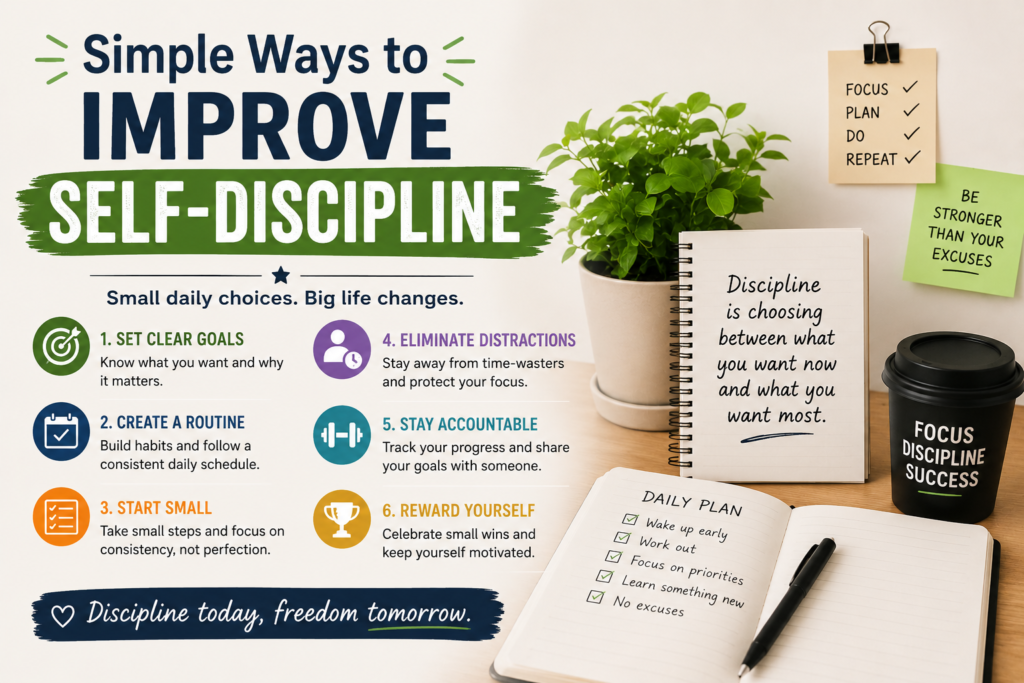
Simple Ways to Improve Self-Discipline:
Introduction
Simple Ways to Improve Self-Discipline. Self-discipline is one of the most important skills for success in life. It is the ability to control your actions, stay focused on your goals, and continue working even when you do not feel motivated. Whether someone wants to improve their health, study better, save money, become more productive, or achieve personal goals, self-discipline plays a major role in making those dreams possible.
In today’s world, distractions are everywhere. Social media, entertainment, smartphones, and busy lifestyles make it difficult for many people to stay focused and consistent.
The good news is that self-discipline is not something people are simply born with. It is a skill that can be developed through practice, consistency, and small daily improvements. You do not need to become perfect overnight.
This complete guide explores practical and simple ways to improve self-discipline, build healthy habits, stay motivated, and create long-term success.
What Is Self-Discipline?: Simple Ways to Improve Self-Discipline
Self-discipline is the ability to control your behavior, emotions, and actions in order to achieve long-term goals. It means doing what needs to be done even when you do not feel like doing it.
Examples of self-discipline include:
- Studying instead of procrastinating
- Exercising regularly
- Waking up on time
- Saving money
- Avoiding unhealthy habits
- Staying focused on important tasks
- Following healthy routines
Self-discipline helps people stay committed to their goals despite distractions, challenges, or temporary discomfort.
Why Self-Discipline Matters: Simple Ways to Improve Self-Discipline
Self-discipline affects nearly every area of life, including:
- Academic success
- Career growth
- Physical health
- Mental wellness
- Financial stability
- Productivity
- Relationships
- Personal growth
People with strong self-discipline are often more organized, confident, focused, and successful because they consistently follow positive habits.
Benefits of self-discipline include:
- Better focus and concentration
- Increased productivity
- Improved time management
- Stronger confidence
- Better decision-making
- Reduced stress
- Greater consistency
- Healthier lifestyle habits
Without self-discipline, it becomes easier to waste time, avoid responsibilities, and give up on goals.
The Difference Between Motivation and Discipline: Simple Ways to Improve Self-Discipline
Many people rely only on motivation to achieve goals. However, motivation is temporary. Some days people feel inspired and energetic, while other days they feel tired or distracted.
Discipline is different.
Self-discipline helps people continue even when motivation disappears.
For example:
- A motivated person may exercise when they feel excited.
- A disciplined person exercises even when they feel lazy.
Long-term success depends more on discipline than short-term motivation.
Remember:
- Motivation helps you start
- Discipline helps you continue
- Consistency creates results
Start With Small Changes: Simple Ways to Improve Self-Discipline
One of the biggest mistakes people make is trying to completely change their lives overnight. This often creates stress and burnout.
Improving self-discipline works best through small daily improvements.
Examples include:
- Reading for 10 minutes daily
- Exercising for 15 minutes
- Drinking more water
- Sleeping earlier
- Reducing screen time gradually
Small habits are easier to maintain and build momentum over time.
Consistency matters more than perfection.
Set Clear Goals
People often struggle with discipline because their goals are unclear.
Instead of saying:
“I want to be successful.”
Create specific goals like:
- “I will study for one hour daily.”
- “I will exercise four times a week.”
- “I will reduce social media usage.”
Clear goals provide direction and make progress easier to measure.
Write Down Your Goals
Writing goals down increases commitment and focus.
You can create:
- Daily goals
- Weekly goals
- Monthly goals
- Long-term goals
Seeing your goals regularly reminds you what you are working toward.
Create a Daily Routine: Simple Ways to Improve Self-Discipline
Strong routines help build self-discipline because they reduce decision-making.
A productive routine may include:
Morning Routine
- Wake up early
- Drink water
- Stretch or exercise
- Plan your day
- Avoid social media immediately
Work or Study Routine
- Focus on important tasks
- Take short breaks
- Limit distractions
- Stay organized
Evening Routine
- Reflect on your day
- Prepare for tomorrow
- Relax before sleep
- Sleep on time
Daily routines turn positive actions into automatic habits.
Remove Distractions: Simple Ways to Improve Self-Discipline
Distractions are one of the biggest enemies of self-discipline.
Common distractions include:
- Social media
- Smartphones
- Notifications
- Television
- Gaming
- Cluttered environments
Ways to Reduce Distractions
- Turn off unnecessary notifications
- Keep your phone away while studying or working
- Create a clean workspace
- Use focus timers
- Limit screen time
Reducing distractions improves concentration and productivity.
Learn to Manage Time Wisely: Simple Ways to Improve Self-Discipline
Time management is closely connected to self-discipline.
People who manage time effectively often feel less stressed and more productive.
Plan Your Day
Create a schedule for important tasks.
Focus on:
- Priorities
- Deadlines
- Goals
Planning helps prevent wasted time.
Use Time Blocking
Divide your day into focused work periods.
Example:
- 9 AM – 11 AM: Study
- 11 AM – 11:30 AM: Break
- 12 PM – 2 PM: Important tasks
Time blocking improves focus and efficiency.
Practice Delayed Gratification: Simple Ways to Improve Self-Discipline
Delayed gratification means resisting short-term pleasure for long-term rewards.
Examples include:
- Studying instead of watching videos
- Saving money instead of unnecessary shopping
- Exercising instead of staying inactive
People who practice delayed gratification often achieve greater success because they focus on future benefits instead of temporary comfort.
Build Healthy Habits: Simple Ways to Improve Self-Discipline
Self-discipline becomes easier when positive habits become automatic.
Healthy Habits to Build
- Exercising regularly
- Eating healthy meals
- Reading daily
- Sleeping properly
- Practicing gratitude
- Managing stress
Healthy habits improve energy, focus, and emotional balance.
Improve Your Environment
Your environment strongly influences your behavior.
A supportive environment makes discipline easier.
Positive Environment Examples
- Keeping books nearby
- Preparing workout clothes early
- Creating a clean workspace
- Spending time around motivated people
Negative Environment Examples
- Constant distractions
- Junk food nearby
- Negative influences
- Cluttered spaces
Small environmental changes can improve discipline significantly.
Train Yourself to Stay Consistent
Consistency is one of the most important parts of self-discipline.
Small actions repeated daily create long-term results.
Examples:
- Reading a little daily improves knowledge
- Exercising regularly improves health
- Practicing skills daily improves confidence
Even when progress feels slow, consistency eventually creates noticeable improvements.
Stop Waiting for the Perfect Moment
Many people delay action because they are waiting for the “right time.”
The truth is:
There is rarely a perfect moment to start.
Successful people take action even when conditions are not perfect.
Start small and improve along the way.
Learn From Failure
Failure is a normal part of growth.
Many people lose discipline because they become discouraged after making mistakes.
Examples:
- Missing one workout
- Failing an exam
- Breaking a routine
- Procrastinating for one day
One mistake does not destroy progress.
The important thing is returning to your routine quickly instead of giving up completely.
Practice Self-Control Daily
Self-control becomes stronger with practice.
Simple ways to practice self-control include:
- Avoid unnecessary phone usage
- Say no to unhealthy habits
- Finish important tasks before entertainment
- Stay focused during work sessions
Like a muscle, self-discipline becomes stronger the more you use it.
Exercise Regularly
Exercise improves both physical and mental discipline.
Benefits include:
- Better mood
- Increased energy
- Improved focus
- Reduced stress
- Greater confidence
Exercise also teaches consistency and patience.
Even simple activities like walking, stretching, or home workouts can help build discipline.
Get Enough Sleep
Poor sleep reduces:
- Focus
- Energy
- Motivation
- Decision-making ability
Healthy sleep habits improve self-control and productivity.
Tips for better sleep:
- Avoid screens before bed
- Keep a regular sleep schedule
- Create a relaxing nighttime routine
A well-rested mind makes disciplined choices more easily.
Use Positive Self-Talk
The way you speak to yourself affects your behavior and mindset.
Negative thoughts such as:
- “I always fail.”
- “I’m too lazy.”
- “I can’t do this.”
can weaken discipline and confidence.
Replace them with:
- “I’m improving every day.”
- “Small progress matters.”
- “I can stay consistent.”
Positive thinking encourages growth and persistence.
Reward Yourself for Progress
Rewards help maintain motivation and reinforce positive habits.
Healthy rewards may include:
- Relaxing after finishing work
- Watching a favorite show
- Spending time with friends
- Enjoying hobbies
Celebrating small wins makes discipline feel more enjoyable.
The Role of Mental Health in Self-Discipline: Simple Ways to Improve Self-Discipline
Mental wellness affects discipline significantly.
Stress, anxiety, and burnout can reduce motivation and focus.
Healthy ways to support mental health include:
- Taking breaks
- Spending time outdoors
- Practicing mindfulness
- Talking to supportive people
- Relaxing and resting properly
A healthy mind supports better self-control and consistency.
Avoid Comparing Yourself to Others: Simple Ways to Improve Self-Discipline
Social media often causes people to compare themselves constantly.
Comparison can lead to:
- Low confidence
- Stress
- Lack of motivation
Focus on your own progress instead of competing with others.
Personal growth is a journey, not a competition.
Develop a Growth Mindset: Simple Ways to Improve Self-Discipline
A growth mindset means believing improvement is possible through effort and learning.
People with a growth mindset:
- Learn from mistakes
- Stay patient during challenges
- Continue improving over time
- Believe skills can develop
This mindset strengthens discipline and resilience.
Daily Habits That Improve Self-Discipline: Simple Ways to Improve Self-Discipline
Helpful daily habits include:
- Waking up earlier
- Planning your day
- Reading regularly
- Exercising
- Reducing screen time
- Journaling
- Practicing gratitude
- Sleeping on time
- Drinking enough water
- Completing important tasks first
Small daily habits create major long-term improvements.
The Long-Term Benefits of Self-Discipline: Simple Ways to Improve Self-Discipline
Strong self-discipline improves nearly every part of life.
Benefits include:
- Better productivity
- Stronger confidence
- Improved health
- Better financial habits
- Greater emotional control
- Reduced stress
- Higher success levels
- More personal freedom
Disciplined people often feel more in control of their lives and future.
Conclusion
Self-discipline is one of the most valuable skills anyone can develop. It helps people stay focused, consistent, and committed to their goals even when motivation fades.
Improving self-discipline does not require perfection or extreme lifestyle changes. Real growth happens through small daily improvements repeated consistently over time.
By creating healthy routines, reducing distractions, managing time wisely, building positive habits, and staying patient during challenges, anyone can strengthen self-discipline and create long-term success.
Remember:
- Small habits create big results
- Consistency matters more than motivation
- Discipline grows through practice
- Every day is a new chance to improve
The choices you make today will shape the person you become tomorrow. Start small, stay focused, and continue improving one step at a time.