
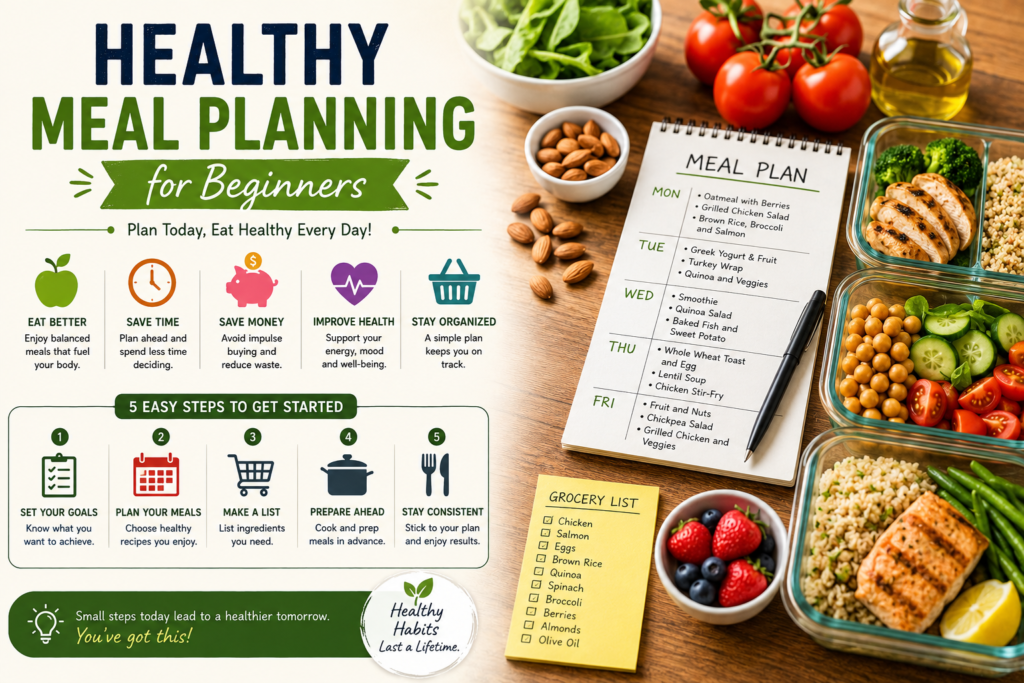
Meal planning helps you organize your meals in advance, making it easier to eat balanced foods, save money, reduce food waste, and maintain healthy habits. Whether your goal is to lose weight, increase energy, improve fitness, or simply eat better, meal planning can make the process much easier.
In this guide, you’ll learn everything you need to know about healthy meal planning, including its benefits, essential steps, meal preparation tips, and beginner-friendly meal ideas.
What Is Meal Planning? Healthy Meal Planning for Beginners
Meal planning is the process of deciding what meals and snacks you will eat throughout the week. Instead of making food choices at the last minute, you prepare a plan that includes healthy ingredients and balanced meals.
Meal planning can involve:
- Planning meals for several days or an entire week
- Creating a grocery shopping list
- Preparing ingredients in advance
- Cooking meals ahead of time
- Organizing portion sizes
A good meal plan reduces stress and helps you stay committed to healthy eating goals.
Benefits of Healthy Meal Planning: Healthy Meal Planning for Beginners
Many people underestimate the impact meal planning can have on their health and lifestyle.
Improves Nutrition
Planning meals in advance helps ensure that you consume a variety of nutritious foods, including fruits, vegetables, whole grains, and lean proteins.
Saves Time
Knowing exactly what to cook eliminates daily decision-making and reduces time spent figuring out meals.
Saves Money
A grocery list based on planned meals helps prevent impulse purchases and unnecessary spending.
Reduces Food Waste
Meal planning encourages you to use ingredients efficiently before they spoil.
Supports Weight Management
Having healthy meals prepared reduces the temptation to order fast food or choose unhealthy snacks.
Reduces Stress
A meal plan removes the daily pressure of deciding what to eat.
Understanding a Balanced Meal: Healthy Meal Planning for Beginners
Before creating a meal plan, it is important to understand what makes a healthy meal.
A balanced meal typically includes:
Lean Protein
Protein helps build and repair tissues while keeping you full longer.
Examples:
- Chicken breast
- Fish
- Eggs
- Greek yogurt
- Beans
- Lentils
- Tofu
Whole Grains
Whole grains provide long-lasting energy and essential nutrients.
Examples:
- Brown rice
- Oats
- Quinoa
- Whole wheat bread
- Whole grain pasta
Fruits and Vegetables
These foods provide vitamins, minerals, fiber, and antioxidants.
Examples:
- Apples
- Berries
- Bananas
- Spinach
- Broccoli
- Carrots
Healthy Fats
Healthy fats support brain health and hormone function.
Examples:
- Avocados
- Nuts
- Seeds
- Olive oil
- Fatty fish
Step 1: Set Realistic Goals: Healthy Meal Planning for Beginners
Before starting a meal plan, identify your primary health goals.
Ask yourself:
- Do I want to lose weight?
- Do I want to build muscle?
- Do I want more energy?
- Do I want healthier eating habits?
Clear goals help guide your food choices and meal structure.
Step 2: Start Small: Healthy Meal Planning for Beginners
Many beginners make the mistake of trying to plan every meal perfectly.
Instead:
- Plan only a few days at first.
- Focus on breakfast and lunch.
- Gradually expand your plan.
Starting small increases your chances of success.
Step 3: Create a Weekly Meal Plan: Healthy Meal Planning for Beginners
A weekly meal plan provides structure and consistency.
Example Weekly Plan: Healthy Meal Planning for Beginners
Monday
Breakfast: Oatmeal with berries
Lunch: Grilled chicken salad
Dinner: Brown rice, vegetables, and salmon
Tuesday
Breakfast: Greek yogurt and fruit
Lunch: Turkey sandwich on whole wheat bread
Dinner: Stir-fried vegetables with chicken
Wednesday
Breakfast: Smoothie with spinach and banana
Lunch: Quinoa salad
Dinner: Baked fish with sweet potatoes
This approach helps simplify grocery shopping and meal preparation.
Step 4: Build a Grocery List: Healthy Meal Planning for Beginners
A grocery list keeps your shopping focused and organized.
Protein Sources:
- Chicken
- Eggs
- Fish
- Greek yogurt
- Beans
Whole Grains:
- Oats
- Brown rice
- Quinoa
- Whole wheat bread
Fruits:
- Apples
- Bananas
- Berries
- Oranges
Vegetables:
- Broccoli
- Spinach
- Bell peppers
- Carrots
Healthy Fats:
- Avocados
- Nuts
- Olive oil
Shopping with a list helps you avoid unhealthy impulse purchases.
Step 5: Prepare Meals in Advance: Healthy Meal Planning for Beginners
Meal preparation can make healthy eating much easier.
Simple Meal Prep Ideas: Healthy Meal Planning for Beginners
- Wash and cut vegetables.
- Cook rice or quinoa ahead of time.
- Prepare grilled chicken for several meals.
- Portion snacks into containers.
- Store meals in reusable containers.
Even one hour of preparation can save time throughout the week.
Easy Healthy Breakfast Ideas: Healthy Meal Planning for Beginners
Breakfast provides energy and sets the tone for the day.
Oatmeal with Fruit
Top oats with berries, bananas, and nuts.
Greek Yogurt Bowl
Combine yogurt with fruit and seeds.
Smoothie
Blend spinach, banana, berries, and milk.
Whole Wheat Toast
Add avocado and a boiled egg.
Healthy Lunch Ideas: Healthy Meal Planning for Beginners
Lunch should provide balanced nutrition and sustained energy.
Chicken Salad
Mix leafy greens, grilled chicken, and vegetables.
Turkey Wrap
Use whole wheat tortillas with lean turkey and vegetables.
Quinoa Bowl
Combine quinoa, vegetables, and beans.
Tuna Sandwich
Serve on whole grain bread with lettuce and tomato.
Healthy Dinner Ideas: Healthy Meal Planning for Beginners
Dinner should be satisfying without being overly heavy.
Grilled Chicken with Vegetables
Pair chicken breast with roasted vegetables.
Baked Salmon
Serve with brown rice and steamed broccoli.
Vegetable Stir-Fry
Cook mixed vegetables with tofu or chicken.
Turkey Chili
A nutritious, protein-rich option for busy evenings.
Healthy Snack Ideas: Healthy Meal Planning for Beginners
Healthy snacks help maintain energy between meals.
Good Snack Choices
- Fresh fruit
- Greek yogurt
- Mixed nuts
- Carrot sticks
- Hummus
- Cottage cheese
- Hard-boiled eggs
Avoid highly processed snacks whenever possible.
Common Meal Planning Mistakes: Healthy Meal Planning for Beginners
Planning Meals That Are Too Complicated:
Choose simple recipes that fit your schedule.
Buying Too Much Food
Purchase only what you need.
Skipping Variety
Eating the same foods daily can become boring.
Ignoring Portion Sizes
Even healthy foods should be consumed in appropriate amounts.
Not Preparing Ahead
Preparation is a key part of successful meal planning.
Budget-Friendly Meal Planning Tips: Healthy Meal Planning for Beginners
Healthy eating does not have to be expensive.
Buy Seasonal Produce
Seasonal fruits and vegetables are often cheaper and fresher.
Purchase in Bulk
Items like oats, rice, and beans are cost-effective when bought in larger quantities.
Cook at Home
Home-cooked meals are usually healthier and more affordable than restaurant meals.
Use Leftovers
Repurpose leftovers for lunches and future dinners.
Freeze Extra Portions
Freezing meals reduces waste and provides convenient options.
Staying Consistent with Meal Planning: Healthy Meal Planning for Beginners
Consistency is more important than perfection.
Helpful strategies include:
- Choose one meal prep day each week.
- Keep healthy foods visible.
- Maintain a grocery list.
- Prepare simple recipes.
- Track your progress.
Small improvements over time can lead to lasting healthy habits.
How Meal Planning Supports Long-Term Health: Healthy Meal Planning for Beginners
Healthy meal planning contributes to:
- Better nutrition
- Improved energy levels
- Weight management
- Reduced stress
- Better digestion
- Stronger immune function
- Improved overall well-being
These benefits become more noticeable when meal planning becomes a regular part of your lifestyle.
Conclusion
By planning meals ahead, creating a grocery list, preparing ingredients in advance, and focusing on balanced nutrition, you can make healthy eating easier and more enjoyable.
Remember that meal planning does not need to be perfect. Start with simple steps, stay consistent, and gradually develop a routine that works for your lifestyle. Over time, these small efforts can lead to significant improvements in your health, energy, and overall quality of life.
The journey toward better nutrition begins with a plan, and every healthy meal is a step toward a healthier future.