
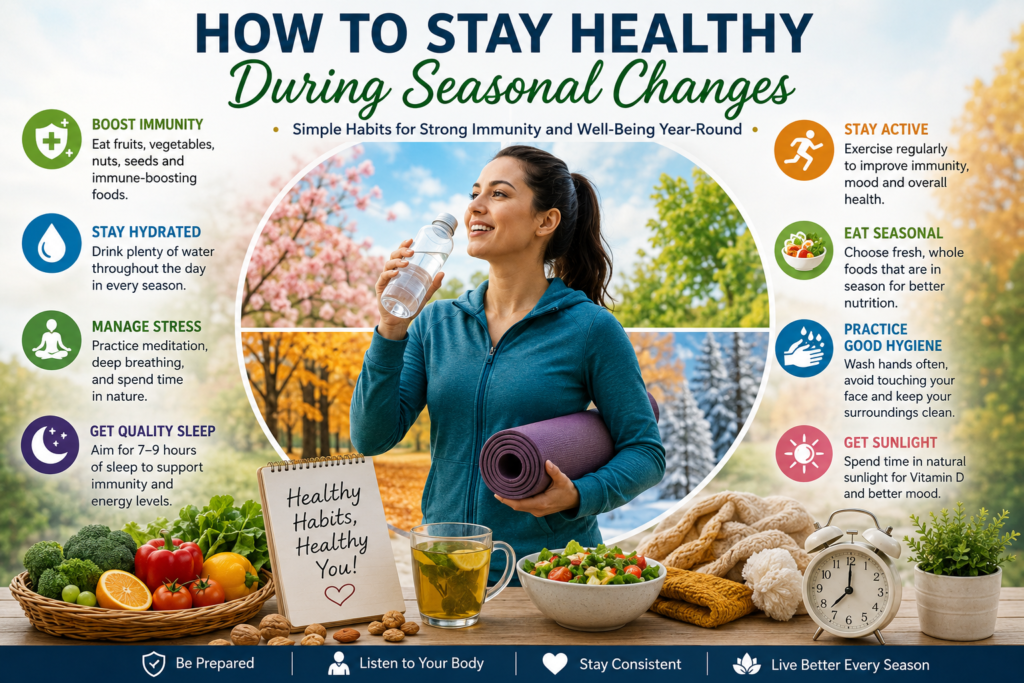
Many people notice that they get sick more often during seasonal transitions. Common issues include colds, flu, allergies, fatigue, dry skin, sleep disturbances, and changes in mood. While these challenges are common, there are many simple and effective ways to protect your health throughout the year.
Understanding how seasonal changes affect your body can help you prepare and adapt more effectively. By making a few lifestyle adjustments, you can maintain strong immunity, steady energy levels, and overall wellness no matter what season it is.
This guide explores practical and natural strategies to help you stay healthy during seasonal changes and enjoy better health year-round.
Why Seasonal Changes Affect Your Health: How to Stay Healthy During Seasonal Changes
Every season brings unique environmental conditions that can influence your body.
Some common seasonal factors include:
- Temperature changes
- Humidity fluctuations
- Reduced or increased sunlight
- Seasonal allergies
- Changes in physical activity
- Dietary shifts
- Increased exposure to viruses
Your body works hard to adapt to these changes. Sometimes this adjustment process can temporarily weaken your immune system or disrupt your daily routine.
Understanding these challenges is the first step toward protecting your health.
Common Health Challenges During Seasonal Changes: How to Stay Healthy During Seasonal Changes
Increased Risk of Colds and Flu
Seasonal transitions often bring an increase in viral infections.
Symptoms may include:
- Runny nose
- Sore throat
- Fever
- Fatigue
- Coughing
A strong immune system can help reduce your risk.
Seasonal Allergies: How to Stay Healthy During Seasonal Changes
Spring and fall are especially challenging for people with allergies.
Common triggers include:
- Pollen
- Mold spores
- Dust
- Grass
Symptoms may include:
- Sneezing
- Itchy eyes
- Nasal congestion
- Watery eyes
Fatigue and Low Energy: How to Stay Healthy During Seasonal Changes
Many people experience seasonal fatigue due to:
- Changes in daylight hours
- Sleep disruption
- Reduced physical activity
- Weather-related stress
Mood Changes: How to Stay Healthy During Seasonal Changes
Seasonal changes can affect emotional well-being.
Some individuals experience:
- Increased stress
- Irritability
- Anxiety
- Seasonal depression
- Reduced motivation
Dry Skin and Dehydration: How to Stay Healthy During Seasonal Changes
Cold weather and indoor heating can remove moisture from the skin and body.
Common symptoms include:
- Dry skin
- Chapped lips
- Itchy skin
- Dehydration
Strengthen Your Immune System: How to Stay Healthy During Seasonal Changes
One of the most important ways to stay healthy during seasonal changes is to support your immune system.
A healthy immune system helps your body defend itself against viruses, bacteria, and other harmful organisms.
Eat Immune-Boosting Foods
Include foods rich in vitamins and antioxidants such as:
- Citrus fruits
- Oranges
- Lemons
- Grapefruit
- Berries
- Bell peppers
- Broccoli
- Spinach
These foods provide essential nutrients that support immune function.
Include Zinc-Rich Foods
Zinc plays a key role in immunity.
Sources include:
- Pumpkin seeds
- Nuts
- Beans
- Lentils
- Whole grains
Stay Hydrated Year-Round: How to Stay Healthy During Seasonal Changes
Many people drink less water during colder months because they feel less thirsty.
However, hydration remains essential throughout every season.
Benefits of proper hydration include:
- Better circulation
- Improved digestion
- Stronger immunity
- Healthy skin
- Increased energy
Tips for Staying Hydrated
- Carry a reusable water bottle
- Drink water consistently throughout the day
- Include herbal teas
- Eat water-rich fruits and vegetables
Aim to drink enough fluids daily based on your activity level and climate.
Maintain a Balanced Diet: How to Stay Healthy During Seasonal Changes
Good nutrition is one of the strongest defenses against seasonal illness.
Focus on Whole Foods
Choose foods such as:
- Fruits
- Vegetables
- Whole grains
- Lean proteins
- Healthy fats
Whole foods provide nutrients your body needs to adapt to changing conditions.
Eat Seasonal Produce
Seasonal fruits and vegetables are often fresher and more nutritious.
Examples include:
Spring
- Strawberries
- Spinach
- Asparagus
Summer
- Watermelon
- Tomatoes
- Cucumbers
Autumn
- Pumpkin
- Sweet potatoes
- Apples
Winter
- Citrus fruits
- Carrots
- Kale
Prioritize Quality Sleep: How to Stay Healthy During Seasonal Changes
Sleep is critical for recovery and immune health.
Poor sleep can weaken the body’s natural defenses and increase susceptibility to illness.
Healthy Sleep Habits
- Go to bed at the same time each night
- Avoid screens before bedtime
- Create a relaxing sleep environment
- Limit caffeine in the evening
Most adults need 7–9 hours of sleep each night.
Stay Physically Active: How to Stay Healthy During Seasonal Changes
Exercise helps your body adapt to seasonal changes while supporting overall wellness.
Benefits include:
- Stronger immunity
- Better circulation
- Improved mood
- Increased energy
- Reduced stress
Seasonal Exercise Ideas
Spring
- Walking
- Gardening
- Cycling
Summer
- Swimming
- Hiking
- Outdoor sports
Autumn
- Jogging
- Nature walks
Winter
- Indoor workouts
- Yoga
- Strength training
Aim for at least 150 minutes of moderate exercise per week.
Protect Yourself from Seasonal Allergies: How to Stay Healthy During Seasonal Changes
If allergies affect you during seasonal transitions, preventive measures can help.
Allergy Management Tips
- Monitor pollen levels
- Keep windows closed on high-pollen days
- Wash your hands frequently
- Shower after spending time outdoors
- Use air purifiers when needed
Reducing exposure to allergens can significantly improve comfort.
Support Mental Health During Seasonal Changes: How to Stay Healthy During Seasonal Changes
Weather and daylight changes can influence mood and mental well-being.
Spend Time Outdoors
Natural sunlight supports:
- Vitamin D production
- Better sleep
- Improved mood
Even a short daily walk can be beneficial.
Practice Mindfulness
Mindfulness techniques include:
- Meditation
- Deep breathing
- Journaling
- Gratitude exercises
These practices help reduce stress and improve emotional resilience.
Get Enough Vitamin D: How to Stay Healthy During Seasonal Changes
Vitamin D is especially important during seasons with limited sunlight.
Low vitamin D levels may contribute to:
- Fatigue
- Weak immunity
- Mood changes
Natural Sources of Vitamin D
- Sunlight exposure
- Fatty fish
- Egg yolks
- Fortified foods
Speak with a healthcare professional if you suspect a deficiency.
Dress Appropriately for the Weather: How to Stay Healthy During Seasonal Changes
Changing temperatures can place stress on the body.
Cold Weather Tips
- Wear layers
- Protect hands and feet
- Use warm clothing outdoors
Hot Weather Tips
- Wear breathable fabrics
- Stay hydrated
- Limit sun exposure during peak hours
Proper clothing helps your body regulate temperature efficiently.
Practice Good Hygiene: How to Stay Healthy During Seasonal Changes
Seasonal illnesses often spread more easily during certain times of the year.
Simple hygiene habits can make a big difference.
Important Practices
- Wash hands regularly
- Avoid touching your face
- Cover coughs and sneezes
- Clean frequently touched surfaces
These habits help reduce the spread of germs.
Manage Stress Effectively: How to Stay Healthy During Seasonal Changes
Chronic stress can weaken the immune system and make seasonal illnesses more likely.
Stress Management Strategies
- Exercise regularly
- Practice relaxation techniques
- Spend time with loved ones
- Maintain hobbies
- Take breaks when needed
Reducing stress supports both physical and mental health.
Keep Your Indoor Environment Healthy: How to Stay Healthy During Seasonal Changes
People often spend more time indoors during extreme weather conditions.
Improve Indoor Air Quality
- Open windows when weather permits
- Use air purifiers
- Vacuum regularly
- Control humidity levels
Clean indoor environments can reduce allergy symptoms and respiratory issues.
Care for Your Skin: How to Stay Healthy During Seasonal Changes
Seasonal weather can affect skin health.
Winter Skin Care Tips
- Use moisturizer daily
- Avoid excessively hot showers
- Drink plenty of water
Summer Skin Care Tips
- Wear sunscreen
- Stay hydrated
- Protect skin from excessive sun exposure
Healthy skin acts as an important barrier against environmental stressors.
Build Healthy Seasonal Routines: How to Stay Healthy During Seasonal Changes
Consistent routines help your body adapt more easily to changing conditions.
Daily Wellness Routine
Morning:
- Drink water
- Stretch
- Eat a healthy breakfast
Afternoon:
- Stay active
- Eat balanced meals
- Take short movement breaks
Evening:
- Relax
- Limit screen time
- Prepare for quality sleep
Consistency supports long-term health regardless of the season.
Common Mistakes to Avoid During Seasonal Changes
Many people unknowingly make choices that increase their risk of illness.
Avoid:
- Skipping meals
- Neglecting hydration
- Staying indoors all day
- Ignoring sleep
- Avoiding exercise
- Excessive junk food consumption
- High stress levels
Recognizing these habits can help you stay healthier throughout the year.
Conclusion
Seasonal changes are unavoidable, but their impact on your health doesn’t have to be negative. By supporting your immune system, eating nutritious foods, staying hydrated, exercising regularly, managing stress, and getting quality sleep, you can maintain strong physical and mental health throughout the year.
The key is preparation and consistency. Small daily habits often provide the greatest protection against seasonal illnesses and wellness challenges. Instead of waiting until you feel sick or exhausted, take proactive steps to support your body before seasonal transitions occur.
Remember that good health is built through everyday choices. By following these practical tips, you can enjoy every season with greater energy, resilience, and well-being while reducing your risk of common seasonal health problems.