
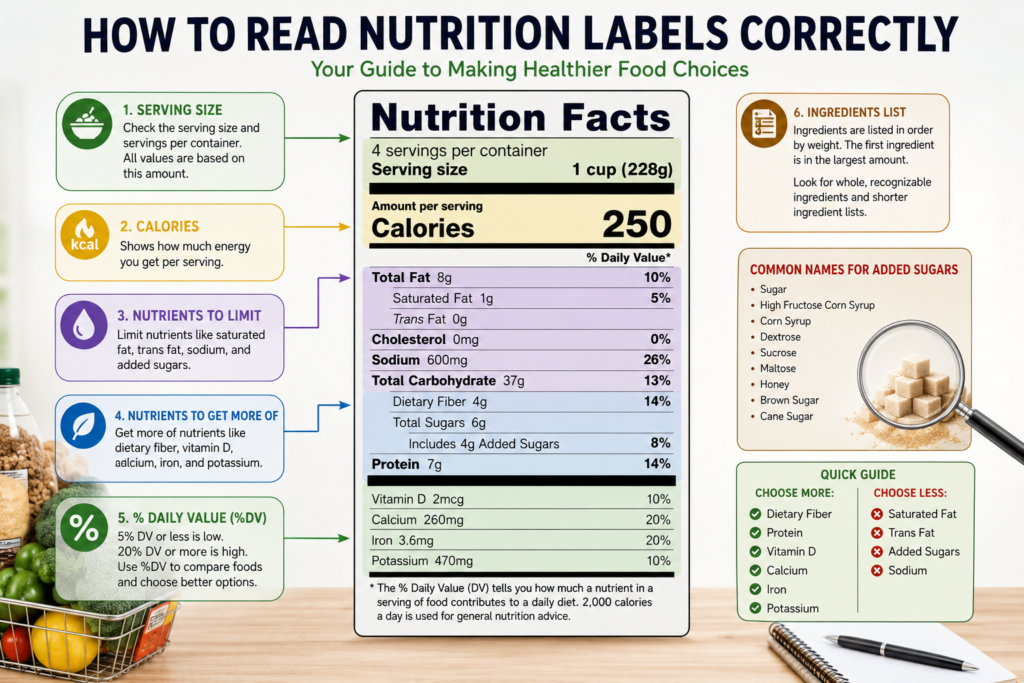
How to Read Nutrition Labels Correctly
How to Read Nutrition Labels Correctly. Have you ever picked up a food package, looked at the nutrition label, and felt confused by all the numbers and percentages? You’re not alone. Nutrition labels can seem complicated at first, but once you understand how they work, they become one of the most valuable tools for making healthier food choices.
Learning how to read nutrition labels correctly can help you manage your weight, improve your diet, reduce your risk of chronic diseases, and become a more informed shopper. Whether you’re trying to eat healthier, lose weight, build muscle, or simply understand what you’re putting into your body, nutrition labels provide essential information.
In this comprehensive guide, you’ll learn everything you need to know about reading nutrition labels, understanding ingredients, and making smarter food decisions.
Why Nutrition Labels Matter: How to Read Nutrition Labels Correctly
Nutrition labels were created to help consumers understand what’s inside packaged foods. They provide information about calories, nutrients, serving sizes, and ingredients.
Reading nutrition labels can help you:
- Make healthier food choices
- Compare similar products
- Control portion sizes
- Reduce excess sugar intake
- Limit unhealthy fats
- Increase nutrient-rich foods
- Manage health conditions such as diabetes or high blood pressure
Instead of relying on marketing claims like “healthy,” “natural,” or “low-fat,” nutrition labels give you factual information.
Understanding the Nutrition Facts Panel: How to Read Nutrition Labels Correctly
Most packaged foods contain a Nutrition Facts label. This panel is divided into several sections that provide important details about the product.
The key sections include:
- Serving Size
- Calories
- Macronutrients
- Micronutrients
- Percent Daily Value (%DV)
- Ingredients List
Let’s break each section down.
Start with the Serving Size: How to Read Nutrition Labels Correctly
One of the biggest mistakes people make is ignoring the serving size.
The serving size tells you the amount of food that all nutritional information is based on.
For example:
Serving Size: 1 cup (228g)
If the package contains 2 servings and you eat the entire package, you must double all the nutritional values listed on the label.
Why Serving Size Is Important
Many foods appear healthy until you realize the serving size is much smaller than what most people actually eat.
For example:
- A bag of chips may contain 3 servings.
- A bottle of juice may contain 2 servings.
- A frozen meal may contain more than one serving.
Always check the serving size before looking at anything else.
Understand Calories: How to Read Nutrition Labels Correctly
Calories measure the amount of energy food provides.
A nutrition label shows how many calories are in one serving.
Example:
- Serving Size: 1 cup
- Calories: 250
If you eat two servings:
250 × 2 = 500 calories
What Is Considered Low or High?
As a general guideline:
- 40 calories = Low
- 100 calories = Moderate
- 400+ calories = High
Calories aren’t everything, but they can help you manage your energy intake and maintain a healthy weight.
Learn About Macronutrients: How to Read Nutrition Labels Correctly
Macronutrients are nutrients your body needs in large amounts.
They include:
- Fat
- Carbohydrates
- Protein
Let’s examine each one.
Total Fat: How to Read Nutrition Labels Correctly
Fat is essential for hormone production, brain function, and nutrient absorption.
However, not all fats are equal.
Nutrition labels usually list:
- Total Fat
- Saturated Fat
- Trans Fat
Healthy Fats
Good sources include:
- Avocados
- Nuts
- Seeds
- Olive oil
- Fatty fish
Saturated Fat
Too much saturated fat may increase heart disease risk.
Aim to limit foods high in saturated fat.
Trans Fat
Trans fat is considered the least healthy type of fat.
Try to avoid products containing trans fat whenever possible.
Carbohydrates: How to Read Nutrition Labels Correctly
Carbohydrates provide the body’s primary energy source.
Labels break carbohydrates into:
- Total Carbohydrates
- Dietary Fiber
- Total Sugars
- Added Sugars
Dietary Fiber
Fiber supports digestion and helps keep you full.
Foods high in fiber include:
- Fruits
- Vegetables
- Whole grains
- Legumes
A good target is 25–38 grams daily.
Total Sugars
This includes natural and added sugars.
Natural sugars occur in:
- Fruits
- Milk
Added Sugars
Added sugars are included during processing.
Examples include:
- Cane sugar
- Corn syrup
- Brown sugar
- Honey
Choose products with lower added sugar whenever possible.
Protein: How to Read Nutrition Labels Correctly
Protein helps build and repair tissues.
It also supports:
- Muscle growth
- Immune function
- Hormone production
Good protein sources include:
- Lean meat
- Fish
- Eggs
- Beans
- Lentils
- Greek yogurt
Higher-protein foods often help increase fullness and satisfaction.
Pay Attention to Percent Daily Value (%DV): How to Read Nutrition Labels Correctly
The Percent Daily Value shows how much a nutrient contributes to a daily diet.
It’s based on a standard 2,000-calorie diet.
Quick Guide
- 5% DV or less = Low
- 20% DV or more = High
Nutrients to Get More Of
Look for foods high in:
- Fiber
- Vitamin D
- Calcium
- Iron
- Potassium
Nutrients to Limit
Choose foods lower in:
- Saturated Fat
- Sodium
- Added Sugars
The %DV makes comparing products easier.
Watch Your Sodium Intake: How to Read Nutrition Labels Correctly
Sodium is often hidden in processed foods.
Excess sodium may contribute to:
- High blood pressure
- Heart disease
- Stroke
Adults should generally limit sodium intake to around 2,300 mg per day.
Common high-sodium foods include:
- Canned soups
- Processed meats
- Frozen meals
- Snack foods
Look for lower-sodium alternatives when possible.
Understand the Ingredients List: How to Read Nutrition Labels Correctly
The ingredients list can tell you a lot about a product’s quality.
Ingredients are listed in descending order by weight.
This means the first ingredient is present in the largest amount.
Example
Ingredients:
Whole Grain Oats, Water, Almonds, Honey, Salt
This indicates oats are the primary ingredient.
Look for Short Ingredient Lists: How to Read Nutrition Labels Correctly
Generally, foods with fewer ingredients tend to be less processed.
For example:
Better Choice
Ingredients:
Oats
Less Ideal Choice
Ingredients:
Refined Flour, Sugar, Corn Syrup, Artificial Flavour, Preservatives, Colours
Simpler ingredient lists often indicate a more natural product.
Identify Hidden Sugars: How to Read Nutrition Labels Correctly
Sugar can appear under many names.
Common examples include:
- Sucrose
- Fructose
- Glucose
- Maltose
- Dextrose
- Corn Syrup
- Cane Juice
- Molasses
If several sugars appear near the top of the ingredients list, the product may contain significant added sugar.
Understand Food Marketing Claims: How to Read Nutrition Labels Correctly
Food packaging often includes attractive marketing terms.
Examples include:
- Natural
- Organic
- Low Fat
- Sugar-Free
- Multigrain
- Gluten-Free
These claims don’t always mean the product is healthy.
Always verify claims by checking the nutrition label and ingredients list.
Comparing Similar Products: How to Read Nutrition Labels Correctly
Nutrition labels are excellent tools for comparison.
Imagine choosing between two breakfast cereals.
Compare:
- Calories
- Fiber
- Protein
- Added Sugar
- Sodium
A cereal with more fiber and less added sugar is usually the healthier choice.
Reading Labels for Weight Loss: How to Read Nutrition Labels Correctly
If weight loss is your goal, pay special attention to:
Calories
Choose lower-calorie options when appropriate.
Protein
Higher protein foods often help control hunger.
Fiber
Fiber promotes fullness and supports digestion.
Added Sugars
Reducing added sugars may help lower calorie intake.
Reading Labels for Heart Health
For heart health, focus on:
- Lower saturated fat
- No trans fat
- Lower sodium
- Higher fiber
Foods rich in whole grains, fruits, vegetables, and healthy fats generally support cardiovascular health.
Reading Labels for Diabetes Management
People managing blood sugar levels should monitor:
- Total Carbohydrates
- Added Sugars
- Fiber
Higher-fiber foods often have a slower impact on blood sugar compared to highly processed foods.
Common Nutrition Label Mistakes
Many consumers make these mistakes:
Ignoring Serving Size
This can lead to consuming far more calories than expected.
Focusing Only on Calories
Nutrient quality matters just as much.
Trusting Front-Package Claims
Marketing language can be misleading.
Ignoring Added Sugars
Even healthy-looking products can contain large amounts of sugar.
Overlooking Sodium
Many processed foods contain surprisingly high sodium levels.
Healthy Grocery Shopping Tips: How to Read Nutrition Labels Correctly
Use nutrition labels as part of a complete shopping strategy.
Shop the Perimeter
Fresh foods are often located around the outer sections of grocery stores.
Read Before You Buy
Take a few extra seconds to check labels.
Compare Brands
Different brands of the same product can vary greatly.
Prioritize Whole Foods
Choose foods closer to their natural form whenever possible.
Practical Example of Reading a Label
Suppose a granola bar label shows:
- Serving Size: 1 Bar
- Calories: 180
- Total Fat: 6g
- Fiber: 4g
- Protein: 5g
- Added Sugar: 12g
What does this tell us?
Positive points:
- Good fiber content
- Moderate protein
Potential concern:
- Relatively high added sugar
This information helps you decide whether it fits your nutrition goals.
Building Healthy Habits with Nutrition Labels: How to Read Nutrition Labels Correctly
Reading labels becomes easier with practice.
Start by checking:
- Serving Size
- Calories
- Added Sugar
- Fiber
- Protein
- Ingredients
After a few shopping trips, label reading will become second nature.
Final Thoughts
Learning how to read nutrition labels correctly is one of the simplest and most effective ways to improve your eating habits. Nutrition labels provide valuable insights into serving sizes, calories, nutrients, and ingredients, helping you make informed choices that support your health goals.
Rather than relying solely on food packaging claims, take a closer look at the Nutrition Facts panel and ingredients list. By understanding what the numbers mean and how they affect your body, you’ll be better equipped to choose foods that nourish your health and well-being.
Small changes in how you shop and read labels can lead to lasting improvements in your diet, energy levels, and overall quality of life. The next time you’re at the grocery store, let nutrition labels guide you toward smarter and healthier decisions.