
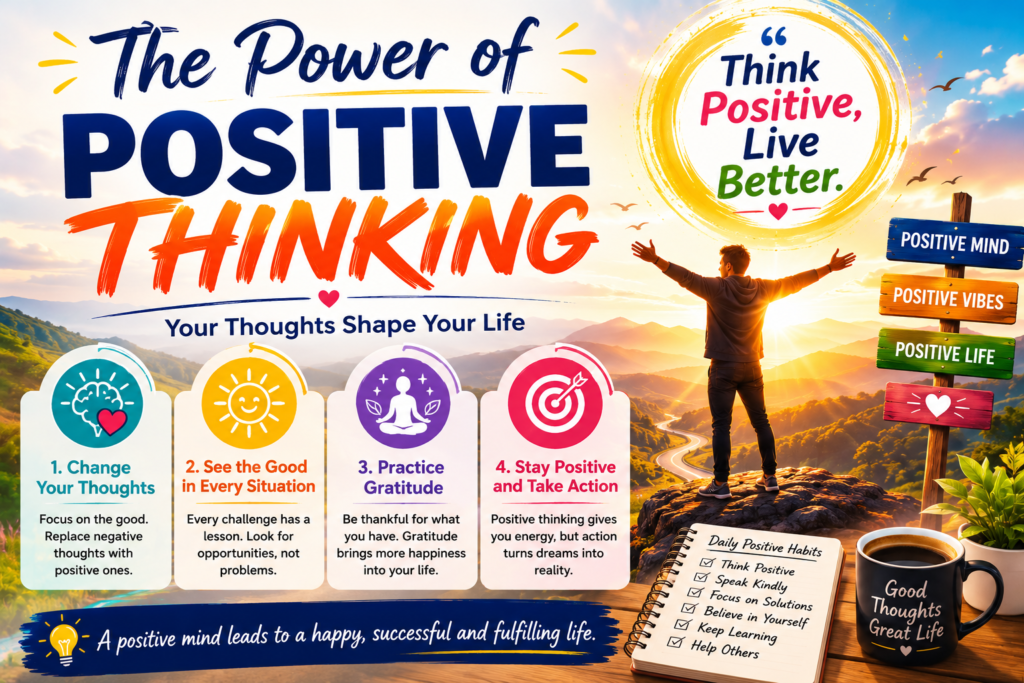
The Power of Positive Thinking:
Introduction
The Power of Positive Thinking. The human mind is one of the most powerful tools in the world. The way people think affects their emotions, decisions, habits, relationships, and overall quality of life. Positive thinking is more than simply “thinking happy thoughts.”
In today’s fast-paced world, many people struggle with stress, anxiety, self-doubt, and negativity. Social pressure, work challenges, financial worries, and personal problems can make life feel overwhelming.
Positive thinking does not mean ignoring problems or pretending everything is perfect. Instead, it means choosing to focus on solutions, opportunities, growth, and hope rather than fear and negativity.
This complete guide explores the power of positive thinking, how mindset affects daily life, the science behind optimism, common negative thought patterns, and practical strategies to develop a positive mindset for long-term success and happiness.
What Is Positive Thinking?
Positive thinking is the practice of focusing on the good aspects of life and approaching situations with optimism and confidence. It involves believing that improvement, growth, and success are possible even during challenges.
Positive thinkers do not avoid difficulties. Instead, they face problems with a mindset focused on learning, resilience, and progress.
Examples of positive thinking include:
- Believing mistakes can become learning opportunities
- Staying hopeful during difficult situations
- Focusing on solutions instead of problems
- Practicing gratitude
- Encouraging yourself with positive self-talk
- Believing in personal growth and improvement
Positive thinking influences emotions, behavior, decision-making, and mental health.
Why Positive Thinking Matters: The Power of Positive Thinking
Thoughts influence actions, emotions, and habits. A person who constantly thinks negatively often feels stressed, discouraged, and unmotivated. On the other hand, people with a positive mindset usually experience greater confidence, emotional balance, and resilience.
Positive thinking matters because it can improve:
- Mental health
- Physical health
- Relationships
- Productivity
- Self-confidence
- Stress management
- Overall happiness
People who think positively are more likely to continue trying after failure, adapt to challenges, and maintain healthy relationships.
The Science Behind Positive Thinking: The Power of Positive Thinking
Scientific research shows that thoughts directly affect the brain and body. Positive emotions influence brain chemistry and can improve overall well-being.
When people experience positive emotions, the brain releases chemicals such as:
- Dopamine
- Serotonin
- Endorphins
These chemicals are associated with happiness, motivation, relaxation, and emotional stability.
Negative thinking, however, often increases stress hormones like cortisol, which can contribute to:
- Anxiety
- Fatigue
- Poor concentration
- Sleep problems
- Emotional exhaustion
A positive mindset can help reduce stress and improve both mental and physical health.
How Positive Thinking Affects Mental Health: The Power of Positive Thinking
Mental health is strongly connected to thought patterns. Negative thinking can create emotional struggles, while positive thinking helps improve emotional balance.
Reduced Stress
Positive thinkers are often better at handling pressure because they focus on possible solutions instead of constantly worrying about problems.
Instead of saying:
“Everything is going wrong.”
A positive thinker may say:
“This situation is difficult, but I can learn from it and improve.”
This mental shift reduces emotional stress and increases resilience.
Improved Confidence
Positive thinking encourages self-belief and personal growth.
Confident people often use encouraging thoughts such as:
- “I can improve.”
- “I will keep learning.”
- “Mistakes help me grow.”
Negative self-talk damages confidence, while supportive self-talk strengthens it.
Better Emotional Balance
People with positive mindsets are often more emotionally stable because they do not allow temporary failures to completely control their emotions.
They understand:
- Problems are temporary
- Growth takes time
- Failure is part of learning
This mindset helps maintain emotional balance during stressful situations.
Positive Thinking and Physical Health: The Power of Positive Thinking
The connection between mental and physical health is powerful. Positive thinking can improve physical wellness in several ways.
Benefits may include:
- Better sleep quality
- Reduced stress levels
- Improved immune system function
- Lower blood pressure
- Increased energy
- Healthier lifestyle choices
People with positive attitudes are also more likely to:
- Exercise regularly
- Eat healthy foods
- Practice self-care
- Avoid harmful habits
A healthy mindset often supports a healthier body.
Common Negative Thinking Patterns: The Power of Positive Thinking
Many people struggle with negative thought patterns without realizing it.
Overthinking
Overthinking involves repeatedly focusing on problems, fears, or mistakes.
This can lead to:
- Anxiety
- Stress
- Mental exhaustion
- Difficulty making decisions
Positive thinking helps people focus more on solutions instead of endless worry.
Self-Doubt
Negative self-talk often creates fear and insecurity.
Examples include:
- “I’m not good enough.”
- “I always fail.”
- “I can’t do this.”
These thoughts reduce confidence and motivation.
Replacing them with healthier thoughts can improve mindset over time.
Comparing Yourself to Others
Social media and modern culture often encourage unhealthy comparison.
Constant comparison can lead to:
- Low self-esteem
- Jealousy
- Stress
- Dissatisfaction
Positive thinking encourages people to focus on personal growth instead of competing with others.
The Power of Gratitude: The Power of Positive Thinking
Gratitude is one of the most effective ways to develop a positive mindset.
Gratitude means appreciating the good things in life, even small ones.
Examples include being grateful for:
- Family and friends
- Good health
- Opportunities
- Education
- Personal growth
- Daily experiences
Practicing gratitude helps train the mind to focus on positivity instead of negativity.
Benefits of Gratitude
Gratitude can improve:
- Happiness
- Mental health
- Relationships
- Emotional resilience
- Stress management
Many people practice gratitude through journaling or daily reflection.
Positive Self-Talk: The Power of Positive Thinking
The way people speak to themselves matters greatly.
Negative self-talk weakens confidence and motivation, while positive self-talk encourages growth and resilience.
Examples of Negative Self-Talk
- “I’ll never succeed.”
- “I’m terrible at this.”
- “I always fail.”
Examples of Positive Self-Talk
- “I’m learning and improving.”
- “I can grow with practice.”
- “Mistakes are part of success.”
Positive self-talk does not mean ignoring weaknesses. It means encouraging yourself while continuing to improve.
Building a Positive Mindset: The Power of Positive Thinking
Positive thinking is a skill that develops through practice and consistency.
Focus on Solutions
Instead of only focusing on problems, ask:
- “What can I learn from this?”
- “How can I improve?”
- “What steps can I take?”
Solution-focused thinking encourages action and growth.
Surround Yourself with Positive People
The people around us strongly influence mindset and emotions.
Supportive and encouraging relationships can improve:
- Confidence
- Motivation
- Emotional health
Negative environments often increase stress and pessimism.
Choose relationships that encourage growth and positivity.
Limit Negative Influences
Constant exposure to negativity can affect mental health.
Examples include:
- Toxic social media content
- Constant complaints
- Negative news overload
- Harmful relationships
Creating healthy boundaries protects emotional well-being.
Practice Mindfulness
Mindfulness techniques include:
- Deep breathing
- Meditation
- Journaling
- Spending time in nature
Mindfulness helps reduce stress and improve emotional awareness.
Positive Thinking and Success: The Power of Positive Thinking
Successful people often share one important quality: a positive mindset.
Positive thinking helps people:
- Stay motivated
- Handle setbacks
- Continue learning
- Take healthy risks
- Remain disciplined
People who believe improvement is possible are more likely to continue trying during difficult times.
Success usually requires persistence, and persistence is easier with a positive mindset.
The Connection Between Positive Thinking and Productivity: The Power of Positive Thinking
Mindset strongly affects productivity.
Negative thinking often causes:
- Procrastination
- Fear of failure
- Low motivation
- Stress
Positive thinking improves productivity by increasing focus, confidence, and energy.
Productive Positive Habits
Helpful habits include:
- Planning daily goals
- Staying organized
- Celebrating progress
- Learning from mistakes
- Maintaining healthy routines
Small positive actions repeated consistently create long-term success.
Positive Thinking in Relationships: The Power of Positive Thinking
Positive thinking can improve communication and relationships.
Positive people often:
- Listen better
- Show empathy
- Encourage others
- Handle conflict calmly
- Build trust more easily
Negativity, criticism, and constant complaining can damage relationships over time.
Healthy relationships grow through understanding, support, and emotional positivity.
How to Stay Positive During Difficult Times: The Power of Positive Thinking
Life is not always easy. Everyone experiences setbacks, stress, and disappointment.
Positive thinking does not remove problems, but it helps people respond more effectively.
Accept Challenges
Difficult situations are part of life and personal growth.
Challenges often teach:
- Patience
- Strength
- Resilience
- Problem-solving skills
Accepting difficulties helps reduce frustration.
Focus on What You Can Control
Worrying about things outside your control increases stress.
Instead, focus on:
- Your actions
- Your attitude
- Your habits
- Your response to situations
This mindset improves emotional stability.
Take Care of Yourself
Self-care is important during stressful periods.
Healthy self-care habits include:
- Sleeping properly
- Eating nutritious foods
- Exercising
- Relaxing
- Talking to supportive people
A healthy body supports a healthy mind.
The Role of Habits in Positive Thinking: The Power of Positive Thinking
Positive thinking becomes stronger through daily habits.
Helpful habits include:
- Gratitude journaling
- Reading motivational books
- Daily exercise
- Meditation
- Limiting negativity
- Setting realistic goals
Daily habits shape mindset over time.
Technology and Positive Thinking: The Power of Positive Thinking
Technology can influence mindset both positively and negatively.
Positive Uses of Technology
- Educational content
- Motivational podcasts
- Productivity apps
- Online learning
- Meditation apps
Negative Uses of Technology
- Endless scrolling
- Negative comparison
- Toxic content
- Constant distractions
Using technology wisely helps protect mental health and emotional balance.
The Importance of Patience and Growth: The Power of Positive Thinking
Positive thinking is not about instant perfection.
Growth takes time.
People often become discouraged because results are slow at first. However, small improvements repeated consistently create long-term change.
Remember:
- Progress matters more than perfection
- Mistakes are part of learning
- Growth happens gradually
Patience is essential for building confidence and long-term success.
Daily Habits That Encourage Positivity: The Power of Positive Thinking
Simple daily habits can strengthen a positive mindset.
Helpful habits include:
- Waking up early
- Practicing gratitude
- Exercising regularly
- Reading positive content
- Spending time outdoors
- Drinking enough water
- Planning your day
- Helping others
- Limiting screen time
- Sleeping properly
Small habits can greatly improve mental health and happiness.
Conclusion
The power of positive thinking can completely transform your life. Your mindset affects your emotions, decisions, habits, relationships, and future success. While life will always include challenges, choosing a positive perspective helps you handle difficulties with greater confidence, resilience, and hope.
Positive thinking is not about ignoring reality or pretending problems do not exist. It is about focusing on growth, solutions, gratitude, and personal improvement instead of fear and negativity.
By practicing gratitude, improving self-talk, building healthy habits, surrounding yourself with positive influences, and staying consistent, you can create a healthier and more meaningful life.
Remember:
- Your thoughts influence your future
- Small positive habits create lasting change
- Growth takes time and patience
- Every day is a new opportunity to improve
The way you think shapes the way you live. Choose thoughts that support your growth, happiness, and success, and continue moving forward one step at a time.