
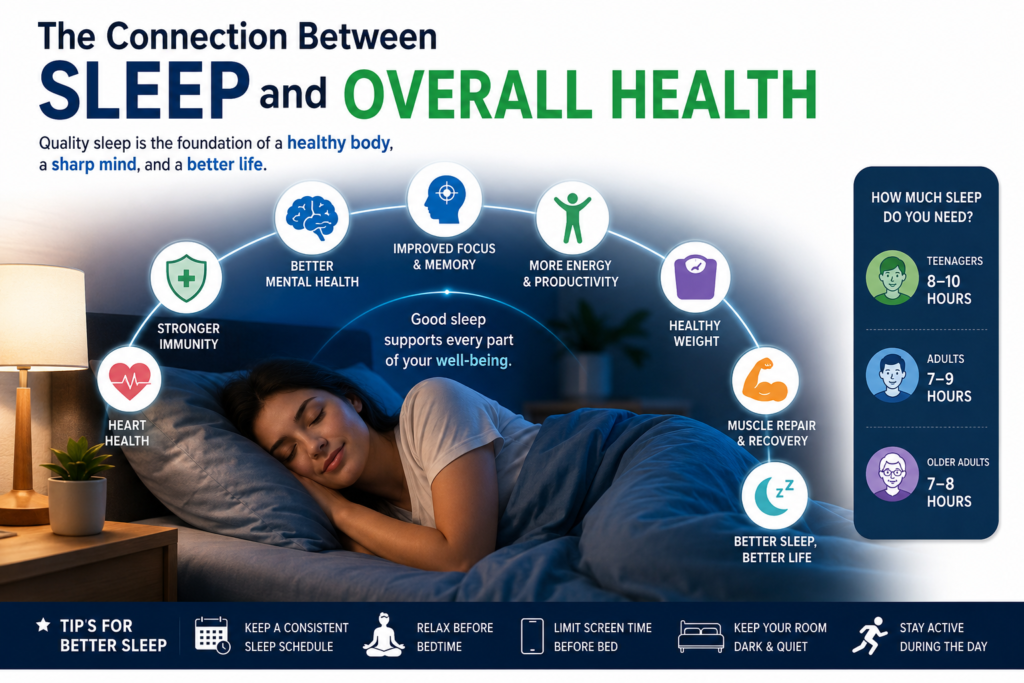
The Connection Between Sleep and Overall Health
Introduction
Sleep is one of the most important yet often overlooked aspects of a healthy lifestyle. In today’s fast-paced world, many people sacrifice sleep to meet work deadlines, attend social events, watch television, or spend time on their smartphones. While this may seem harmless, consistently getting inadequate sleep can have serious consequences for both physical and mental health.
The connection between sleep and overall health is stronger than most people realize. Sleep is not merely a time when the body rests. It is an active process during which the body repairs tissues, regulates hormones, strengthens the immune system, consolidates memories, and restores energy. Every organ system in the body depends on adequate sleep to function properly.
Research continues to show that people who regularly get sufficient, high-quality sleep tend to enjoy better health, greater productivity, stronger immunity, and improved emotional well-being. On the other hand, poor sleep has been linked to a variety of health problems, including obesity, heart disease, diabetes, depression, and weakened immune function.
Understanding the role sleep plays in maintaining overall health can help you make informed lifestyle choices and prioritize one of the most powerful tools for wellness. The Connection Between Sleep and Overall Health
Why Sleep Matters
Many people think sleep is simply a period of inactivity. In reality, the body performs numerous essential functions during sleep.
While sleeping, your body:
- Repairs damaged cells
- Builds and restores muscles
- Produces important hormones
- Strengthens immune defenses
- Processes memories and learning
- Regulates metabolism
- Supports brain function
- Maintains cardiovascular health
Without enough sleep, these processes become less effective, which can negatively affect nearly every aspect of health.
Sleep serves as the body’s natural recovery system. Just as proper nutrition fuels the body and exercise strengthens it, sleep allows it to recover and function optimally.
Understanding the Sleep Cycle
To appreciate the connection between sleep and overall health, it helps to understand how sleep works.
Sleep consists of several stages that repeat throughout the night.
Stage 1: Light Sleep
This is the transition between wakefulness and sleep. During this stage:
- Heart rate slows
- Muscles relax
- Brain activity decreases
This stage typically lasts only a few minutes.
Stage 2: Deeper Sleep
Body temperature drops, and brain waves continue to slow.
This stage accounts for a significant portion of total sleep time and helps prepare the body for restorative sleep.
Stage 3: Deep Sleep
Deep sleep is essential for:
- Physical recovery
- Tissue repair
- Immune system support
- Muscle growth
People often feel refreshed when they get enough deep sleep.
REM Sleep
Rapid Eye Movement (REM) sleep is associated with dreaming.
During REM sleep:
- Brain activity increases
- Memory processing occurs
- Learning is reinforced
- Emotional regulation improves
A healthy sleep cycle includes multiple rounds of all these stages each night.
The Connection Between Sleep and Physical Health
Sleep Supports Heart Health
The heart works continuously throughout life, and sleep plays an important role in protecting cardiovascular health.
During sleep:
- Blood pressure decreases
- Heart rate slows
- Blood vessels relax
These changes reduce stress on the cardiovascular system.
People who consistently sleep less than recommended may face increased risks of:
- High blood pressure
- Heart disease
- Stroke
- Heart attacks
Studies have shown that chronic sleep deprivation can contribute to inflammation and elevated stress hormones, both of which can damage the cardiovascular system over time.
Prioritizing sleep is one of the simplest ways to support long-term heart health.
Sleep Strengthens the Immune System
The immune system relies heavily on quality sleep.
During sleep, the body produces proteins called cytokines, which help fight infection and inflammation.
When sleep is inadequate:
- Immune responses weaken
- Recovery from illness slows
- Susceptibility to infections increases
People who regularly sleep fewer than six hours per night are often more likely to catch common illnesses such as colds and flu.
Adequate sleep allows the immune system to function at its best, helping the body defend itself against harmful bacteria and viruses.
Sleep Helps Maintain Healthy Weight
Sleep plays a major role in regulating appetite and metabolism.
Two important hormones affected by sleep are:
Ghrelin
Ghrelin stimulates hunger.
Sleep deprivation increases ghrelin levels, making people feel hungrier.
Leptin
Leptin signals fullness and satisfaction.
Lack of sleep decreases leptin levels, making it harder to feel satisfied after eating.
As a result, people who do not get enough sleep often:
- Consume more calories
- Crave sugary foods
- Choose unhealthy snacks
- Experience weight gain
Good sleep habits can support healthier eating patterns and effective weight management.
Sleep Supports Muscle Recovery
Whether you’re an athlete or simply active throughout the day, sleep is essential for muscle repair and recovery.
During deep sleep:
- Growth hormone is released
- Muscle tissue repairs itself
- Physical recovery occurs
Without adequate sleep, recovery becomes slower and physical performance may decline.
This is why professional athletes often prioritize sleep as part of their training and recovery programs.
The Connection Between Sleep and Mental Health
Sleep Improves Mood
One of the most noticeable effects of poor sleep is its impact on mood.
People who sleep well often experience:
- Greater emotional stability
- Increased positivity
- Better patience
- Improved resilience
Sleep deprivation can lead to:
- Irritability
- Frustration
- Mood swings
- Increased stress
Even a single night of poor sleep can affect emotional regulation and make everyday challenges feel more overwhelming.
Sleep Reduces Stress
Sleep helps regulate cortisol, the body’s primary stress hormone.
When sleep quality is poor:
- Cortisol levels remain elevated
- Stress becomes harder to manage
- Anxiety symptoms may increase
Quality sleep allows the nervous system to relax and recover from daily pressures.
People who maintain healthy sleep habits often report feeling calmer and more capable of handling stressful situations.
Sleep and Anxiety
Research consistently shows a strong relationship between sleep and anxiety.
Poor sleep can:
- Increase anxious thoughts
- Heighten emotional sensitivity
- Reduce coping abilities
At the same time, anxiety can make it harder to fall asleep, creating a cycle that becomes difficult to break.
Improving sleep hygiene often helps reduce anxiety symptoms and improve overall emotional health.
Sleep and Depression
Sleep disturbances are commonly associated with depression.
People experiencing depression often struggle with:
- Insomnia
- Excessive sleeping
- Frequent nighttime awakenings
Likewise, chronic sleep deprivation may increase the risk of developing depressive symptoms.
Maintaining healthy sleep habits can be an important component of mental wellness and emotional balance.
Sleep and Brain Function
Better Memory and Learning
Sleep plays a crucial role in memory consolidation.
During sleep, the brain organizes information gathered throughout the day and transfers important memories into long-term storage.
This process helps improve:
- Learning
- Knowledge retention
- Academic performance
- Professional productivity
Students who get sufficient sleep often perform better than those who stay up late studying.
Improved Concentration
Sleep is essential for maintaining attention and focus.
Lack of sleep can cause:
- Difficulty concentrating
- Poor decision-making
- Reduced alertness
- Increased mistakes
Many workplace accidents and driving incidents are linked to fatigue caused by insufficient sleep.
Adequate rest improves mental sharpness and daily performance.
Enhanced Creativity
Sleep helps the brain form connections between ideas.
Many people find that solutions to difficult problems become clearer after a good night’s sleep.
Creativity often flourishes when the brain is properly rested and functioning efficiently.
Sleep and Hormonal Balance
The endocrine system relies on healthy sleep patterns.
Several important hormones are regulated during sleep.
Growth Hormone
Supports:
- Tissue repair
- Muscle growth
- Cell regeneration
Cortisol
Helps regulate stress responses.
Insulin
Controls blood sugar levels.
Poor sleep may increase insulin resistance and raise the risk of type 2 diabetes.
Melatonin
Regulates the body’s sleep-wake cycle.
Reproductive Hormones
Sleep also influences hormones involved in fertility and reproductive health.
Balanced hormone production contributes to better overall health and well-being.
Sleep and Energy Levels
Most people immediately notice the impact of sleep on energy.
When sleep quality is good:
- Energy levels increase
- Motivation improves
- Productivity rises
- Physical stamina improves
Conversely, sleep deprivation often causes:
- Fatigue
- Sluggishness
- Lack of motivation
- Reduced performance
Sleep acts as the body’s natural energy restoration system.
The Long-Term Health Risks of Poor Sleep
Chronic sleep deprivation can contribute to serious health conditions.
These may include:
Obesity
Hormonal imbalances caused by poor sleep can increase appetite and weight gain.
Type 2 Diabetes
Insufficient sleep can interfere with glucose regulation and insulin sensitivity.
Cardiovascular Disease
Poor sleep has been linked to hypertension, stroke, and heart disease.
Weakened Immunity
The body becomes less effective at fighting infections.
Mental Health Disorders
Anxiety, depression, and chronic stress often worsen when sleep quality declines.
Cognitive Decline
Long-term sleep deprivation may negatively affect memory and brain health.
These risks highlight the importance of making sleep a priority.
Common Causes of Poor Sleep
Many factors can interfere with healthy sleep.
Stress and Worry
Mental stress can make it difficult to relax and fall asleep.
Excessive Screen Time
Blue light from phones, tablets, and computers can suppress melatonin production.
Caffeine Consumption
Drinking coffee or energy drinks late in the day can disrupt sleep.
Poor Sleep Environment
Noise, light, and uncomfortable temperatures can interfere with sleep quality.
Irregular Sleep Schedule
Frequently changing bedtime and wake-up times can confuse the body’s internal clock.
Lack of Physical Activity
Sedentary lifestyles may contribute to poor sleep quality.
Practical Tips for Better Sleep
Stick to a Consistent Schedule
Go to bed and wake up at the same time every day.
Consistency helps regulate your body’s natural sleep rhythm.
Create a Relaxing Bedtime Routine
Try activities such as:
- Reading
- Meditation
- Gentle stretching
- Listening to calming music
These activities signal to the body that it’s time to sleep.
Limit Screen Time Before Bed
Avoid electronic devices at least one hour before bedtime.
Reducing exposure to blue light supports melatonin production.
Optimize Your Bedroom
Create an environment that promotes restful sleep.
Your bedroom should be:
- Cool
- Dark
- Quiet
- Comfortable
Exercise Regularly
Physical activity can improve sleep quality and overall health.
However, intense exercise close to bedtime may make it harder to fall asleep.
Avoid Heavy Meals Late at Night
Eating large meals before bed can cause discomfort and disrupt sleep.
How Sleep Improves Quality of Life
People who consistently get quality sleep often experience:
- Better physical health
- Stronger mental well-being
- Improved productivity
- Better relationships
- Enhanced emotional stability
- Greater motivation
- Increased life satisfaction
Sleep impacts every area of life, making it one of the most valuable investments in long-term wellness.
Building a Healthy Sleep Routine
Developing healthy sleep habits does not require major lifestyle changes.
Start by:
- Setting a regular bedtime.
- Limiting caffeine intake.
- Exercising consistently.
- Creating a calming nighttime routine.
- Keeping electronic devices out of the bedroom.
- Prioritizing sleep as an essential part of health.
Small improvements can lead to significant benefits over time.
Conclusion
The connection between sleep and overall health is undeniable. Sleep affects nearly every system in the body, including the heart, brain, immune system, metabolism, and emotional well-being. Quality sleep supports physical recovery, strengthens immunity, improves mood, enhances memory, and boosts daily energy levels.
Unfortunately, many people underestimate the importance of sleep and sacrifice it in favor of other activities. However, the long-term consequences of poor sleep can be serious, ranging from weight gain and weakened immunity to heart disease and mental health challenges.
By making sleep a priority and practicing healthy sleep habits, you can significantly improve your overall health, increase productivity, enhance emotional well-being, and enjoy a higher quality of life. Remember, good health starts not only with what you eat and how much you exercise but also with how well you sleep. A good night’s rest is one of the most powerful tools for living a healthier, happier, and more balanced life.