
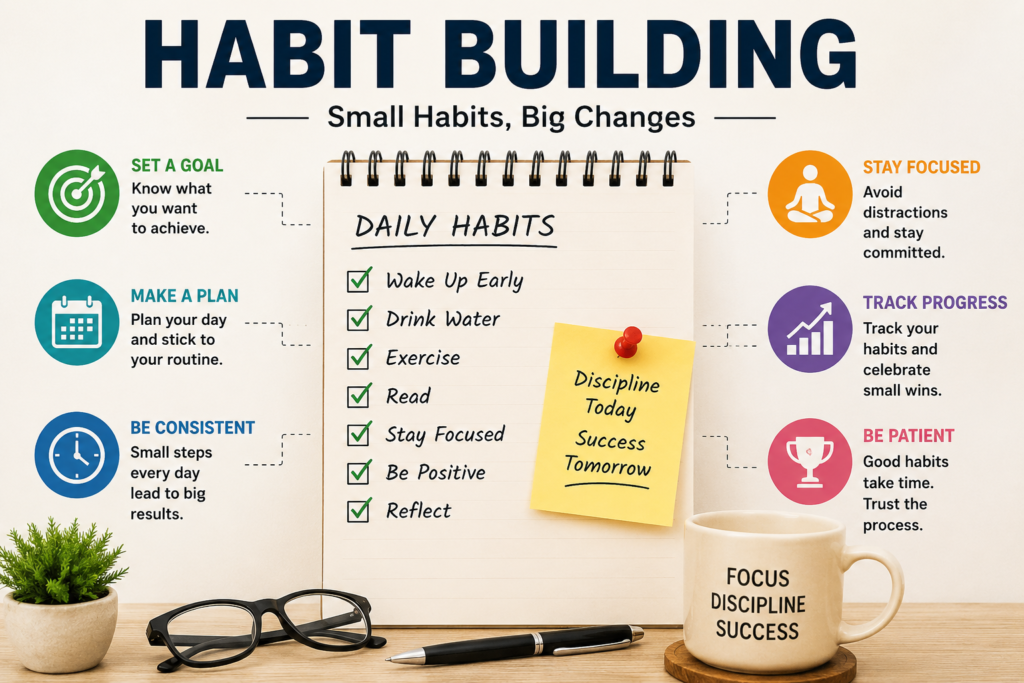
Habit Building:
Introduction
Habits shape almost every part of our daily lives. From the moment we wake up until we go to sleep, our routines, behaviors, and decisions are influenced by the habits we repeat consistently. Good habits can improve health, productivity, confidence, relationships, and success, while negative habits can hold us back from reaching our full potential.
In today’s fast-paced world, many people struggle with procrastination, unhealthy routines, excessive screen time, lack of motivation, and poor time management. The good news is that real change does not require perfection or massive overnight transformation. Small daily actions, repeated consistently, can completely change your lifestyle over time.
Successful people are not successful because they rely on motivation every day. They succeed because they build positive habits that support their goals and create long-term growth. Whether you want to become healthier, more productive, financially stable, mentally stronger, or more confident, habit building is the key to lasting improvement.
This complete guide explores the science of habits, the importance of positive routines, practical habit-building strategies, and simple ways to create a healthier, happier, and more productive life.
What Are Habits? Habit Building
Habits are repeated actions or behaviors that become automatic over time. When people perform the same activity consistently, the brain creates patterns that make the behavior easier to repeat in the future.
For example, brushing your teeth, checking your phone after waking up, drinking coffee in the morning, or exercising after work are all habits formed through repetition.
Habits can be divided into two main categories:
Positive Habits
Positive habits improve physical health, mental wellness, productivity, and personal growth. Examples include:
- Exercising regularly
- Reading books daily
- Drinking enough water
- Practicing gratitude
- Sleeping on time
- Saving money
- Studying consistently
Negative Habits
Negative habits can harm your health, mindset, and productivity. Examples include:
- Procrastination
- Excessive social media use
- Poor sleep routines
- Unhealthy eating
- Negative self-talk
- Avoiding responsibilities
The goal of habit building is to replace unhealthy routines with positive habits that support a balanced and successful lifestyle.
Why Habits Matter: Habit Building
Small daily habits create long-term results. A single workout may not transform your body, and reading one page may not instantly make you knowledgeable. However, repeating these actions consistently over weeks, months, and years creates powerful life-changing results.
For example:
- Reading 10 pages daily can help you finish dozens of books every year.
- Exercising regularly improves physical and mental health over time.
- Saving small amounts of money consistently can create financial stability.
- Practicing skills daily leads to improvement and confidence.
Habits matter because they shape your future. Your daily routines determine the person you eventually become.
The Science Behind Habit Formation: Habit Building
Most habits follow a process called the habit loop, which includes three important stages:
1. Cue
The cue is the trigger that starts the habit.
Examples include:
- Waking up in the morning
- Feeling stressed
- Seeing your phone
- Receiving notifications
2. Routine
The routine is the actual behavior or action.
Examples include:
- Going for a walk
- Checking social media
- Drinking water
- Studying or reading
3. Reward
The reward is the benefit your brain receives after completing the habit.
Examples include:
- Feeling relaxed
- Entertainment
- Increased energy
- Satisfaction and achievement
When this loop repeats regularly, the brain begins to automate the behavior, making the habit stronger over time.
How to Build Positive Habits: Habit Building
Start Small
One of the biggest mistakes people make is trying to change everything at once. Large goals often feel overwhelming and difficult to maintain.
Instead, focus on small and manageable habits such as:
- Reading 5 pages daily
- Exercising for 10 minutes
- Drinking one extra glass of water
- Writing for 5 minutes each morning
Small habits are easier to maintain and help create consistency.
Stay Consistent
Consistency is more important than intensity. Doing something small every day creates better long-term results than doing something big occasionally.
Even tiny actions repeated daily can create major improvements over time.
Use Habit Stacking
Habit stacking means attaching a new habit to an existing routine.
Examples:
- After brushing your teeth, meditate for 2 minutes.
- After breakfast, read a few pages of a book.
- After work, go for a short walk.
This strategy helps your brain remember the new behavior more easily.
Create a Positive Environment
Your surroundings influence your habits more than you realize.
To support positive routines:
- Keep healthy foods visible
- Place books near your bed
- Prepare workout clothes in advance
- Remove distractions from your workspace
- Turn off unnecessary notifications
A supportive environment makes good habits easier to follow.
Healthy Habits for a Better Life: Habit Building
Exercise Regularly
Exercise improves:
- Physical health
- Energy levels
- Mental wellness
- Confidence
- Focus and productivity
Even simple activities like walking, stretching, cycling, or home workouts can make a huge difference.
Eat Nutritious Foods
A balanced diet supports both body and mind.
Healthy eating habits include:
- Eating fruits and vegetables
- Drinking enough water
- Reducing processed foods
- Limiting sugary drinks
Good nutrition improves concentration, mood, and overall wellness.
Improve Sleep Quality
Sleep is essential for recovery and mental clarity.
To improve sleep:
- Maintain a regular sleep schedule
- Avoid screens before bed
- Limit caffeine late in the day
- Create a relaxing nighttime routine
Quality sleep improves focus, mood, immunity, and productivity.
Productivity Habits for Success: Habit Building
Plan Your Day
Daily planning helps reduce stress and improve organization.
Create a simple to-do list that includes:
- Important tasks
- Priorities
- Deadlines
Reduce Distractions
Social media and constant notifications can reduce focus and productivity.
Helpful tips:
- Turn off unnecessary notifications
- Keep your workspace organized
- Use focus timers
- Work in quiet environments
Deep focus leads to better performance and faster results.
Follow the Two-Minute Rule
If a task takes less than two minutes, complete it immediately.
Examples:
- Replying to a message
- Cleaning your desk
- Writing reminders
- Organizing small tasks
This habit prevents tasks from building up and becoming overwhelming.
The Power of Consistency: Habit Building
Consistency is the true secret behind long-term success. Motivation may disappear, but consistent action creates real progress.
Think of habits like planting seeds. You may not see results immediately, but with patience and repetition, growth becomes visible over time.
Missing one day does not mean failure. The key is returning to the habit without giving up.
Remember:
- Small progress still matters
- Perfection is not required
- Long-term growth takes time
Breaking Bad Habits: Habit Building
Breaking unhealthy habits requires awareness and intentional effort.
Identify Triggers
Understand what causes the bad habit.
Examples:
- Stress causing overeating
- Boredom leading to excessive scrolling
- Anxiety creating procrastination
Replace the Habit
Instead of simply removing a habit, replace it with a healthier alternative.
Examples:
- Replace junk food with healthy snacks
- Replace social media scrolling with reading
- Replace negative thinking with gratitude journaling
Make Bad Habits Difficult
Reduce temptation by changing your environment.
Examples:
- Delete distracting apps
- Keep unhealthy food out of the house
- Turn off notifications
- Create screen-time limits
The Importance of Mindset in Habit Building: Habit Building
Mindset plays a major role in long-term success. People who believe they can improve are more likely to stay committed to positive change.
A growth mindset helps people:
- Stay motivated
- Learn from mistakes
- Build discipline
- Continue improving
Instead of focusing on perfection, focus on progress.
Positive self-talk also matters. Replace negative thoughts like:
- “I always fail.”
With healthier thoughts such as:
- “I’m improving every day.”
- “Small progress still counts.”
Your mindset influences your actions, habits, and future success.
Digital Habits in Modern Life: Habit Building
Technology can either improve your life or become a major distraction.
Healthy digital habits include:
- Limiting unnecessary screen time
- Taking breaks from devices
- Avoiding screens before sleep
- Following positive and educational content
Use technology as a tool for growth rather than endless distraction.
Habits That Build Confidence: Habit Building
Confidence grows through action and consistency.
Ways to build confidence:
- Keep promises to yourself
- Learn new skills
- Practice self-discipline
- Celebrate small wins
- Improve self-talk
Every time you complete a positive habit, you strengthen self-trust and personal confidence.
Evening Habits for Better Living: Habit Building
A healthy evening routine helps prepare your mind and body for the next day.
Healthy evening habits include:
- Reflecting on your day
- Preparing for tomorrow
- Reading books
- Avoiding overstimulation before sleep
- Practicing relaxation techniques
Strong evening routines improve sleep quality and reduce stress.
Common Habit-Building Mistakes: Habit Building
Setting Unrealistic Goals
Trying to change everything overnight often leads to burnout.
Relying Only on Motivation
Motivation is temporary. Systems and routines create lasting success.
Being Too Hard on Yourself
Perfection is impossible. Progress matters more than perfection.
Ignoring Your Environment
Your surroundings strongly influence your behavior and habits.
Transform Your Life One Habit at a Time: Habit Building
Real transformation happens slowly through small daily actions. You do not need to become perfect overnight.
Start with:
- One healthier meal
- One workout
- One productive morning
- One positive thought
- One page of reading
Over time, these small habits create powerful changes in health, mindset, confidence, productivity, and overall happiness.
Remember:
- Small habits create big results
- Consistency beats perfection
- Growth takes time
- Every day is a new opportunity to improve
Conclusion
Habit building is one of the most powerful tools for personal growth and self-improvement. Your daily habits shape your health, mindset, productivity, relationships, and future success.
Building better habits does not require perfection, talent, or extreme discipline. It requires small consistent actions repeated over time. By focusing on positive routines, healthy choices, and long-term growth, anyone can create lasting positive change.
Whether your goal is improving health, becoming more productive, building confidence, or creating a balanced lifestyle, your habits will determine your future.
Start small. Stay patient. Stay consistent.
The habits you choose today will shape the life you live tomorrow.