
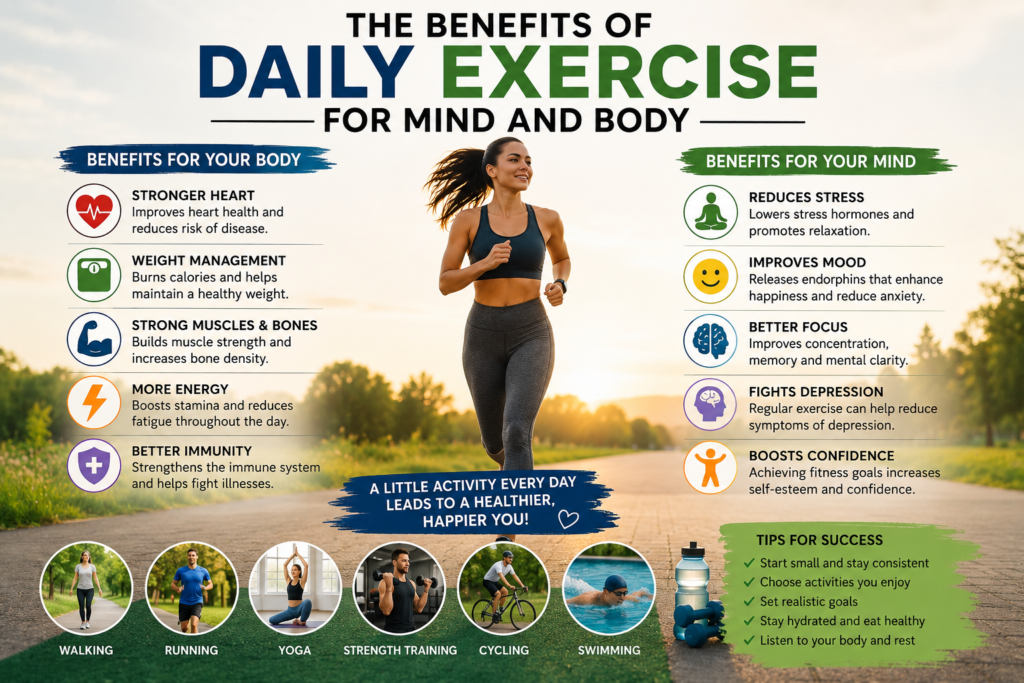
The Benefits of Daily Exercise for Mind and Body: A Complete Guide to Better Health and Wellness
Introduction
In today’s fast-paced world, many people spend long hours sitting at desks, using smartphones, or watching screens. As a result, physical activity often takes a back seat to work, studies, and daily responsibilities. However, making time for exercise every day can be one of the most powerful investments you make in your health.
Daily exercise does much more than help you stay in shape. It strengthens your body, improves your mental well-being, boosts your energy levels, and helps prevent numerous health conditions. Whether it’s a brisk walk, cycling, jogging, yoga, strength training, or simply staying active throughout the day, regular movement can significantly improve your quality of life.
The good news is that you don’t need to spend hours in a gym to experience the benefits. Even 30 minutes of moderate exercise each day can create positive changes in both your physical and mental health.
In this comprehensive guide, we’ll explore the many benefits of daily exercise for mind and body, practical ways to stay active, and how you can build a sustainable fitness routine for long-term success.
Why Daily Exercise Matters
The human body was designed to move. Regular physical activity helps every major system in the body function more efficiently.
Exercise supports:
- Heart health
- Brain function
- Muscle strength
- Bone density
- Mental well-being
- Weight management
- Better sleep
- Improved immunity
Unfortunately, modern lifestyles often involve prolonged sitting, which can negatively affect health over time. Daily exercise helps counteract these effects and keeps the body functioning optimally.
Physical Benefits of Daily Exercise
1. Improves Heart Health
One of the greatest benefits of regular exercise is a healthier heart.
Physical activity helps:
- Strengthen heart muscles
- Improve blood circulation
- Lower blood pressure
- Reduce bad cholesterol levels
- Increase good cholesterol
Regular exercise lowers the risk of heart disease, stroke, and other cardiovascular conditions.
Activities such as walking, jogging, swimming, and cycling are especially beneficial for heart health.
2. Helps Maintain a Healthy Weight
Exercise plays an important role in weight management.
When you move your body:
- Calories are burned
- Metabolism increases
- Fat loss becomes easier
- Muscle mass improves
Combining daily exercise with healthy eating habits creates the most effective approach for maintaining a healthy weight.
3. Builds Stronger Muscles
Muscles naturally weaken over time if they are not used regularly.
Daily exercise helps:
- Increase muscle strength
- Improve muscle endurance
- Enhance physical performance
- Support everyday activities
Strength training exercises such as bodyweight workouts, resistance bands, and weightlifting are excellent for muscle development.
4. Strengthens Bones
Strong bones are essential for long-term mobility and independence.
Weight-bearing exercises help increase bone density and reduce the risk of osteoporosis.
Examples include:
- Walking
- Running
- Hiking
- Dancing
- Strength training
Regular movement encourages healthy bone growth and maintenance.
5. Boosts Energy Levels
Many people believe exercise makes them tired, but the opposite is often true.
Daily physical activity improves:
- Oxygen circulation
- Blood flow
- Cardiovascular efficiency
As a result, your body becomes more efficient at producing and using energy.
People who exercise regularly often report feeling more energetic throughout the day.
6. Improves Flexibility and Mobility
Exercise helps maintain healthy joints and muscles.
Activities like:
- Stretching
- Yoga
- Pilates
- Mobility exercises
Improve flexibility and reduce stiffness.
Better mobility makes daily activities easier and lowers the risk of injuries.
7. Supports a Strong Immune System
Regular moderate exercise can strengthen immune function.
Benefits include:
- Improved circulation of immune cells
- Reduced inflammation
- Better stress management
A stronger immune system helps the body fight illnesses more effectively.
8. Enhances Physical Endurance
Consistency in exercise improves stamina over time.
You may notice:
- Less fatigue
- Better physical performance
- Increased endurance during activities
Daily movement helps your body adapt and become stronger.
Mental Benefits of Daily Exercise
9. Reduces Stress
Stress is a common part of modern life.
Exercise acts as a natural stress reliever by lowering stress hormones and promoting relaxation.
After a workout, many people experience a calmer and more positive mindset.
Even a short walk can help reduce daily stress levels.
10. Improves Mood
Exercise stimulates the release of endorphins, often called “feel-good hormones.”
These chemicals help:
- Improve mood
- Increase happiness
- Reduce feelings of sadness
Regular exercise can create lasting improvements in emotional well-being.
11. Helps Reduce Anxiety
Physical activity is a powerful tool for managing anxiety.
Exercise helps calm the nervous system by:
- Reducing muscle tension
- Improving breathing patterns
- Promoting relaxation
Many people experience immediate mental relief after exercising.
12. Supports Mental Clarity
Exercise improves blood flow to the brain.
This can enhance:
- Focus
- Concentration
- Memory
- Cognitive performance
Students and professionals often find they think more clearly after physical activity.
13. Increases Self-Confidence
Achieving fitness goals builds confidence.
Whether you:
- Walk farther
- Lift heavier weights
- Improve flexibility
- Lose weight
Each accomplishment contributes to greater self-esteem.
Confidence gained through exercise often extends to other areas of life.
14. Helps Fight Depression
Research has shown that regular physical activity can positively impact mental health.
Exercise encourages the release of neurotransmitters that support emotional balance.
While exercise is not a replacement for professional treatment when needed, it can be a valuable part of an overall wellness plan.
15. Encourages Positive Thinking
Physical activity often improves overall outlook and resilience.
Regular exercise can help:
- Increase motivation
- Improve optimism
- Reduce negative thought patterns
A healthy body often supports a healthier mindset.
Daily Exercise and Better Sleep
16. Improves Sleep Quality
Many people struggle with poor sleep due to stress, screen time, and busy schedules.
Exercise can help by:
- Regulating sleep patterns
- Helping you fall asleep faster
- Improving sleep quality
People who exercise regularly often wake up feeling more refreshed.
17. Helps Regulate Body Clock
Consistent exercise supports healthy circadian rhythms.
A regular workout routine helps the body establish predictable sleep and wake cycles.
This contributes to better overall health and energy levels.
Benefits for Long-Term Health
18. Lowers Risk of Chronic Diseases
Daily exercise helps reduce the risk of:
- Heart disease
- Type 2 diabetes
- High blood pressure
- Obesity
- Certain cancers
Prevention is one of the most valuable benefits of maintaining an active lifestyle.
19. Supports Healthy Aging
As we age, physical activity becomes increasingly important.
Exercise helps maintain:
- Muscle mass
- Bone density
- Balance
- Coordination
These factors contribute to independence and quality of life later in life.
20. Increases Life Expectancy
Studies consistently show that physically active individuals tend to live longer and healthier lives.
Regular movement reduces many of the risks associated with premature mortality.
Best Types of Daily Exercise
Walking
Walking is simple, accessible, and highly effective.
Benefits include:
- Improved heart health
- Weight management
- Stress reduction
A 30-minute walk daily can make a significant difference.
Running or Jogging
These activities improve cardiovascular fitness and endurance.
They also burn calories efficiently and support mental health.
Strength Training
Strength exercises help:
- Build muscle
- Increase metabolism
- Strengthen bones
Aim for at least two strength-training sessions per week.
Cycling
Cycling provides excellent cardiovascular benefits while being gentle on the joints.
Swimming
Swimming is a full-body workout that improves endurance, flexibility, and muscle strength.
Yoga
Yoga combines physical movement with mindfulness.
Benefits include:
- Improved flexibility
- Reduced stress
- Better posture
- Mental relaxation
Home Workouts
You don’t need a gym membership to stay active.
Simple exercises include:
- Push-ups
- Squats
- Lunges
- Planks
- Jumping jacks
Home workouts can be highly effective when done consistently.
How to Build a Daily Exercise Habit
Start Small
Begin with manageable goals.
Examples:
- 10-minute walk
- 15-minute workout
- Simple stretching session
Small wins build momentum.
Create a Schedule
Treat exercise like an important appointment.
Choose a consistent time each day.
Examples:
- Morning workouts
- Lunch break walks
- Evening gym sessions
Consistency helps build lasting habits.
Choose Activities You Enjoy
You’re more likely to stick with exercise if it’s enjoyable.
Options include:
- Dancing
- Hiking
- Sports
- Cycling
- Swimming
Find activities that fit your personality and lifestyle.
Track Progress
Monitoring progress can boost motivation.
Track:
- Workout duration
- Distance walked
- Strength gains
- Energy levels
Celebrating improvements encourages long-term commitment.
Common Exercise Mistakes to Avoid
Doing Too Much Too Soon
Gradually increase intensity to avoid injury.
Skipping Warm-Ups
Prepare muscles and joints before exercising.
Ignoring Recovery
Rest is essential for muscle repair and growth.
Inconsistent Exercise
Consistency matters more than perfection.
Comparing Yourself to Others
Focus on your personal progress and goals.
Sample Daily Exercise Routine
Morning
- 5 minutes stretching
- 20-minute brisk walk
Afternoon
- Light movement breaks
- Short walk after lunch
Evening
- 20 minutes strength training
- Gentle stretching
This routine can be adjusted to fit your schedule and fitness level.
The Connection Between Physical and Mental Health
Physical and mental health are closely connected.
When you exercise:
- Your body becomes stronger.
- Your mind becomes clearer.
- Stress becomes more manageable.
- Energy levels improve.
- Confidence grows.
This creates a positive cycle that benefits nearly every aspect of life.
Conclusion
The benefits of daily exercise for mind and body extend far beyond physical appearance. Regular physical activity strengthens the heart, builds muscles, improves mental health, increases energy, enhances sleep quality, and reduces the risk of chronic diseases.
The best part is that you don’t need complicated fitness programs or expensive equipment to experience these benefits. Simple activities like walking, stretching, cycling, or home workouts can create meaningful improvements in your overall health.
Start where you are, stay consistent, and focus on progress rather than perfection. Over time, daily exercise can transform both your body and your mind, helping you live a healthier, happier, and more fulfilling life.
Frequently Asked Questions (FAQ)
1. How much exercise should I do daily?
Most health experts recommend at least 30 minutes of moderate physical activity daily.
2. What are the mental benefits of exercise?
Exercise helps reduce stress, improve mood, increase focus, boost confidence, and support emotional well-being.
3. Can exercise improve sleep?
Yes, regular exercise can help you fall asleep faster and improve overall sleep quality.
4. What is the best exercise for beginners?
Walking is one of the easiest and most effective exercises for beginners.
5. Does exercise help with weight loss?
Exercise supports weight loss by burning calories, increasing metabolism, and preserving muscle mass when combined with healthy eating.