
Introduction
Many people believe that living a healthy lifestyle requires dramatic changes, strict diets, expensive gym memberships, or complicated wellness routines. The truth is that lasting health improvements often begin with small, consistent actions. Simple lifestyle changes practiced daily can have a powerful impact on your physical health, mental well-being, energy levels, and overall quality of life.
In today’s fast-paced world, unhealthy habits can easily become part of everyday life. Long hours of sitting, poor eating choices, lack of exercise, inadequate sleep, and excessive stress can gradually affect both physical and mental health. Fortunately, it’s never too late to make positive changes.
The best part about healthy living is that you don’t have to change everything at once. By making small adjustments and building healthy habits over time, you can create a lifestyle that supports long-term wellness and happiness.
This guide explores practical and effective healthy lifestyle changes you can start today to improve your overall well-being and enjoy a healthier future.
Why Healthy Lifestyle Changes Matter
Your daily habits influence nearly every aspect of your life. The choices you make regarding nutrition, exercise, sleep, stress management, and personal care can determine how you feel physically and emotionally.
Healthy lifestyle habits can help:
- Increase energy levels
- Improve mood
- Strengthen immunity
- Support heart health
- Maintain a healthy weight
- Reduce stress
- Improve sleep quality
- Increase productivity
- Enhance mental clarity
- Lower the risk of chronic diseases
Even small improvements can lead to significant benefits over time.
Start Your Day with Water
One of the simplest healthy lifestyle changes you can make is drinking water first thing in the morning.
After several hours of sleep, your body becomes slightly dehydrated. Drinking water upon waking helps:
- Rehydrate the body
- Boost metabolism
- Improve digestion
- Increase alertness
- Support brain function
Many health experts recommend drinking one or two glasses of water before consuming coffee or breakfast.
This small habit takes only a few minutes but can set a positive tone for the entire day.
Eat More Whole Foods
Nutrition plays a major role in overall health.
Whole foods are foods that are minimally processed and rich in nutrients.
Examples include:
- Fruits
- Vegetables
- Whole grains
- Lean proteins
- Nuts
- Seeds
- Legumes
Whole foods provide:
- Vitamins
- Minerals
- Fiber
- Antioxidants
- Healthy fats
Instead of focusing on restrictive diets, aim to gradually replace highly processed foods with healthier alternatives.
For example:
- Choose fruit instead of candy
- Select whole-grain bread over white bread
- Snack on nuts instead of chips
These simple swaps can improve nutrition without feeling overwhelming.
Move Your Body Every Day
Regular physical activity is one of the most important factors in maintaining good health.
Exercise helps:
- Strengthen muscles
- Improve heart health
- Boost mood
- Increase energy
- Support weight management
- Reduce stress
The good news is that you don’t need intense workouts to experience benefits.
Simple activities include:
- Walking
- Cycling
- Swimming
- Dancing
- Stretching
- Gardening
Even 20 to 30 minutes of movement daily can significantly improve your health.
The key is consistency rather than perfection.
Prioritize Quality Sleep
Sleep is often overlooked when discussing healthy living.
Quality sleep supports:
- Physical recovery
- Brain function
- Hormonal balance
- Emotional well-being
- Immune health
Most adults need between seven and nine hours of sleep each night.
To improve sleep quality:
- Maintain a regular sleep schedule
- Limit screen time before bed
- Create a relaxing bedtime routine
- Keep your bedroom cool and comfortable
Better sleep often leads to improvements in nearly every area of life.
Reduce Added Sugar Intake
Many processed foods contain large amounts of added sugar.
Excessive sugar consumption has been linked to:
- Weight gain
- Type 2 diabetes
- Heart disease
- Energy crashes
- Dental problems
Rather than eliminating sugar completely, focus on reducing unnecessary sources.
Start by:
- Drinking less soda
- Choosing unsweetened beverages
- Reading food labels
- Limiting sugary snacks
Small reductions can make a big difference over time.
Practice Mindful Eating
Many people eat while distracted by television, smartphones, or work.
Mindful eating encourages you to:
- Eat slowly
- Pay attention to hunger cues
- Enjoy your food
- Recognize fullness
Benefits include:
- Better digestion
- Reduced overeating
- Increased satisfaction with meals
Mindful eating helps create a healthier relationship with food and supports long-term wellness.
Manage Stress Effectively
Stress is a normal part of life, but chronic stress can negatively affect both physical and mental health.
Long-term stress may contribute to:
- High blood pressure
- Anxiety
- Depression
- Sleep problems
- Digestive issues
Healthy stress-management techniques include:
- Meditation
- Deep breathing exercises
- Walking outdoors
- Journaling
- Yoga
- Spending time with loved ones
Finding healthy ways to manage stress can improve your overall quality of life.
Spend More Time Outdoors
Nature offers numerous benefits for health and well-being.
Spending time outdoors can:
- Improve mood
- Reduce stress
- Increase physical activity
- Support mental clarity
- Enhance vitamin D levels
Simple outdoor activities include:
- Walking in a park
- Hiking
- Gardening
- Exercising outside
Even a short daily walk in nature can have positive effects on your mental and physical health.
Limit Sedentary Time
Modern lifestyles often involve sitting for long periods.
Extended sitting has been associated with:
- Weight gain
- Poor posture
- Reduced circulation
- Increased health risks
Try to:
- Stand regularly
- Stretch every hour
- Take walking breaks
- Use stairs when possible
Small movement breaks throughout the day help support overall health.
Build Strong Social Connections
Healthy relationships are an important component of overall wellness.
Strong social connections can:
- Reduce stress
- Improve mental health
- Increase happiness
- Provide emotional support
- Promote longevity
Ways to strengthen relationships include:
- Calling family members
- Spending time with friends
- Joining community groups
- Participating in hobbies
Human connection contributes significantly to emotional well-being.
Practice Gratitude Daily
Gratitude is a simple yet powerful habit.
Research suggests that regularly practicing gratitude may:
- Improve mood
- Reduce stress
- Increase optimism
- Enhance emotional resilience
Consider keeping a gratitude journal and writing down three things you appreciate each day.
This habit helps shift focus toward positive aspects of life.
Reduce Screen Time
Technology offers many benefits, but excessive screen use can affect health.
Too much screen time may contribute to:
- Eye strain
- Poor sleep
- Reduced physical activity
- Increased stress
Healthy strategies include:
- Taking regular breaks
- Limiting social media use
- Creating screen-free periods
- Avoiding screens before bedtime
Finding balance can improve both mental and physical wellness.
Develop a Consistent Routine
Healthy routines make positive habits easier to maintain.
A structured daily routine can:
- Improve productivity
- Reduce decision fatigue
- Support better sleep
- Encourage healthier choices
Start with simple routines for:
- Morning habits
- Exercise
- Meals
- Bedtime
Consistency often leads to long-term success.
Learn to Say No
Overcommitting can increase stress and reduce personal well-being.
Setting healthy boundaries helps protect:
- Mental health
- Energy levels
- Personal time
Learning to say no allows you to focus on activities that align with your goals and values.
Healthy boundaries are an important part of self-care.
Focus on Progress, Not Perfection
Many people abandon healthy habits because they expect immediate results.
Lasting lifestyle change takes time.
Remember:
- Small improvements matter
- Consistency is more important than perfection
- Setbacks are normal
- Progress accumulates over time
A sustainable approach is often more effective than extreme short-term efforts.
Creating Your Personal Healthy Lifestyle Plan
Healthy living becomes easier when you have a clear plan.
Start by identifying one or two habits you would like to improve.
For example:
Week 1
- Drink more water
- Walk 20 minutes daily
Week 2
- Add vegetables to meals
- Reduce sugary drinks
Week 3
- Improve sleep schedule
- Practice gratitude
Week 4
- Begin stress-management exercises
- Limit screen time before bed
Gradual changes are easier to maintain and less overwhelming.
Common Challenges and How to Overcome Them
Lack of Time
Choose activities that fit your schedule.
Even 10 minutes of exercise or meal preparation can make a difference.
Low Motivation
Focus on your reasons for making changes.
Remember the long-term benefits rather than temporary discomfort.
Busy Lifestyle
Build healthy habits into your existing routine.
For example:
- Walk during lunch breaks
- Stretch while watching television
- Prepare healthy snacks in advance
Setbacks
Don’t view setbacks as failures.
Use them as opportunities to learn and continue moving forward.
The Long-Term Benefits of Healthy Lifestyle Changes
Consistently practicing healthy habits can lead to:
- Better physical fitness
- Stronger immunity
- Improved heart health
- Increased energy
- Better mental well-being
- Higher productivity
- Improved sleep quality
- Healthier body weight
- Greater confidence
- Enhanced quality of life
These benefits often extend far beyond physical health and positively impact relationships, careers, and personal happiness.
Conclusion
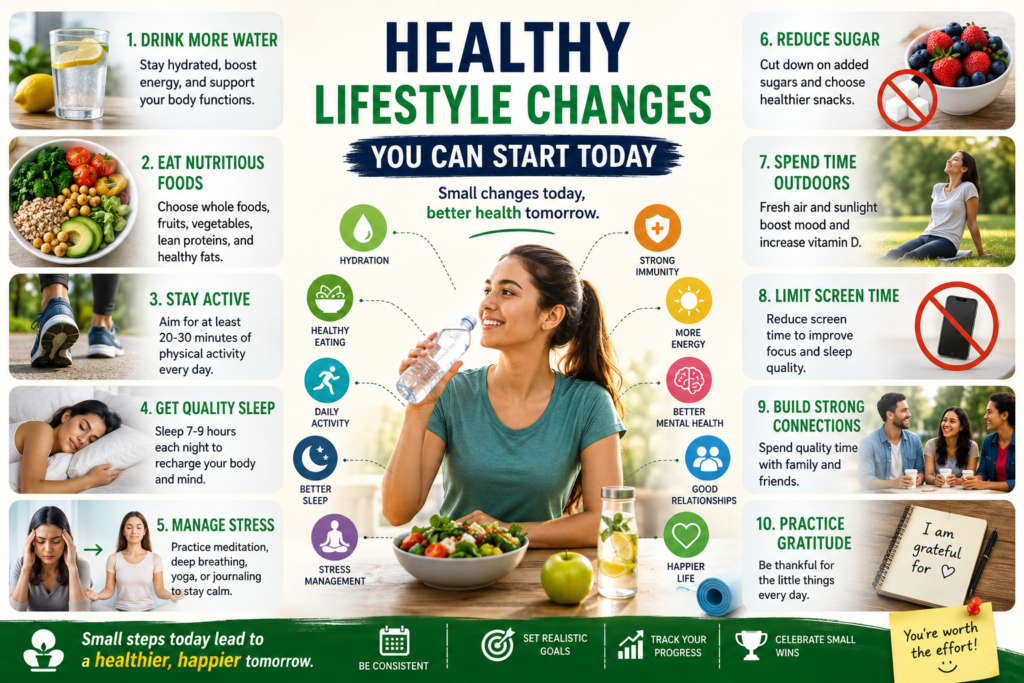
Healthy lifestyle changes do not require dramatic transformations or complicated plans. Some of the most effective improvements come from small, consistent actions that become part of your daily routine. Drinking more water, eating nutritious foods, exercising regularly, managing stress, improving sleep, and building meaningful relationships can significantly enhance your overall well-being.
The key to success is starting where you are and focusing on progress rather than perfection. Every positive choice you make today contributes to a healthier future. Whether you begin by taking a short walk, drinking an extra glass of water, or getting to bed a little earlier, those small steps can lead to lasting improvements in your health and happiness.
Remember, a healthy lifestyle is not about being perfect—it’s about making choices that support your well-being and help you live your best life, one day at a time.