
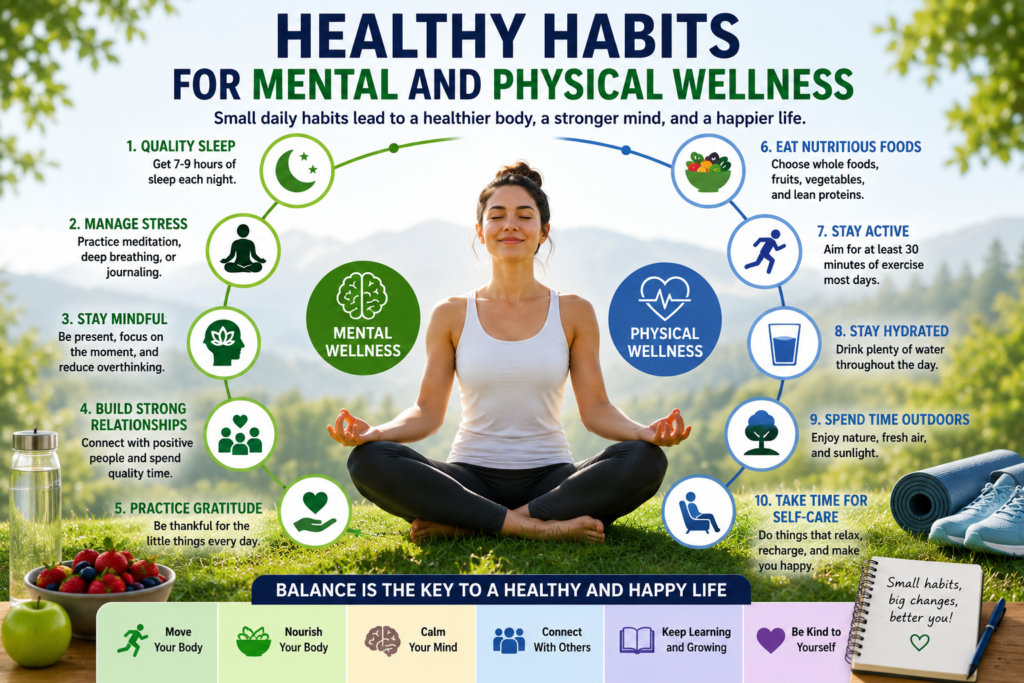
Healthy Habits for Mental and Physical Wellness
Introduction
Healthy Habits for Mental and Physical Wellness are essential for living a balanced, energetic, and fulfilling life. By adopting simple daily routines, you can improve both your physical health and mental well-being.
In today’s busy world, maintaining both mental and physical wellness has become more important than ever. Many people focus on physical health by eating nutritious foods and exercising regularly, while others prioritize mental well-being through stress management and self-care. However, true wellness comes from nurturing both the mind and body together.
Mental and physical health are deeply connected. When your body feels healthy, your mind often functions better. Likewise, good mental health can positively influence physical well-being. Neglecting one area can impact the other, creating challenges that affect your overall quality of life.
The good news is that achieving better mental and physical wellness does not require drastic lifestyle changes. Small, consistent habits practiced daily can significantly improve your health, happiness, and productivity over time.
This comprehensive guide explores healthy habits that support both mental and physical wellness and help you create a balanced, fulfilling lifestyle.
Understanding Mental and Physical Wellness
Before discussing healthy habits, it’s important to understand what wellness truly means.
Physical Wellness
Physical wellness involves caring for your body through:
- Proper nutrition
- Regular exercise
- Quality sleep
- Preventive healthcare
- Healthy daily habits
Physical wellness helps improve energy, strength, endurance, and overall health.
Mental Wellness
Mental wellness refers to emotional, psychological, and social well-being.
It includes:
- Managing stress
- Maintaining positive relationships
- Developing resilience
- Practicing self-awareness
- Supporting emotional balance
Mental wellness affects how you think, feel, and respond to life’s challenges.
Together, mental and physical wellness create the foundation for a healthier and more satisfying life.
Why Healthy Habits Matter: Healthy Habits for Mental and Physical Wellness
Healthy habits shape your daily experiences and long-term health outcomes.
Benefits of healthy habits include:
- Improved energy levels
- Better mood
- Reduced stress
- Stronger immunity
- Enhanced productivity
- Better sleep quality
- Improved concentration
- Lower risk of chronic diseases
- Greater emotional resilience
- Increased life satisfaction
The habits you practice consistently often determine the quality of your health and well-being.
Prioritize Quality Sleep: Healthy Habits for Mental and Physical Wellness
Sleep is one of the most important factors in overall wellness.
During sleep, the body:
- Repairs tissues
- Restores energy
- Strengthens immunity
- Processes memories
- Regulates hormones
Most adults need between seven and nine hours of quality sleep each night.
Tips for Better Sleep
- Maintain a consistent bedtime
- Limit screen time before bed
- Keep your bedroom cool and quiet
- Avoid caffeine late in the day
- Develop a relaxing nighttime routine
Better sleep improves both mental clarity and physical health.
Stay Physically Active: Healthy Habits for Mental and Physical Wellness
Regular exercise benefits nearly every system in the body.
Physical activity helps:
- Strengthen muscles and bones
- Improve cardiovascular health
- Support weight management
- Reduce stress
- Increase energy
- Improve mood
Exercise also stimulates the release of endorphins, often called “feel-good hormones.”
Simple Ways to Stay Active
- Walking
- Cycling
- Swimming
- Dancing
- Yoga
- Strength training
Aim for at least 150 minutes of moderate physical activity each week.
Eat a Balanced Diet: Healthy Habits for Mental and Physical Wellness
Nutrition plays a critical role in both physical and mental wellness.
A healthy diet provides the nutrients necessary for:
- Brain function
- Energy production
- Immune support
- Tissue repair
- Hormonal balance
Focus on Nutrient-Dense Foods
Include:
- Fruits
- Vegetables
- Whole grains
- Lean proteins
- Healthy fats
- Nuts and seeds
Reducing highly processed foods can help improve energy levels and overall health.
Stay Hydrated: Healthy Habits for Mental and Physical Wellness
Water is essential for every function in the body.
Proper hydration supports:
- Digestion
- Brain function
- Energy levels
- Joint health
- Temperature regulation
Even mild dehydration can cause:
- Fatigue
- Headaches
- Poor concentration
- Mood changes
Make it a habit to drink water consistently throughout the day.
Practice Stress Management: Healthy Habits for Mental and Physical Wellness
Stress is a natural part of life, but chronic stress can negatively affect mental and physical health.
Long-term stress may contribute to:
- Anxiety
- Depression
- High blood pressure
- Sleep problems
- Digestive issues
Effective Stress-Management Techniques
- Deep breathing
- Meditation
- Journaling
- Physical activity
- Spending time in nature
- Listening to calming music
Managing stress effectively improves emotional resilience and overall well-being.
Practice Mindfulness: Healthy Habits for Mental and Physical Wellness
Mindfulness involves paying attention to the present moment without judgment.
Benefits of mindfulness include:
- Reduced stress
- Improved concentration
- Better emotional regulation
- Increased self-awareness
- Enhanced mental clarity
Ways to Practice Mindfulness
- Meditation
- Mindful breathing
- Mindful eating
- Gratitude exercises
- Body scan techniques
Even a few minutes of mindfulness each day can make a meaningful difference.
Build Positive Relationships: Healthy Habits for Mental and Physical Wellness
Humans are naturally social beings.
Strong relationships provide:
- Emotional support
- Encouragement
- Connection
- A sense of belonging
Healthy social connections can reduce stress and improve mental health.
Ways to Strengthen Relationships
- Spend quality time with loved ones
- Communicate openly
- Practice active listening
- Show appreciation
- Offer support to others
Positive relationships contribute significantly to long-term wellness.
Spend Time Outdoors: Healthy Habits for Mental and Physical Wellness
Nature offers numerous mental and physical health benefits.
Outdoor activities can:
- Improve mood
- Reduce stress
- Increase physical activity
- Boost vitamin D levels
- Enhance focus
Simple outdoor habits include:
- Walking in a park
- Gardening
- Hiking
- Exercising outdoors
Regular exposure to nature can improve both emotional and physical well-being.
Limit Screen Time: Healthy Habits for Mental and Physical Wellness
Technology is a valuable tool, but excessive screen time can affect health.
Too much screen exposure may lead to:
- Eye strain
- Poor posture
- Reduced physical activity
- Sleep disturbances
- Increased stress
Healthy Screen Habits
- Take regular breaks
- Use screen-free periods
- Avoid devices before bedtime
- Set limits on social media use
Creating balance helps support mental and physical wellness.
Practice Gratitude Daily: Healthy Habits for Mental and Physical Wellness
Gratitude is a simple habit with powerful benefits.
Research suggests gratitude may:
- Improve mood
- Increase happiness
- Reduce stress
- Strengthen relationships
- Improve resilience
Gratitude Exercise
Each day, write down three things you appreciate.
This simple habit encourages a positive mindset and supports emotional well-being.
Develop a Positive Mindset: Healthy Habits for Mental and Physical Wellness
A healthy mindset influences how you respond to challenges and setbacks.
Positive thinking does not mean ignoring difficulties. Instead, it involves approaching situations with optimism and resilience.
Benefits include:
- Better stress management
- Improved confidence
- Greater motivation
- Enhanced emotional health
Ways to Cultivate Positivity
- Practice gratitude
- Focus on solutions
- Challenge negative thoughts
- Celebrate small successes
A positive mindset contributes to long-term wellness.
Create Healthy Daily Routines: Healthy Habits for Mental and Physical Wellness
Daily routines help establish consistency and reduce decision fatigue.
Healthy routines support:
- Better sleep
- Improved productivity
- Consistent exercise
- Balanced nutrition
- Stress management
Example Morning Routine
- Wake up at a consistent time
- Drink water
- Stretch or exercise
- Eat a healthy breakfast
- Set goals for the day
Small routines often lead to significant improvements over time.
Set Realistic Goals: Healthy Habits for Mental and Physical Wellness
Goal setting provides direction and motivation.
Effective goals should be:
- Specific
- Achievable
- Measurable
- Realistic
- Time-bound
Setting realistic goals helps build confidence and encourages consistent progress.
Learn Healthy Boundaries: Healthy Habits for Mental and Physical Wellness
Boundaries protect your mental and emotional energy.
Healthy boundaries allow you to:
- Manage stress
- Prevent burnout
- Maintain balance
- Prioritize self-care
Learning to say no when necessary is an important aspect of wellness.
Engage in Lifelong Learning
Keeping your mind active supports mental health and cognitive function.
Learning new skills can:
- Improve confidence
- Stimulate creativity
- Enhance memory
- Increase adaptability
Examples include:
- Reading books
- Taking courses
- Learning a language
- Developing new hobbies
Mental stimulation contributes to overall well-being.
Avoid Harmful Habits
Certain habits can negatively impact both mental and physical health.
Examples include:
- Smoking
- Excessive alcohol consumption
- Chronic sleep deprivation
- Sedentary behavior
- Poor dietary choices
Replacing unhealthy habits with positive alternatives supports long-term wellness.
Make Time for Self-Care
Self-care involves intentionally caring for your physical, emotional, and mental needs.
Self-care activities may include:
- Relaxation
- Reading
- Exercise
- Meditation
- Hobbies
- Spending time with loved ones
Taking care of yourself is not selfish; it is essential for maintaining wellness.
Overcoming Common Wellness Challenges
Lack of Time
Start with small habits that fit into your schedule.
Even 10 minutes of activity can make a difference.
Low Motivation
Focus on why your health matters to you.
Small successes often build momentum.
Stress and Overwhelm
Break goals into manageable steps and prioritize progress over perfection.
Inconsistency
Create routines and reminders that support healthy habits.
Consistency matters more than intensity.
Building a Long-Term Wellness Plan
A sustainable wellness plan should include:
Physical Wellness Goals
- Regular exercise
- Healthy nutrition
- Proper hydration
- Quality sleep
Mental Wellness Goals
- Stress management
- Mindfulness
- Positive relationships
- Gratitude practice
Choose one or two habits to focus on initially and gradually build from there.
The Long-Term Benefits of Healthy Habits
Consistent healthy habits can lead to:
- Better physical fitness
- Improved emotional health
- Stronger immunity
- Increased energy
- Better sleep quality
- Enhanced focus and productivity
- Reduced stress
- Greater self-confidence
- Improved quality of life
- Increased longevity
These benefits accumulate over time and create lasting improvements in overall wellness.
Conclusion :
Healthy habits for mental and physical wellness are the foundation of a balanced and fulfilling life. By prioritizing sleep, staying active, eating nutritious foods, managing stress, practicing mindfulness, building positive relationships, and engaging in regular self-care, you can significantly improve your overall well-being.
The journey toward better health does not require perfection. Small, consistent actions practiced every day often produce the greatest results. Whether you start by drinking more water, taking a daily walk, practicing gratitude, or getting an extra hour of sleep, each healthy choice brings you closer to a stronger body, a healthier mind, and a more rewarding life.
Remember, wellness is not a destination—it’s an ongoing commitment to caring for yourself physically, mentally, and emotionally. Start today, stay consistent, and enjoy the long-term benefits of a healthier and happier life.