
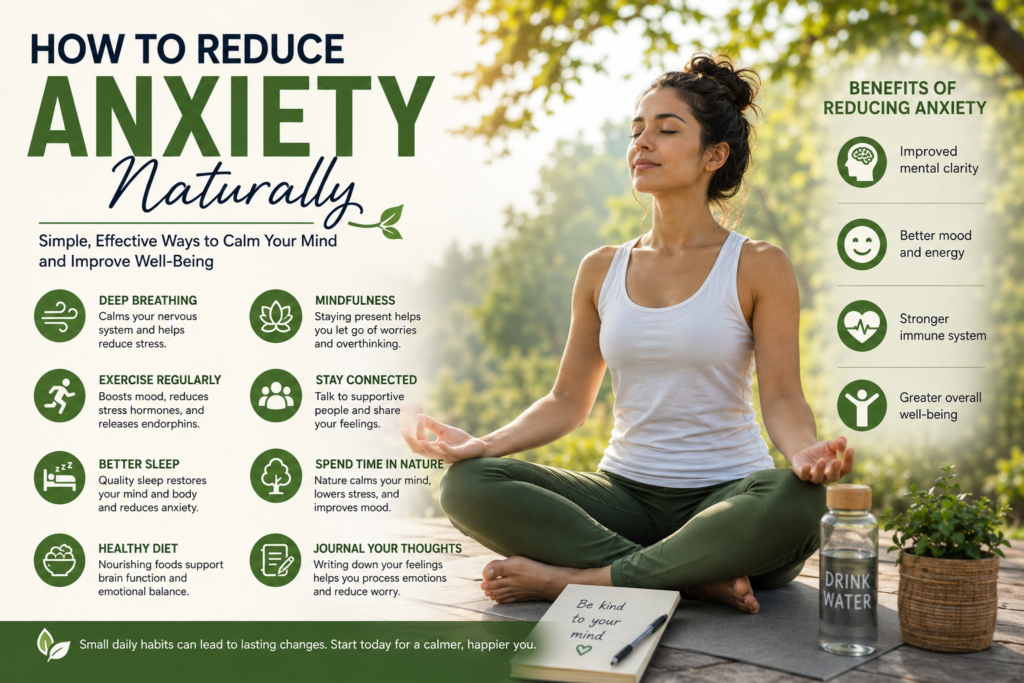
How to Reduce Anxiety Naturally:
Introduction
How to Reduce Anxiety Naturally. Anxiety is a common part of life that affects millions of people worldwide. Whether it is caused by work pressure, financial concerns, health issues, or personal challenges, anxiety can have a significant impact on your mental and physical well-being. While occasional anxiety is normal, persistent feelings of worry and stress can make daily life more difficult.
The good news is that there are many ways to reduce anxiety naturally without relying solely on medication. By making positive lifestyle changes and adopting healthy habits, you can improve your emotional balance, manage stress more effectively, and enjoy a calmer, healthier life.
In this guide, you will learn how to reduce anxiety naturally through practical, science-backed strategies that can be incorporated into your daily routine.
Understanding Anxiety: How to Reduce Anxiety Naturally
Anxiety is your body’s natural response to stress. It is a feeling of fear, worry, or nervousness that occurs when you perceive a threat or challenge.
Common symptoms of anxiety include:
- Excessive worrying
- Rapid heartbeat
- Difficulty concentrating
- Restlessness
- Irritability
- Muscle tension
- Trouble sleeping
- Fatigue
While anxiety can be uncomfortable, it is important to remember that it is a normal human emotion. Learning how to manage it effectively can improve your quality of life.
Why Natural Anxiety Management Matters: How to Reduce Anxiety Naturally
Natural anxiety management focuses on addressing the root causes of stress while supporting overall health and well-being.
Benefits include:
- Fewer side effects
- Improved physical health
- Better sleep quality
- Enhanced emotional resilience
- Increased energy levels
- Long-term stress reduction
These approaches can be especially effective when practiced consistently over time.
1. Practice Deep Breathing Exercises: How to Reduce Anxiety Naturally
One of the fastest ways to reduce anxiety naturally is through deep breathing.
When you feel anxious, your breathing often becomes shallow and rapid. Deep breathing helps activate the body’s relaxation response.
Simple Deep Breathing Technique
- Sit comfortably.
- Inhale slowly through your nose for 4 seconds.
- Hold your breath for 4 seconds.
- Exhale slowly through your mouth for 6 seconds.
- Repeat for 5–10 minutes.
Deep breathing lowers stress hormones and helps calm the nervous system.
2. Exercise Regularly: How to Reduce Anxiety Naturally
Physical activity is one of the most effective natural anxiety reducers.
Exercise releases endorphins, often called “feel-good” hormones, which improve mood and reduce stress.
Best Exercises for Anxiety Relief
- Walking
- Jogging
- Cycling
- Swimming
- Yoga
- Dancing
- Strength training
Aim for at least 30 minutes of moderate exercise most days of the week.
3. Improve Your Sleep Quality: How to Reduce Anxiety Naturally
Poor sleep and anxiety often create a vicious cycle. Anxiety can disrupt sleep, while lack of sleep can increase anxiety levels.
Tips for Better Sleep
- Maintain a consistent sleep schedule.
- Avoid caffeine before bedtime.
- Keep your bedroom cool and quiet.
- Limit screen time before sleeping.
- Practice relaxation techniques at night.
Quality sleep helps regulate emotions and improves stress management.
4. Limit Caffeine Intake: How to Reduce Anxiety Naturally
Caffeine stimulates the nervous system and may worsen anxiety symptoms in sensitive individuals.
Common caffeine sources include:
- Coffee
- Energy drinks
- Tea
- Soft drinks
- Chocolate
Reducing caffeine consumption may help decrease nervousness, restlessness, and rapid heartbeat.
5. Practice Mindfulness Meditation: How to Reduce Anxiety Naturally
Mindfulness involves focusing on the present moment without judgment.
Research shows that mindfulness meditation can reduce anxiety and improve emotional well-being.
How to Practice Mindfulness
- Sit quietly.
- Focus on your breathing.
- Observe your thoughts without reacting to them.
- Gently return your attention to your breath whenever your mind wanders.
Even 10 minutes of mindfulness daily can make a noticeable difference.
6. Eat a Balanced and Nutritious Diet: How to Reduce Anxiety Naturally
Your diet plays an important role in mental health.
Foods rich in vitamins, minerals, and antioxidants support brain function and emotional balance.
Anxiety-Friendly Foods
- Fruits
- Vegetables
- Whole grains
- Nuts and seeds
- Fatty fish
- Legumes
- Yogurt
Avoid excessive processed foods and sugar, which may contribute to mood swings.
7. Spend Time in Nature: How to Reduce Anxiety Naturally
Nature has a calming effect on the mind.
Activities such as:
- Walking in parks
- Hiking
- Gardening
- Sitting near water
can reduce stress levels and improve mental clarity.
Exposure to natural environments helps lower cortisol, the body’s primary stress hormone.
8. Stay Connected with Supportive People: How to Reduce Anxiety Naturally
Social support is essential for emotional well-being.
Talking with trusted friends or family members can help relieve anxiety and provide perspective during difficult times.
Healthy relationships offer:
- Emotional support
- Encouragement
- Reduced feelings of isolation
- Increased resilience
Don’t hesitate to reach out when you need help.
9. Reduce Screen Time and Social Media Use: How to Reduce Anxiety Naturally
Excessive exposure to social media can contribute to anxiety, comparison, and information overload.
Healthy Digital Habits
- Set screen time limits.
- Take regular breaks.
- Avoid checking news constantly.
- Create technology-free periods each day.
Being intentional with technology use can significantly reduce stress.
10. Try Journaling: How to Reduce Anxiety Naturally
Writing down your thoughts and feelings can help you process emotions and identify anxiety triggers.
Journaling Ideas
- Gratitude journal
- Daily reflections
- Goal tracking
- Stress management journal
Journaling promotes self-awareness and emotional regulation.
11. Listen to Relaxing Music: How to Reduce Anxiety Naturally
Music has a powerful effect on the brain and nervous system.
Calming music can:
- Lower blood pressure
- Reduce stress hormones
- Improve mood
- Promote relaxation
Instrumental music, nature sounds, and soft melodies are excellent choices.
12. Practice Gratitude Daily: How to Reduce Anxiety Naturally
Focusing on positive aspects of life can shift attention away from worry and fear.
Gratitude Practice
Each day, write down three things you are grateful for.
Examples:
- Good health
- Family support
- A pleasant experience
- Personal achievements
Over time, gratitude can improve emotional resilience and overall happiness.
13. Learn Effective Time Management: How to Reduce Anxiety Naturally
Feeling overwhelmed often contributes to anxiety.
Good time management helps create a sense of control and reduces stress.
Time Management Tips
- Prioritize important tasks.
- Break large projects into smaller steps.
- Use a planner or calendar.
- Avoid multitasking.
- Set realistic goals.
Organized routines can help reduce mental clutter.
14. Practice Yoga: How to Reduce Anxiety Naturally
Yoga combines physical movement, breathing techniques, and mindfulness.
Benefits include:
- Reduced muscle tension
- Improved flexibility
- Better sleep
- Lower stress levels
- Enhanced emotional balance
Even beginner-friendly yoga sessions can provide significant anxiety relief.
15. Focus on What You Can Control: How to Reduce Anxiety Naturally
Anxiety often arises from uncertainty about the future.
Instead of worrying about things beyond your control, focus on actions you can take today.
Ask yourself:
- What can I do right now?
- What steps can improve the situation?
- What is within my control?
This mindset helps reduce unnecessary stress.
Creating a Daily Anxiety-Reducing Routine
A consistent routine can make anxiety management easier.
Morning
- Deep breathing
- Healthy breakfast
- Short walk
Afternoon
- Balanced meals
- Hydration
- Productive work sessions
Evening
- Relaxing activities
- Reduced screen time
- Gratitude journaling
- Quality sleep
Small daily habits can lead to lasting improvements in mental well-being.
When to Seek Professional Help: How to Reduce Anxiety Naturally
Natural strategies can be highly effective, but some people may need additional support.
Consider speaking with a healthcare professional if anxiety:
- Interferes with daily life
- Causes panic attacks
- Affects relationships
- Leads to persistent sleep problems
- Feels overwhelming despite self-help efforts
Seeking help is a sign of strength, not weakness.
Conclusion
Learning how to reduce anxiety naturally can empower you to take control of your mental health and improve your quality of life. Simple practices such as deep breathing, exercise, mindfulness, healthy eating, quality sleep, and spending time in nature can have a profound impact on anxiety levels.
Remember that lasting change takes time. Start with one or two strategies and gradually build healthier habits into your daily routine. With consistency and patience, you can reduce anxiety, strengthen emotional resilience, and enjoy a calmer, more balanced life.
By prioritizing your mental well-being and making intentional lifestyle changes, you can create a healthier future and experience greater peace of mind every day.