
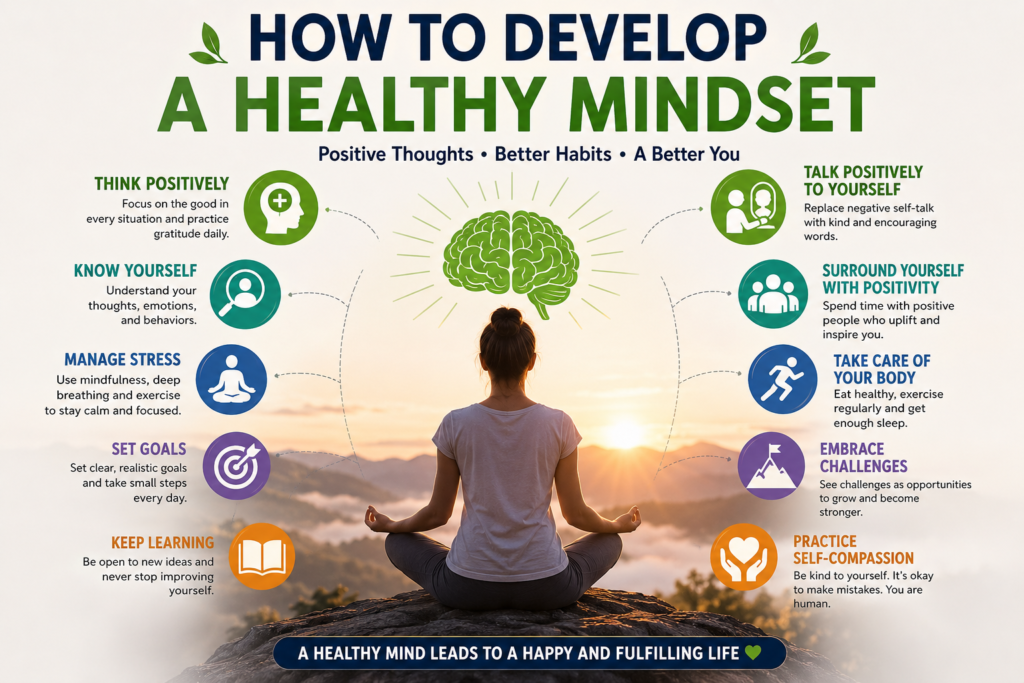
How to Develop a Healthy Mindset
How to Develop a Healthy Mindset. Your mindset influences nearly every aspect of your life. It affects how you think, feel, react to challenges, and pursue your goals. A healthy mindset doesn’t mean being happy all the time or ignoring life’s difficulties. Instead, it means developing a balanced, positive, and resilient way of thinking that helps you navigate both successes and setbacks.
In today’s fast-paced world, many people struggle with stress, self-doubt, negative thinking, and emotional overwhelm. These challenges can impact mental health, relationships, career growth, and overall well-being. Fortunately, a healthy mindset is something that can be developed through intentional habits and consistent practice.
This guide explores what a healthy mindset is, why it matters, and practical steps you can take to cultivate a stronger, more positive outlook on life.
What Is a Healthy Mindset? How to Develop a Healthy Mindset
A healthy mindset is a way of thinking that promotes emotional balance, resilience, self-awareness, and personal growth.
People with a healthy mindset typically:
- Believe they can learn and improve
- Handle setbacks constructively
- Maintain realistic optimism
- Practice self-compassion
- Focus on solutions rather than problems
- Take responsibility for their actions
- Value continuous learning
A healthy mindset does not eliminate challenges, but it helps you respond to them more effectively.
Why a Healthy Mindset Matters: How to Develop a Healthy Mindset
Your mindset influences your:
Mental Health
Positive thinking patterns can help reduce stress, anxiety, and emotional exhaustion.
Physical Health
Research suggests that a positive outlook may contribute to better health habits and overall wellness.
Relationships
Healthy thinking improves communication, empathy, and emotional regulation.
Career and Success
People with resilient mindsets often persevere through obstacles and continue growing.
Personal Development
A healthy mindset encourages lifelong learning and self-improvement.
Signs You May Need a Mindset Shift: How to Develop a Healthy Mindset
Many people unknowingly develop unhealthy thought patterns.
Common signs include:
- Constant self-criticism
- Fear of failure
- Negative self-talk
- Comparing yourself to others
- Feeling stuck or hopeless
- Difficulty handling setbacks
- Focusing only on problems
- Avoiding challenges
Recognizing these patterns is the first step toward change.
Practice Self-Awareness: How to Develop a Healthy Mindset
Self-awareness is the foundation of a healthy mindset.
You cannot change thought patterns you don’t recognize.
How to Improve Self-Awareness
Take time to reflect on:
- Your thoughts
- Emotions
- Behaviours
- Reactions to situations
Ask yourself:
- Why am I feeling this way?
- What triggered this emotion?
- Is my reaction helping me?
Journaling can be an effective tool for developing greater self-awareness.
Replace Negative Self-Talk: How to Develop a Healthy Mindset
Many people are harder on themselves than they would ever be on a friend.
Negative self-talk often sounds like:
- “I’m not good enough.”
- “I always fail.”
- “I can’t do this.”
These thoughts can damage confidence and motivation.
Create Healthier Thoughts
Replace negative statements with realistic alternatives:
Instead of:
“I always mess things up.”
Try:
“I’m learning and improving.”
Instead of:
“I’ll never succeed.”
Try:
“This challenge will help me grow.”
Small changes in language can create powerful shifts in mindset.
Focus on What You Can Control: How to Develop a Healthy Mindset
One of the biggest sources of stress is worrying about things outside your control.
You cannot control:
- Other people’s opinions
- Past mistakes
- Unexpected events
You can control:
- Your actions
- Your attitude
- Your effort
- Your responses
Focusing your energy on what you can influence helps reduce anxiety and improve resilience.
Adopt a Growth Mindset: How to Develop a Healthy Mindset
A growth mindset is the belief that abilities and skills can be developed through effort and learning.
People with a growth mindset view challenges as opportunities rather than obstacles.
Fixed Mindset vs. Growth Mindset
Fixed Mindset
- “I’m either good at it or I’m not.”
- “Failure means I’m not capable.”
Growth Mindset
- “I can improve with practice.”
- “Failure is part of learning.”
Adopting a growth mindset can transform how you approach life.
Practice Gratitude Daily: How to Develop a Healthy Mindset
Gratitude helps shift attention away from what’s missing and toward what’s already positive.
Research has shown that gratitude may improve:
- Mood
- Optimism
- Relationships
- Overall well-being
Simple Gratitude Practice
Each day, write down:
- Three things you’re thankful for
- One positive experience
- One thing you’re looking forward to
Over time, this habit trains your brain to notice positivity.
Surround Yourself with Positive Influences: How to Develop a Healthy Mindset
The people around you can significantly affect your mindset.
Positive influences encourage growth, support, and healthy thinking.
Consider spending more time with people who:
- Inspire you
- Encourage your goals
- Support your well-being
- Promote positivity
At the same time, try to limit exposure to consistently negative influences when possible.
Learn to Accept Imperfection: How to Develop a Healthy Mindset
Perfectionism often leads to:
- Stress
- Procrastination
- Fear of failure
- Self-criticism
No one is perfect.
Healthy individuals understand that mistakes are a normal part of growth.
Instead of aiming for perfection, focus on progress.
Ask yourself:
“What can I learn from this experience?”
rather than
“Why wasn’t I perfect?”
Develop Emotional Resilience: How to Develop a Healthy Mindset
Resilience is the ability to recover from setbacks and continue moving forward.
Life inevitably includes challenges such as:
- Job difficulties
- Relationship issues
- Financial stress
- Personal disappointments
Resilient people don’t avoid problems. They learn how to manage them effectively.
Ways to Build Resilience
- Maintain perspective
- Focus on solutions
- Seek support when needed
- Learn from setbacks
- Practice patience
Resilience strengthens with experience and practice.
Limit Negative Media Consumption: How to Develop a Healthy Mindset
Constant exposure to negative news and social media can affect your mental outlook.
While staying informed is important, excessive consumption may increase:
- Stress
- Anxiety
- Fear
- Comparison
Consider setting healthy boundaries around media use.
Replace some screen time with:
- Reading
- Exercise
- Hobbies
- Time outdoors
Take Care of Your Physical Health: How to Develop a Healthy Mindset
Your mind and body are deeply connected.
Poor physical health can negatively affect mood, energy, and mental clarity.
Prioritize Sleep
Aim for 7–9 hours of quality sleep each night.
Exercise Regularly
Physical activity helps improve:
- Mood
- Energy
- Focus
- Stress management
Eat Nutritious Foods
A balanced diet supports both brain health and emotional well-being.
Stay Hydrated
Even mild dehydration can impact concentration and mood.
Set Meaningful Goals: How to Develop a Healthy Mindset
Having clear goals provides direction and motivation.
Goals help create a sense of purpose and progress.
Effective Goal Setting
Make goals:
- Specific
- Measurable
- Realistic
- Time-based
Example:
Instead of:
“I want to get healthier.”
Try:
“I will walk for 30 minutes five days per week.”
Meaningful goals contribute to a healthier mindset.
Practice Mindfulness: How to Develop a Healthy Mindset
Mindfulness involves paying attention to the present moment without judgment.
Many people spend too much time:
- Worrying about the future
- Regretting the past
Mindfulness helps bring attention back to the present.
Simple Mindfulness Activities
- Deep breathing
- Meditation
- Walking in nature
- Mindful eating
These practices can reduce stress and improve emotional balance.
Learn from Failure: How to Develop a Healthy Mindset
Failure is often viewed negatively, but it can be one of life’s greatest teachers.
Successful people understand that setbacks provide valuable lessons.
Instead of asking:
“Why did I fail?”
Ask:
“What can I learn from this experience?”
This shift in perspective encourages growth and resilience.
Celebrate Small Wins: How to Develop a Healthy Mindset
Many people wait for major achievements before feeling successful.
However, recognizing small victories helps build confidence and motivation.
Examples include:
- Completing a workout
- Reading a chapter of a book
- Finishing a task
- Learning a new skill
Small wins create momentum toward larger goals.
Develop Healthy Boundaries: How to Develop a Healthy Mindset
Healthy boundaries protect your mental and emotional well-being.
Boundaries may involve:
- Saying no when necessary
- Protecting personal time
- Limiting toxic interactions
- Prioritizing self-care
Strong boundaries support healthier relationships and reduced stress.
Cultivate Optimism: How to Develop a Healthy Mindset
Optimism doesn’t mean ignoring problems.
It means believing that challenges can be managed and overcome.
Optimistic individuals tend to:
- Look for solutions
- Maintain hope
- Recover faster from setbacks
Try asking:
“What positive outcome could come from this situation?”
This question encourages constructive thinking.
Continue Learning and Growing: How to Develop a Healthy Mindset
Personal growth contributes significantly to a healthy mindset.
Challenge yourself by:
- Reading books
- Taking courses
- Learning new skills
- Exploring hobbies
Continuous learning keeps the mind engaged and adaptable.
Sample Daily Routine for a Healthy Mindset: How to Develop a Healthy Mindset
Morning
- Wake up at a consistent time
- Practice gratitude
- Exercise or stretch
- Set daily intentions
Afternoon
- Take breaks
- Stay hydrated
- Focus on priorities
Evening
- Reflect on accomplishments
- Limit screen time
- Practice relaxation
- Prepare for restful sleep
Consistent routines support emotional stability and positive thinking.
Common Obstacles to Developing a Healthy: How to Develop a Healthy Mindset Mindset
You may encounter challenges such as:
- Negative environments
- Old habits
- Self-doubt
- Fear of change
Remember that mindset development is a journey, not a destination.
Progress may be gradual, but every positive step matters.
Benefits of a Healthy Mindset: How to Develop a Healthy Mindset
As your mindset improves, you may notice:
- Increased confidence
- Better stress management
- Improved emotional health
- Stronger relationships
- Greater resilience
- Higher productivity
- Enhanced life satisfaction
These benefits often extend into every area of life.
Final Thoughts
Learning how to develop a healthy mindset is one of the most valuable investments you can make in yourself. A positive and resilient mindset can help you navigate challenges, pursue goals, build stronger relationships, and improve overall well-being.
Remember that developing a healthy mindset doesn’t happen overnight. It requires consistent effort, self-awareness, and patience. Focus on small daily habits such as practicing gratitude, challenging negative thoughts, maintaining healthy routines, and embracing personal growth.
Over time, these practices can transform the way you think, feel, and respond to life’s experiences. By nurturing a healthy mindset, you create a stronger foundation for a happier, more fulfilling, and more successful life.