
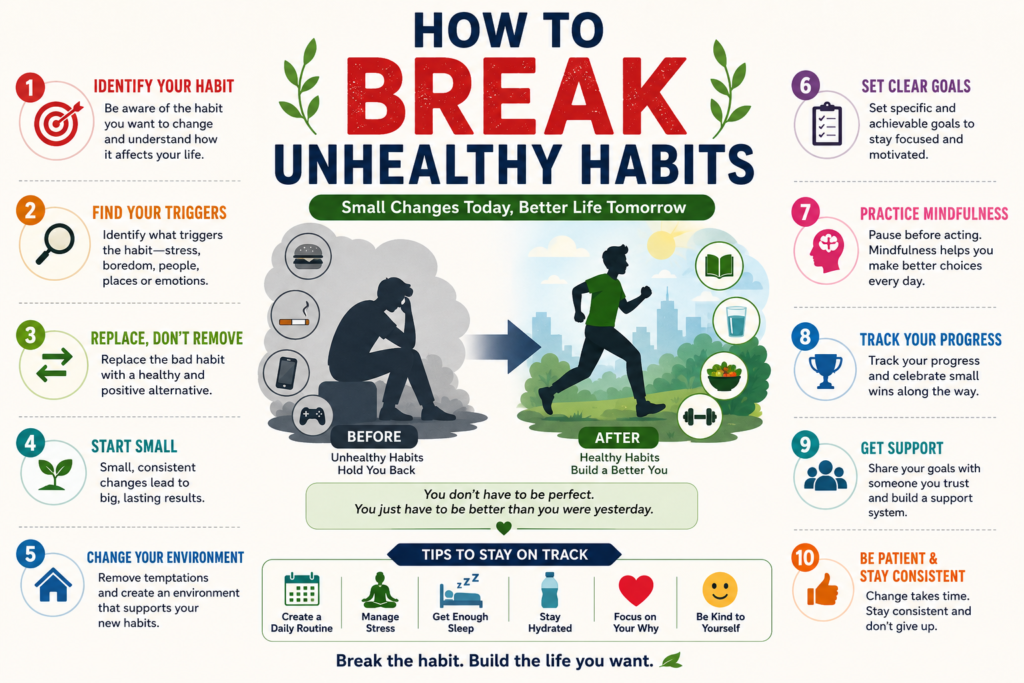
How to Break Unhealthy Habits
How to Break Unhealthy Habits. We all have habits. Some help us live healthier, happier, and more productive lives, while others hold us back from reaching our full potential. Whether it’s procrastinating, overeating, spending too much time on social media, skipping exercise, staying up too late, or constantly choosing unhealthy foods, bad habits can gradually affect our physical health, mental well-being, relationships, and personal growth.
The good news is that unhealthy habits are not permanent. Habits are learned behaviours, which means they can be changed. While breaking a bad habit isn’t always easy, it is absolutely possible with the right mindset, strategies, and consistency.
In this guide, you’ll learn why unhealthy habits develop, how they affect your life, and proven techniques to replace them with healthier alternatives that support your long-term goals.
Understanding Habits: How to Break Unhealthy Habits
Before learning how to break unhealthy habits, it’s important to understand how habits work.
A habit is a behaviour that becomes automatic through repetition. Over time, your brain creates shortcuts that make repeated actions easier to perform without much conscious thought.
Every habit generally follows a simple loop:
Cue
A trigger that starts the behaviour.
Routine
The action or habit itself.
Reward
The benefit or feeling you receive after completing the behaviour.
For example:
- Cue: Feeling stressed
- Routine: Eating junk food
- Reward: Temporary comfort
Understanding this cycle can help you identify and change unwanted behaviours.
Why Unhealthy Habits Are Hard to Break: How to Break Unhealthy Habits
Many people believe they lack willpower when they struggle to change a habit. In reality, habits become deeply rooted because they often provide immediate rewards.
Some common reasons unhealthy habits persist include:
- Stress relief
- Emotional comfort
- Convenience
- Boredom
- Social influences
- Lack of awareness
- Established routines
The brain naturally seeks efficiency, which is why repeated behaviours become automatic over time.
Common Unhealthy Habits: How to Break Unhealthy Habits
Everyone’s challenges are different, but some common unhealthy habits include:
- Smoking
- Excessive screen time
- Procrastination
- Overeating
- Skipping exercise
- Poor sleep habits
- Nail biting
- Negative self-talk
- Excessive caffeine consumption
- Spending too much time on social media
Recognizing your specific habit is the first step toward change.
The Impact of Unhealthy Habits: How to Break Unhealthy Habits
Bad habits may seem harmless in the short term, but over time they can significantly affect your quality of life.
Physical Health Effects
Unhealthy habits may contribute to:
- Weight gain
- Poor sleep
- Fatigue
- Reduced fitness
- Increased disease risk
Mental Health Effects
They can also lead to:
- Stress
- Anxiety
- Low self-esteem
- Reduced focus
- Emotional exhaustion
Productivity Effects
Bad habits often result in:
- Missed opportunities
- Poor time management
- Lower performance
- Reduced motivation
The longer unhealthy habits continue, the more difficult they can become to change.
Step 1: Identify Your Habit Triggers: How to Break Unhealthy Habits
Every habit starts with a trigger.
To break a bad habit, you must first identify what causes it.
Ask yourself:
- When does the habit occur?
- Where does it happen?
- Who am I with?
- What emotions am I feeling?
- What happened immediately before the behaviour?
Keeping a habit journal for a week can reveal important patterns.
Example
If you often snack on unhealthy foods, you may notice that it happens:
- During stressful workdays
- Late at night
- While watching television
Understanding triggers helps you prepare for them.
Step 2: Replace the Habit Instead of Eliminating
It: How to Break Unhealthy Habits
One of the biggest mistakes people make is trying to simply stop a habit without replacing it.
Your brain still seeks the reward associated with the behaviour.
Instead, replace the unhealthy habit with a healthier alternative.
Examples
Instead of:
- Eating chips → Eat fruit
- Scrolling social media → Read a book
- Smoking → Take a short walk
- Drinking soda → Drink water
Replacing a habit is often easier than completely removing it.
Step 3: Start Small: How to Break Unhealthy Habits
Many people fail because they attempt drastic changes overnight.
Lasting change usually comes from small, manageable improvements.
Better Approach
Instead of:
“I’ll exercise every day for two hours.”
Try:
“I’ll walk for 10 minutes daily.”
Small successes build momentum and confidence.
Step 4: Change Your Environment: How to Break Unhealthy Habits
Your surroundings strongly influence your behaviour.
If unhealthy habits are easily accessible, you’ll be more likely to repeat them.
Make Bad Habits Harder
Examples:
- Remove junk food from the house.
- Turn off unnecessary notifications.
- Keep cigarettes out of reach.
- Delete distracting apps.
Make Good Habits Easier
Examples:
- Keep healthy snacks visible.
- Place workout clothes nearby.
- Keep a water bottle on your desk.
Environment often beats motivation.
Step 5: Set Clear Goals: How to Break Unhealthy Habits
Vague goals make it difficult to track progress.
Instead of saying:
“I want to be healthier.”
Say:
“I will replace sugary drinks with water five days per week.”
Specific goals provide direction and accountability.
Step 6: Use the Power of Habit Stacking: How to Break Unhealthy Habits
Habit stacking involves attaching a new behavior to an existing routine.
Formula
After I do Current Habit, I will do New Habit.
Examples:
- After brushing my teeth, I will stretch for two minutes.
- After breakfast, I will drink a glass of water.
- After work, I will take a 15-minute walk.
This technique helps new habits become automatic more quickly.
Step 7: Practice Mindfulness: How to Break Unhealthy Habits
Many unhealthy habits happen automatically.
Mindfulness helps you become more aware of your thoughts, emotions, and behaviors.
Before engaging in the habit, pause and ask:
- Why am I doing this?
- What am I feeling right now?
- Is there a healthier response?
Awareness creates opportunities for better choices.
Step 8: Manage Stress Effectively: How to Break Unhealthy Habits
Stress is a major trigger for many bad habits.
People often turn to unhealthy coping mechanisms when overwhelmed.
Healthy alternatives include:
- Meditation
- Deep breathing
- Exercise
- Journaling
- Listening to music
- Spending time in nature
Reducing stress makes habit change much easier.
Step 9: Focus on Progress, Not Perfection: How to Break Unhealthy Habits
Many people quit after a single setback.
Remember that occasional mistakes are part of the process.
If you slip up:
- Don’t criticize yourself.
- Learn from the experience.
- Identify what triggered the behaviour.
- Continue moving forward.
Consistency matters more than perfection.
Step 10: Reward Positive Behaviour: How to Break Unhealthy Habits: How to Break Unhealthy Habits
Your brain responds well to rewards.
Celebrate small victories when you successfully avoid an unhealthy habit.
Rewards might include:
- Watching a favorite movie
- Enjoying a relaxing activity
- Buying a new book
- Taking a day trip
Positive reinforcement helps strengthen new behaviours.
Step 11: Build a Support System: How to Break Unhealthy Habits
Change is easier when you have encouragement.
Share your goals with:
- Friends
- Family members
- Accountability partners
- Support groups
People who support your efforts can provide motivation during difficult moments.
Step 12: Track Your Progress: How to Break Unhealthy Habits
Tracking helps you stay focused and motivated.
Use:
- A journal
- Habit-tracking apps
- Calendars
- Checklists
Recording your progress allows you to see how far you’ve come.
Step 13: Learn from Relapses: How to Break Unhealthy Habits
Relapses are common during behaviour change.
Rather than viewing them as failures, treat them as learning opportunities.
Ask:
- What triggered the relapse?
- How can I prepare next time?
- What lesson can I learn?
Growth comes from understanding challenges, not avoiding them.
Step 14: Improve Your Self-Talk: How to Break Unhealthy Habits
The way you speak to yourself matters.
Negative thoughts often reinforce unhealthy behaviours.
Replace:
“I’ll never change.”
With:
“I’m making progress every day.”
Positive self-talk strengthens confidence and resilience.
Step 15: Create a Healthy Daily Routine: How to Break Unhealthy Habits
A structured routine reduces decision fatigue and helps prevent unhealthy behaviours.
Morning
- Wake up consistently
- Drink water
- Eat a healthy breakfast
Afternoon
- Take movement breaks
- Stay hydrated
- Choose nutritious meals
Evening
- Limit screen time
- Relax and unwind
- Follow a regular bedtime schedule
Healthy routines support healthy habits.
The Science of Habit Change: How to Break Unhealthy Habits
Research suggests that habits are strengthened through repetition and consistency.
When you repeatedly choose healthier behaviours, your brain gradually creates new neural pathways.
Over time:
- New habits become easier.
- Old habits become weaker.
- Positive behaviours feel more natural.
This process requires patience, but it works.
Healthy Habits to Replace Unhealthy Ones
| Unhealthy Habit | Healthier Alternative |
|---|---|
| Eating junk food | Fresh fruits and vegetables |
| Excessive social media | Reading or learning |
| Skipping exercise | Daily walking |
| Staying up late | Consistent bedtime |
| Drinking soda | Water or herbal tea |
| Negative self-talk | Positive affirmations |
| Stress eating | Meditation or exercise |
| Excessive TV watching | Outdoor activities |
Signs You’re Successfully Breaking Unhealthy Habits: How to Break Unhealthy Habits
As you continue your journey, you may notice:
- Better self-control
- Increased confidence
- Improved physical health
- Better sleep quality
- More energy
- Reduced stress
- Improved focus
- Greater productivity
These positive changes often develop gradually.
Long-Term Success Tips: How to Break Unhealthy Habits
To maintain healthy habits:
Stay Consistent
Small daily actions create lasting results.
Be Patient
Meaningful change takes time.
Review Your Goals
Adjust your strategies when needed.
Continue Learning
Read books, listen to podcasts, and learn new personal development techniques.
Celebrate Milestones
Recognize your progress along the way.
Final Thoughts
Learning how to break unhealthy habits is one of the most valuable skills you can develop. While the process may feel challenging at first, every positive choice strengthens your ability to create lasting change.
Remember that habits are not changed overnight. Success comes from understanding your triggers, replacing unhealthy behaviours with healthier alternatives, creating supportive environments, and staying consistent over time.
Focus on progress rather than perfection. Every small improvement moves you closer to becoming the healthiest, happiest, and most productive version of yourself. With patience, persistence, and self-compassion, you can break unhealthy habits and build a lifestyle that supports your long-term well-being and success.