
Introduction
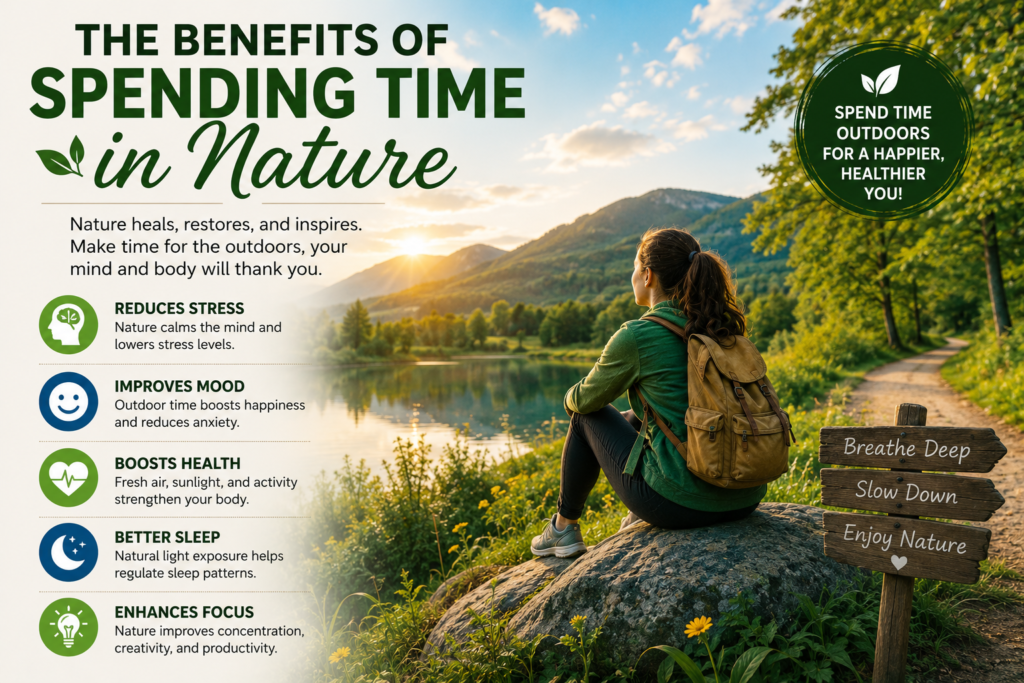
The Benefits of Spending Time in Nature. In today’s fast-paced world, many people spend most of their time indoors. Between work, school, smartphones, social media, and daily responsibilities, it is easy to lose touch with nature. Yet humans have a natural connection with the outdoors that plays a powerful role in overall health and well-being.
Whether it is a walk through a park, a hike in the mountains, relaxing near a lake, or simply sitting under a tree, spending time in nature can positively impact both the mind and body. Research continues to show that regular exposure to natural environments can reduce stress, improve mood, boost physical health, and increase overall happiness.
Nature offers something that modern life often lacks—peace, balance, and an opportunity to reconnect with ourselves. Even a few minutes outdoors each day can make a significant difference.
This guide explores the many benefits of spending time in nature and how you can incorporate more outdoor experiences into your daily life.
Why Nature Matters: The Benefits of Spending Time in Nature
Humans evolved in natural environments long before cities, computers, and smartphones existed. Our bodies and minds are naturally designed to interact with the outdoors.
Natural environments provide:
- Fresh air
- Sunlight
- Green spaces
- Physical activity opportunities
- Mental relaxation
- Sensory stimulation
These elements work together to support better health and wellness.
Unfortunately, many people spend more than 90% of their time indoors, which may contribute to stress, fatigue, and reduced overall well-being.
Nature Reduces Stress: The Benefits of Spending Time in Nature
One of the most well-known benefits of spending time in nature is stress reduction.
Modern life often exposes us to:
- Work pressures
- Financial concerns
- Traffic
- Noise pollution
- Information overload
These stressors can increase cortisol, the body’s primary stress hormone.
How Nature Helps
Natural environments encourage relaxation by:
- Lowering cortisol levels
- Reducing muscle tension
- Slowing heart rate
- Promoting calmness
Even a short walk in a green space can help reduce stress and improve mood.
Practical Tip
Spend 20–30 minutes outdoors daily, even if it is simply walking through a nearby park.
Improves Mental Health: The Benefits of Spending Time in Nature
Mental health is just as important as physical health, and nature can play a significant role in emotional well-being.
Benefits for Mental Health
Regular exposure to nature may help:
- Reduce anxiety
- Lower depression symptoms
- Improve mood
- Increase feelings of happiness
- Promote emotional balance
Natural environments often provide a sense of peace that is difficult to find in busy urban settings.
The Power of Green Spaces
Studies suggest that people who live near parks, forests, or other green spaces often report higher levels of life satisfaction and emotional well-being.
Boosts Physical Health: The Benefits of Spending Time in Nature
Spending time outdoors naturally encourages movement and physical activity.
Common Outdoor Activities
- Walking
- Hiking
- Cycling
- Running
- Gardening
- Swimming
Regular movement helps:
- Improve cardiovascular health
- Strengthen muscles
- Increase flexibility
- Support healthy weight management
Combining exercise with nature creates a powerful health benefit.
Supports Heart Health: The Benefits of Spending Time in Nature
Nature exposure may help improve cardiovascular health in several ways.
Benefits Include
- Lower blood pressure
- Reduced stress levels
- Improved circulation
- Lower heart rate
Spending time outdoors while engaging in physical activity can significantly benefit heart health over time.
Enhances Sleep Quality: The Benefits of Spending Time in Nature
Many people struggle with poor sleep due to stress, excessive screen time, and irregular schedules.
Nature Helps Regulate Sleep
Exposure to natural sunlight supports the body’s internal clock, known as the circadian rhythm.
Benefits include:
- Easier sleep onset
- Better sleep quality
- Improved morning alertness
- More consistent sleep schedules
Morning Sunlight Matters
Getting sunlight exposure early in the day can help improve sleep quality at night.
Strengthens the Immune System: The Benefits of Spending Time in Nature
Spending time in nature may help support immune function.
How Nature Benefits Immunity
Natural environments often encourage:
- Physical activity
- Reduced stress
- Better sleep
- Improved mental health
All of these factors contribute to a stronger immune system.
Fresh Air Benefits
Fresh outdoor air may help improve respiratory health compared to spending extended periods in poorly ventilated indoor environments.
Increases Vitamin D Levels: The Benefits of Spending Time in Nature
Sunlight is one of the best natural sources of vitamin D.
Why Vitamin D Is Important
Vitamin D supports:
- Bone health
- Immune function
- Mood regulation
- Muscle strength
Many people do not get enough vitamin D due to limited outdoor exposure.
Safe Sun Exposure
Spending moderate time outdoors can help maintain healthy vitamin D levels while avoiding excessive sun exposure.
Improves Focus and Concentration: The Benefits of Spending Time in Nature
Nature can help refresh the brain and improve cognitive performance.
Benefits for Attention
Research suggests that spending time outdoors may:
- Improve concentration
- Increase productivity
- Enhance memory
- Reduce mental fatigue
This is particularly beneficial for students and professionals who spend long hours working indoors.
Nature Breaks
Even a brief outdoor break during the workday can improve focus and mental clarity.
Encourages Mindfulness: The Benefits of Spending Time in Nature
Nature naturally draws attention to the present moment.
When outdoors, people often notice:
- Birds singing
- Leaves moving
- Flowing water
- Fresh scents
- Changing weather
These experiences encourage mindfulness and reduce mental clutter.
Benefits of Mindfulness
- Reduced stress
- Better emotional regulation
- Improved mental clarity
- Increased happiness
Nature provides an ideal setting for mindful living.
Promotes Better Mood: The Benefits of Spending Time in Nature
Have you ever felt happier after spending time outdoors?
There is a scientific reason for that.
Nature can stimulate the release of mood-enhancing chemicals in the brain that contribute to feelings of relaxation and happiness.
Mood Benefits Include
- Increased positivity
- Reduced irritability
- Greater emotional balance
- Enhanced self-esteem
Even small amounts of outdoor time can improve overall mood.
Supports Healthy Aging: The Benefits of Spending Time in Nature
Nature can be especially beneficial for older adults.
Benefits for Healthy Aging
- Improved mobility
- Better balance
- Reduced stress
- Enhanced mental health
- Increased social interaction
Activities such as walking, gardening, and outdoor recreation can support physical and cognitive health as people age.
Encourages Social Connections: The Benefits of Spending Time in Nature
Many outdoor activities involve spending time with others.
Examples include:
- Family walks
- Group hikes
- Community gardening
- Outdoor sports
Strong social connections are linked to:
- Better mental health
- Longer lifespan
- Reduced stress
- Greater life satisfaction
Nature often creates opportunities for meaningful interactions.
Reduces Screen Time: The Benefits of Spending Time in Nature
Modern lifestyles involve significant screen exposure.
Excessive screen time has been associated with:
- Eye strain
- Sleep disruption
- Reduced physical activity
- Increased stress
Spending time outdoors provides a healthy alternative and encourages more balanced daily habits.
Inspires Creativity: The Benefits of Spending Time in Nature
Nature has long been a source of inspiration for artists, writers, and innovators.
How Nature Boosts Creativity
Natural environments can:
- Reduce mental fatigue
- Improve focus
- Encourage reflection
- Stimulate imagination
Many people find that their best ideas come while walking outdoors or spending time in peaceful natural settings.
Improves Overall Quality of Life: The Benefits of Spending Time in Nature
When all the benefits of nature are combined, they contribute to a higher quality of life.
Regular exposure to natural environments may help:
- Increase happiness
- Improve health
- Reduce stress
- Enhance relationships
- Promote personal growth
Nature supports a balanced and fulfilling lifestyle.
Easy Ways to Spend More Time in Nature: The Benefits of Spending Time in Nature
You do not need to live near a forest or mountain to enjoy nature.
Simple Ideas
- Take daily walks in a local park
- Eat meals outdoors
- Garden at home
- Walk your dog regularly
- Visit nature trails
- Spend time near lakes or rivers
- Exercise outdoors
- Read under a tree
Small outdoor experiences can have a significant impact.
Nature Activities for Families
Families can enjoy nature together through activities such as:
- Picnics
- Nature scavenger hunts
- Camping
- Hiking
- Outdoor games
- Bird watching
These activities promote health while creating lasting memories.
Common Barriers and Solutions: The Benefits of Spending Time in Nature
“I Don’t Have Time”
Start with just 10–15 minutes outdoors each day.
“I Live in a City”
Visit local parks, gardens, or green spaces.
“The Weather Is Bad”
Dress appropriately and enjoy nature safely in different seasons.
“I’m Not Active”
Simply sitting outdoors and enjoying fresh air can provide benefits.
Building a Nature Habit
Creating a consistent outdoor routine helps maximize benefits.
Daily Routine Example
Morning:
- Take a short walk
- Get sunlight exposure
Afternoon:
- Spend lunch outdoors
Evening:
- Relax in a park or garden
Consistency is more important than duration.
Conclusion
The benefits of spending time in nature extend far beyond enjoying beautiful scenery. Nature supports physical health, mental well-being, emotional balance, better sleep, stronger immunity, and improved quality of life.
In a world filled with screens, deadlines, and constant distractions, nature offers a simple yet powerful way to restore balance. Whether you spend five minutes outside or several hours exploring the outdoors, every moment in nature contributes to your overall wellness.
The best part is that nature is accessible to almost everyone. A local park, a backyard garden, a walking trail, or even a quiet green space can provide meaningful health benefits.
Start small, make it a habit, and experience how spending time in nature can transform your health, happiness, and overall well-being.