
Introduction
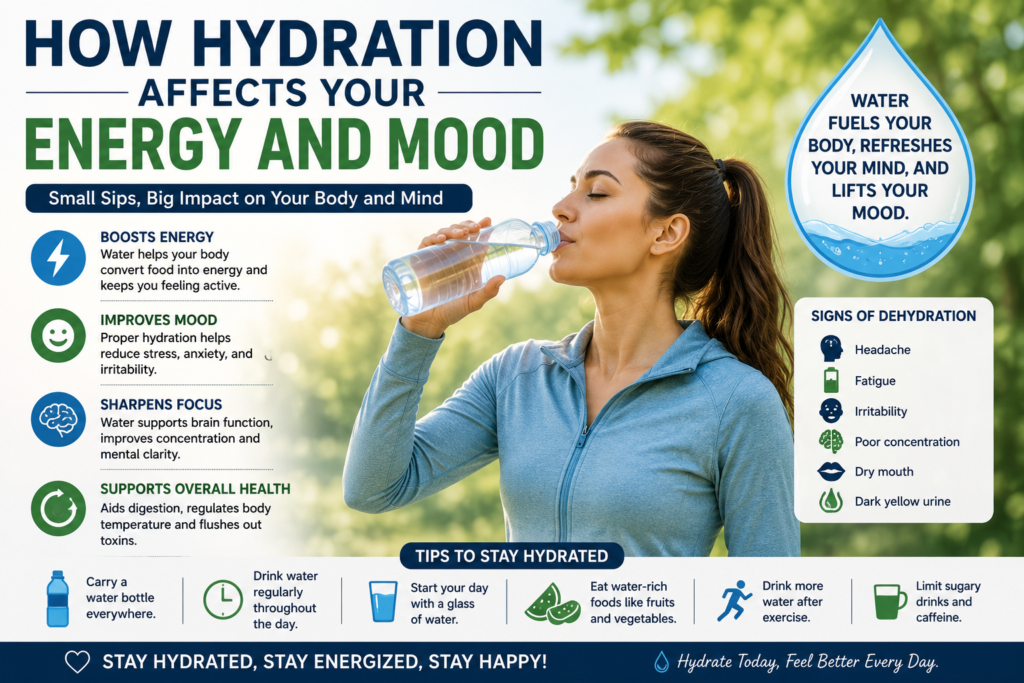
How Hydration Affects Your Energy and Mood. Water is one of the most essential substances for human life. Every cell, tissue, and organ in your body relies on water to function properly. Yet many people underestimate how important hydration is for maintaining energy levels, mental clarity, emotional balance, and overall health.
If you’ve ever felt tired, sluggish, irritable, or unable to focus, dehydration may have been part of the problem. Even mild dehydration can affect your physical performance, brain function, and mood. Unfortunately, many people spend their days slightly dehydrated without realizing it.
The good news is that improving hydration is one of the simplest and most effective ways to support both your physical and mental well-being. Drinking enough water can help boost energy, improve concentration, support emotional health, and enhance overall quality of life.
In this guide, we’ll explore how hydration affects your energy and mood, why water is so important, and practical ways to stay hydrated every day.
Why Water Is Essential for the Human Body: How Hydration Affects Your Energy and Mood
The human body is made up of approximately 60% water. Water plays a role in nearly every bodily function.
Water helps:
- Transport nutrients
- Regulate body temperature
- Support digestion
- Remove waste
- Lubricate joints
- Protect organs
- Support brain function
- Maintain healthy circulation
Without adequate hydration, the body’s systems cannot operate efficiently.
Understanding Hydration: How Hydration Affects Your Energy and Mood
Hydration refers to maintaining the right balance of fluids in the body.
Your body loses water through:
- Sweating
- Breathing
- Urination
- Digestion
- Physical activity
To stay healthy, you must replace the fluids you lose throughout the day.
Even small fluid losses can affect how you feel and perform.
The Connection Between Hydration and Energy: How Hydration Affects Your Energy and Mood
One of the first signs of dehydration is a drop in energy levels.
Why Does Dehydration Cause Fatigue?
When the body lacks sufficient water:
- Blood volume decreases
- Oxygen delivery becomes less efficient
- The heart works harder
- Muscles receive fewer nutrients
As a result, you may feel:
- Tired
- Weak
- Sluggish
- Less motivated
Many people mistakenly assume they need more caffeine when they actually need more water.
How Water Helps Boost Energy: How Hydration Affects Your Energy and Mood
1. Improves Circulation
Water helps maintain healthy blood volume and circulation.
Better circulation means:
- More oxygen reaches tissues
- Nutrients are delivered efficiently
- Energy production improves
2. Supports Physical Performance
Muscles require adequate hydration to function properly.
Proper hydration helps:
- Improve endurance
- Reduce fatigue
- Prevent muscle cramps
- Enhance recovery
3. Helps Maintain Body Temperature
Water regulates body temperature through sweating.
When hydration levels drop, the body struggles to cool itself, leading to exhaustion and reduced energy.
How Hydration Affects Mood: How Hydration Affects Your Energy and Mood
Water doesn’t just influence physical health—it also affects emotional well-being.
The Brain Depends on Water
The brain contains a significant amount of water and is highly sensitive to fluid changes.
Even mild dehydration can impact:
- Mood
- Concentration
- Memory
- Emotional stability
Common Emotional Effects of Dehydration: How Hydration Affects Your Energy and Mood
People who are dehydrated may experience:
- Irritability
- Anxiety
- Mood swings
- Frustration
- Increased stress
Proper hydration helps support emotional balance throughout the day.
Dehydration and Mental Performance: How Hydration Affects Your Energy and Mood
Hydration plays a major role in cognitive function.
Effects on Concentration
Dehydration can make it difficult to:
- Focus
- Pay attention
- Process information
- Stay productive
Effects on Memory
Research suggests that dehydration may negatively impact short-term memory and mental performance.
Brain Fog
Many people describe dehydration-related cognitive issues as “brain fog.”
Symptoms include:
- Mental fatigue
- Difficulty concentrating
- Forgetfulness
- Slower thinking
Drinking water can often improve these symptoms quickly.
Signs of Dehydration: How Hydration Affects Your Energy and Mood
Recognizing dehydration early can help prevent more serious problems.
Common Signs
- Dry mouth
- Thirst
- Fatigue
- Headaches
- Dizziness
- Dark-colored urine
- Difficulty concentrating
- Irritability
Severe Dehydration Symptoms
- Rapid heartbeat
- Confusion
- Extreme weakness
- Very little urination
Severe dehydration requires immediate medical attention.
How Much Water Do You Need?
There is no single amount that works for everyone.
Hydration needs depend on:
- Age
- Body size
- Activity level
- Climate
- Health conditions
General Recommendations
Many adults benefit from approximately:
- 2–3 liters of fluids per day
Some individuals may require more if they:
- Exercise regularly
- Live in hot climates
- Sweat heavily
- Are pregnant or breastfeeding
Factors That Increase Water Needs: How Hydration Affects Your Energy and Mood
Hot Weather
High temperatures increase sweating and fluid loss.
Physical Activity
Exercise causes the body to lose water through sweat.
Illness
Fever, vomiting, and diarrhea can lead to dehydration.
High Altitudes
Higher elevations often increase fluid requirements.
Caffeine and Alcohol
Excessive consumption may contribute to fluid loss in some individuals.
Hydration and Exercise Performance: How Hydration Affects Your Energy and Mood
Athletes and active individuals are particularly vulnerable to dehydration.
Benefits of Proper Hydration During Exercise
- Better endurance
- Improved strength
- Faster recovery
- Reduced injury risk
- Enhanced performance
Even a small drop in hydration levels can negatively affect physical activity.
Hydration and Sleep Quality: How Hydration Affects Your Energy and Mood
Many people don’t realize that hydration can affect sleep.
Too Little Water
Dehydration may contribute to:
- Dry mouth
- Night time discomfort
- Poor sleep quality
Balanced Hydration
Proper hydration throughout the day can support:
- Better sleep
- Improved recovery
- Increased morning energy
Avoid drinking excessive amounts immediately before bed to reduce night time bathroom trips.
Hydration and Stress Management: How Hydration Affects Your Energy and Mood
Stress affects many aspects of health, including hydration.
How Dehydration Increases Stress
When the body is dehydrated:
- Cortisol levels may increase
- Physical discomfort rises
- Mood may worsen
Staying hydrated can help support the body’s ability to manage daily stressors.
The Best Drinks for Hydration: How Hydration Affects Your Energy and Mood
Water
Water remains the best choice for hydration.
Herbal Teas
Many herbal teas provide hydration without added sugar.
Milk
Milk contains water and important nutrients.
Electrolyte Drinks
These may be helpful after intense exercise or excessive sweating.
Water-Rich Foods
Foods can also contribute to hydration.
Examples include:
- Watermelon
- Cucumbers
- Oranges
- Strawberries
- Lettuce
- Celery
Drinks That May Reduce Hydration: How Hydration Affects Your Energy and Mood
Certain beverages should be consumed in moderation.
Sugary Drinks
Examples:
- Soda
- Energy drinks
- Sweetened juices
Excessive Alcohol
Alcohol may contribute to dehydration when consumed in large amounts.
Excessive Caffeine
Moderate caffeine intake is generally fine, but excessive amounts may affect hydration in some individuals.
Simple Tips to Stay Hydrated: How Hydration Affects Your Energy and Mood
Carry a Water Bottle
Keeping water nearby encourages regular drinking.
Start Your Day with Water
Drink a glass of water soon after waking up.
Drink Before You Feel Thirsty
Thirst is often a sign that dehydration has already begun.
Set Hydration Reminders
Phone reminders can help build healthy habits.
Flavor Water Naturally
Add:
- Lemon
- Lime
- Mint
- Cucumber
This can make water more enjoyable.
Hydration for Children: How Hydration Affects Your Energy and Mood
Children may become dehydrated more quickly than adults.
Encourage Healthy Habits
- Offer water regularly
- Limit sugary beverages
- Provide water-rich fruits
Healthy hydration habits started early can last a lifetime.
Hydration for Older Adults: How Hydration Affects Your Energy and Mood
As people age, the sensation of thirst often decreases.
Why It Matters
Older adults may be at greater risk of:
- Dehydration
- Fatigue
- Dizziness
- Confusion
Regular fluid intake is especially important for healthy aging.
Common Myths About Hydration: How Hydration Affects Your Energy and Mood
Myth 1: You Only Need Water When You’re Thirsty
Thirst often appears after dehydration has already started.
Myth 2: Coffee Causes Severe Dehydration
Moderate coffee consumption generally contributes to daily fluid intake.
Myth 3: Everyone Needs Exactly Eight Glasses Per Day
Hydration needs vary from person to person.
Myth 4: Sports Drinks Are Always Better Than Water
For most people, water is sufficient for daily hydration.
Creating a Daily Hydration Routine: How Hydration Affects Your Energy and Mood
Morning
- Drink one glass of water after waking
- Have water with breakfast
Afternoon
- Carry a water bottle
- Drink water with meals
Evening
- Continue drinking fluids
- Avoid excessive sugary beverages
Consistency is key to staying hydrated.
Long-Term Benefits of Proper Hydration: How Hydration Affects Your Energy and Mood
Maintaining healthy hydration levels may help:
- Improve energy
- Enhance mood
- Support heart health
- Improve digestion
- Maintain healthy skin
- Boost concentration
- Increase physical performance
- Promote overall wellness
Small hydration habits can produce significant long-term health benefits.
Conclusion
Hydration is one of the most important yet often overlooked aspects of health. Water affects nearly every function in the body, including energy production, brain performance, emotional well-being, digestion, circulation, and physical activity.
Even mild dehydration can leave you feeling tired, unfocused and irritable. Fortunately, staying hydrated is simple and affordable. By drinking water consistently throughout the day, eating water-rich foods, and paying attention to your body’s needs, you can improve both your energy levels and mood naturally.
The next time you feel fatigued, stressed, or mentally drained, consider reaching for a glass of water first. Your body and mind may thank you.
Remember, better hydration isn’t just about drinking more water—it’s about creating healthy daily habits that support your overall well-being for years to come.