
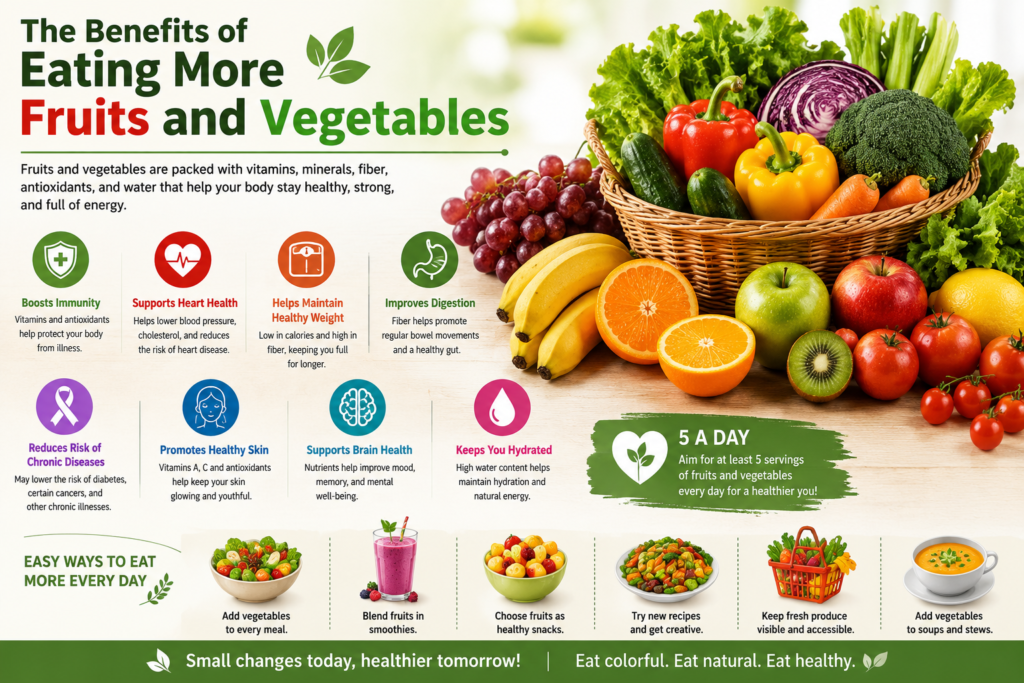
The Benefits of Eating More Fruits and Vegetables
The Benefits of Eating More Fruits and Vegetables. When it comes to improving your health, few habits are as simple and effective as eating more fruits and vegetables. These natural foods are packed with vitamins, minerals, antioxidants, fiber, and other nutrients that support nearly every function in your body. Yet despite their well-known benefits, many people still struggle to include enough fruits and vegetables in their daily diets.
Whether you’re looking to boost your energy, strengthen your immune system, manage your weight, improve digestion, or reduce your risk of chronic diseases, adding more fruits and vegetables to your meals can make a significant difference.
In this comprehensive guide, we’ll explore the many benefits of eating more fruits and vegetables and provide practical tips for incorporating them into your daily routine.
Why Fruits and Vegetables Are Essential for Health: The Benefits of Eating More Fruits and Vegetables
Fruits and vegetables are among the most nutrient-dense foods available. They provide a wide range of essential nutrients while being naturally low in calories and unhealthy fats.
They contain:
- Vitamins
- Minerals
- Fiber
- Antioxidants
- Phytochemicals
- Water
These nutrients work together to support overall health and help protect the body from disease.
Unlike highly processed foods, fruits and vegetables nourish your body without excessive sugar, sodium, or unhealthy fats.
Rich Source of Essential Vitamins and Minerals: The Benefits of Eating More Fruits and Vegetables
One of the biggest benefits of fruits and vegetables is their impressive nutrient content.
Different fruits and vegetables provide different vitamins and minerals, making variety important.
Vitamin C
Found in:
- Oranges
- Strawberries
- Kiwi
- Bell peppers
- Broccoli
Vitamin C supports:
- Immune health
- Skin health
- Wound healing
- Antioxidant protection
Vitamin A
Found in:
- Carrots
- Sweet potatoes
- Pumpkin
- Spinach
Vitamin A helps maintain:
- Healthy vision
- Immune function
- Skin health
Potassium
Found in:
- Bananas
- Potatoes
- Avocados
- Tomatoes
Potassium supports:
- Heart health
- Blood pressure regulation
- Muscle function
Folate
Found in:
- Leafy greens
- Beans
- Asparagus
Folate is essential for cell growth and development.
Boosts Your Immune System: The Benefits of Eating More Fruits and Vegetables
A strong immune system helps protect the body from infections and illnesses.
Many fruits and vegetables contain nutrients that support immune function, including:
- Vitamin C
- Vitamin A
- Zinc
- Antioxidants
These nutrients help your body:
- Produce immune cells
- Fight harmful bacteria and viruses
- Reduce inflammation
- Recover more quickly from illness
Regularly eating a variety of colourful produce can help strengthen your body’s natural defenses.
Supports Heart Health: The Benefits of Eating More Fruits and Vegetables
Heart disease remains one of the leading causes of death worldwide.
Eating more fruits and vegetables can significantly reduce the risk of heart-related conditions.
How They Help
Fruits and vegetables:
- Lower blood pressure
- Reduce cholesterol levels
- Improve blood vessel function
- Decrease inflammation
Foods particularly beneficial for heart health include:
- Berries
- Leafy greens
- Tomatoes
- Avocados
- Citrus fruits
The fiber and antioxidants found in these foods contribute to better cardiovascular health.
Helps Maintain a Healthy Weight: The Benefits of Eating More Fruits and Vegetables
Many people struggle with weight management due to diets high in processed foods and empty calories.
Fruits and vegetables can help because they are:
- Low in calories
- High in fiber
- Rich in water
These qualities help increase feelings of fullness while reducing overall calorie intake.
For example, replacing chips with carrot sticks or choosing fruit instead of sugary desserts can help support healthy weight loss or maintenance.
Improves Digestion: The Benefits of Eating More Fruits and Vegetables
Digestive health plays a major role in overall well-being.
One of the most important nutrients for digestion is fiber.
Benefits of Fiber
Fiber helps:
- Promote regular bowel movements
- Prevent constipation
- Support gut health
- Feed beneficial gut bacteria
Excellent sources of fiber include:
- Apples
- Pears
- Broccoli
- Carrots
- Beans
- Leafy greens
A healthy digestive system improves nutrient absorption and overall comfort.
Reduces the Risk of Chronic Diseases: The Benefits of Eating More Fruits and Vegetables
Numerous studies have shown that diets rich in fruits and vegetables are associated with a lower risk of chronic diseases.
These include:
- Heart disease
- Type 2 diabetes
- Certain cancers
- High blood pressure
- Obesity
The protective compounds found in fruits and vegetables help reduce oxidative stress and inflammation, two major contributors to chronic disease development.
Provides Powerful Antioxidants: The Benefits of Eating More Fruits and Vegetables
Antioxidants help protect cells from damage caused by free radicals.
Free radicals can contribute to:
- Premature aging
- Chronic diseases
- Cellular damage
Many fruits and vegetables are rich in antioxidants.
Examples include:
Blueberries
Contain anthocyanins that support brain and heart health.
Tomatoes
Rich in lycopene, which may support heart health and reduce certain disease risks.
Spinach
Contains lutein and zeaxanthin that support eye health.
Red Grapes
Provide resveratrol, a compound linked to various health benefits.
The more colourful your plate, the greater the variety of antioxidants you’re likely consuming.
Enhances Skin Health: The Benefits of Eating More Fruits and Vegetables
Healthy skin starts from within.
Many fruits and vegetables contain nutrients that support skin health and appearance.
Vitamin C
Supports collagen production, which helps keep skin firm and youthful.
Beta-Carotene
Found in orange vegetables like carrots and sweet potatoes.
Helps protect skin from environmental damage.
Water Content
Many fruits and vegetables help maintain hydration, which contributes to healthier-looking skin.
Regular consumption may help improve skin texture and overall appearance.
Supports Healthy Aging: The Benefits of Eating More Fruits and Vegetables
Aging is a natural process, but nutrition plays an important role in how we age.
Fruits and vegetables provide nutrients that help:
- Protect brain function
- Support bone health
- Maintain muscle strength
- Reduce inflammation
The antioxidants found in produce may help reduce age-related cellular damage and promote long-term health.
Improves Eye Health: The Benefits of Eating More Fruits and Vegetables
Certain fruits and vegetables contain nutrients that are essential for vision.
Important Eye-Health Nutrients
- Vitamin A
- Lutein
- Zeaxanthin
Foods rich in these nutrients include:
- Carrots
- Kale
- Spinach
- Sweet potatoes
- Bell peppers
These compounds help protect the eyes and support healthy vision throughout life.
Increases Energy Naturally: The Benefits of Eating More Fruits and Vegetables
Many people rely on sugary snacks and caffeine for quick energy boosts.
Unfortunately, these often lead to energy crashes later.
Fruits and vegetables provide:
- Natural carbohydrates
- Vitamins
- Minerals
- Hydration
These nutrients support steady energy production throughout the day.
Bananas, apples, berries, oranges, and leafy greens are excellent choices for sustained energy.
Supports Mental Health and Mood: The Benefits of Eating More Fruits and Vegetables
Nutrition plays a significant role in mental well-being.
Research suggests that diets rich in fruits and vegetables may be associated with:
- Better mood
- Reduced stress
- Improved mental clarity
- Lower risk of depression
The vitamins, minerals, antioxidants, and fiber found in produce support brain function and overall emotional wellness.
Helps Control Blood Sugar Levels: The Benefits of Eating More Fruits and Vegetables
Many fruits and vegetables contain fiber that slows digestion and helps regulate blood sugar.
Good options include:
- Apples
- Berries
- Pears
- Non-starchy vegetables
Fiber helps prevent rapid spikes and crashes in blood sugar levels.
People with diabetes or insulin resistance can benefit from including more high-fiber produce in their meals.
Strengthens Bones: The Benefits of Eating More Fruits and Vegetables
Strong bones require more than just calcium.
Many fruits and vegetables contain nutrients that support bone health, including:
- Vitamin K
- Magnesium
- Potassium
- Calcium
Leafy greens such as kale and spinach are especially beneficial.
Eating a variety of produce contributes to stronger bones and a lower risk of osteoporosis.
Promotes Healthy Hydration: The Benefits of Eating More Fruits and Vegetables
Many fruits and vegetables contain high amounts of water.
Examples include:
- Watermelon
- Cucumbers
- Strawberries
- Lettuce
- Celery
These foods contribute to daily hydration needs and support:
- Energy levels
- Digestion
- Temperature regulation
- Overall health
Hydration is essential for every system in the body.
Encourages Healthy Eating Habits: The Benefits of Eating More Fruits and Vegetables
When you increase your intake of fruits and vegetables, you naturally make less room for highly processed foods.
This can lead to:
- Better food choices
- Improved nutrition
- Reduced junk food consumption
- Greater awareness of healthy eating
Over time, these small changes can create lasting habits that improve overall well-being.
Practical Ways to Eat More Fruits and Vegetables: The Benefits of Eating More Fruits and Vegetables
Many people know they should eat more produce but aren’t sure how to fit it into their routine.
Here are some easy strategies.
Add Fruit to Breakfast
Try:
- Bananas on oatmeal
- Berries in yogurt
- Apples with peanut butter
Include Vegetables at Every Meal
Add:
- Spinach to eggs
- Salad with lunch
- Steamed vegetables at dinner
Keep Healthy Snacks Available
Choose:
- Baby carrots
- Apple slices
- Grapes
- Cucumber sticks
Blend Smoothies
Smoothies can combine fruits, vegetables, and protein into one convenient meal.
Try New Produce
Experiment with seasonal fruits and vegetables to add variety and excitement to your diet.
How Many Fruits and Vegetables Should You Eat?
Health experts generally recommend:
- At least 5 servings of fruits and vegetables per day
Many experts encourage even more for optimal health.
A simple goal is:
- Half your plate filled with fruits and vegetables at meals
This approach naturally increases nutrient intake while supporting overall health.
Common Barriers and How to Overcome Them
“I Don’t Have Time”
Choose pre-cut vegetables or frozen produce for convenience.
“Fresh Produce Is Expensive”
Frozen fruits and vegetables are often affordable and just as nutritious.
“I Don’t Like Vegetables”
Try different cooking methods such as roasting, grilling, or blending them into soups and smoothies.
“I Forget to Eat Them”
Keep fruits visible on your kitchen counter and prepare vegetables ahead of time.
Final Thoughts
The benefits of eating more fruits and vegetables extend far beyond basic nutrition. These powerful foods support heart health, improve digestion, strengthen the immune system, help manage weight, boost energy levels, and reduce the risk of chronic diseases.
The best part is that you don’t need to completely change your diet overnight. Small, consistent improvements—such as adding a serving of fruit to breakfast or including vegetables with dinner—can have a meaningful impact over time.
By making fruits and vegetables a regular part of your meals, you’re investing in your long-term health, vitality, and overall quality of life. Every colorful serving brings you one step closer to a healthier and happier future.