
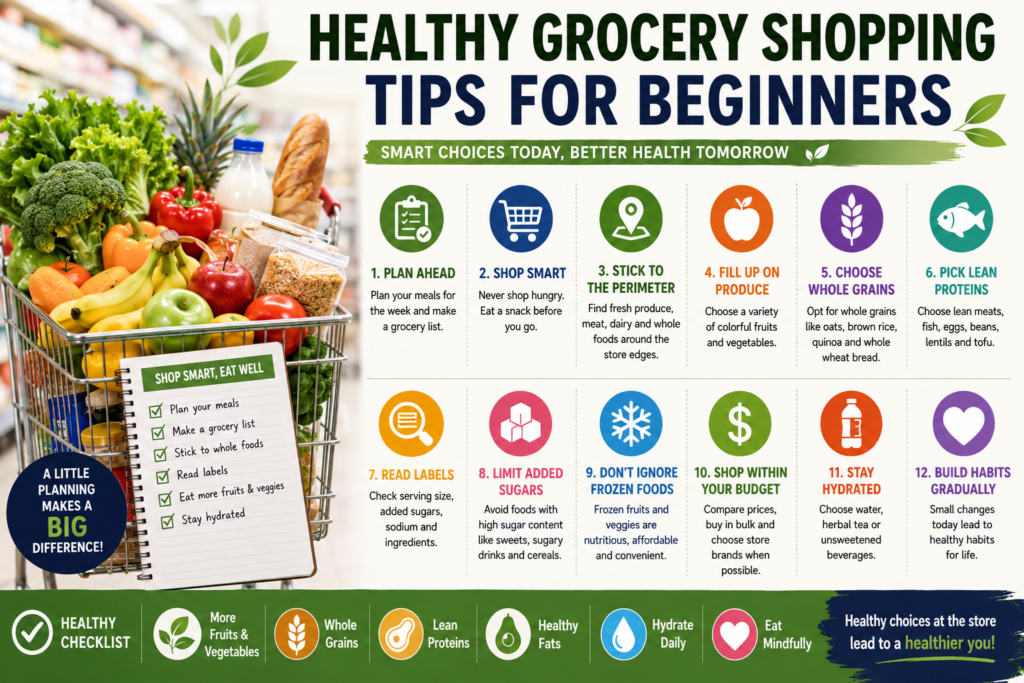
Healthy Grocery Shopping Tips for Beginners
Healthy Grocery Shopping Tips for Beginners. Walking into a grocery store can feel overwhelming, especially if you’re trying to eat healthier. With thousands of products lining the shelves, colourful marketing claims, and endless choices, it’s easy to feel unsure about what belongs in your shopping cart.
The good news is that healthy grocery shopping doesn’t have to be complicated. By learning a few simple strategies, you can confidently choose nutritious foods, save money, reduce food waste, and build healthy eating habits that support your long-term wellness goals.
Why Healthy Grocery Shopping Matters:
Healthy eating begins before you enter the kitchen. The foods you bring home determine the meals and snacks available throughout the week.
Making smart choices at the grocery store can help you:
- Improve overall nutrition
- Maintain a healthy weight
- Increase energy levels
- Support heart health
- Reduce processed food consumption
- Save money
- Create healthier habits
A well-planned grocery trip makes healthy eating much easier.
Start with a Plan: Healthy Grocery Shopping Tips for Beginners
One of the biggest mistakes beginners make is shopping without a plan.
When you enter a store without knowing what you need, you’re more likely to:
- Overspend
- Buy unhealthy impulse items
- Forget important ingredients
- Waste food
Create a Weekly Meal Plan
Before shopping, spend a few minutes planning your meals for the week.
Consider:
- Breakfasts
- Lunches
- Dinners
- Snacks
For example:
Breakfast:
- Oatmeal with fruit
- Greek yogurt with berries
Lunch:
- Chicken salad
- Vegetable wraps
Dinner:
- Grilled fish and vegetables
- Stir-fried chicken and brown rice
A meal plan gives your shopping trip clear direction.
Make a Grocery List: Healthy Grocery Shopping Tips for Beginners
Once your meals are planned, create a shopping list.
Organize it into categories such as:
Produce
- Apples
- Bananas
- Spinach
- Broccoli
Protein
- Chicken breast
- Eggs
- Beans
Whole Grains
- Oats
- Brown rice
- Whole wheat bread
Dairy
- Milk
- Greek yogurt
Healthy Snacks
- Nuts
- Fruit
- Hummus
A grocery list helps you stay focused and avoid unnecessary purchases.
Never Shop Hungry: Healthy Grocery Shopping Tips for Beginners
This simple tip can make a huge difference.
When you’re hungry, tempting foods become much harder to resist.
Research consistently shows that people buy more unhealthy foods when shopping on an empty stomach.
Try to:
- Eat a meal beforehand
- Have a healthy snack before leaving
Shopping while satisfied helps you make better decisions.
Shop the Perimeter First: Healthy Grocery Shopping Tips for Beginners
Most grocery stores are designed similarly.
The outer sections typically contain:
- Fresh fruits
- Vegetables
- Dairy
- Meat
- Fish
- Eggs
These areas often contain the least processed foods.
The center aisles usually contain more:
- Packaged foods
- Sugary snacks
- Processed meals
While some healthy items are found in the middle aisles, focusing on the perimeter first can improve the overall quality of your cart.
Fill Half Your Cart with Fruits and Vegetables: Healthy Grocery Shopping Tips for Beginners
Fruits and vegetables should be a major part of any healthy shopping trip.
They provide:
- Vitamins
- Minerals
- Fiber
- Antioxidants
Aim for a variety of colors.
Green Options
- Spinach
- Kale
- Broccoli
Red Options
- Tomatoes
- Strawberries
- Red peppers
Orange Options
- Carrots
- Sweet potatoes
- Oranges
Different colors provide different nutrients.
The more variety, the better.
Choose Whole Grains: Healthy Grocery Shopping Tips for Beginners
Not all grains are created equal.
Whole grains contain more nutrients and fiber than refined grains.
Healthy Choices
- Brown rice
- Oats
- Quinoa
- Whole wheat bread
- Whole grain pasta
Limit
- White bread
- Sugary cereals
- Refined pasta
Check ingredient labels to ensure whole grains are listed first.
Pick Lean Protein Sources: Healthy Grocery Shopping Tips for Beginners
Protein helps:
- Build muscle
- Support metabolism
- Increase fullness
Healthy protein options include:
Animal-Based
- Chicken breast
- Turkey
- Fish
- Eggs
- Greek yogurt
Plant-Based
- Lentils
- Beans
- Chickpeas
- Tofu
- Edamame
Including protein at each meal can help maintain energy throughout the day.
Learn How to Read Nutrition Labels: Healthy Grocery Shopping Tips for Beginners
Nutrition labels provide valuable information.
Pay attention to:
Serving Size
Many packages contain multiple servings.
Calories
Understand how much energy a serving provides.
Fiber
Higher fiber foods often support better digestion.
Added Sugars
Choose products with less added sugar.
Sodium
Look for lower-sodium options when possible.
Reading labels helps you make informed decisions.
Understand Ingredient Lists: Healthy Grocery Shopping Tips for Beginners
Ingredients are listed by weight.
The first ingredients appear in the largest amounts.
Better Example
Ingredients:
Whole Oats
Less Ideal Example
Ingredients:
Sugar, Corn Syrup, Refined Flour
Generally, shorter ingredient lists often indicate less processed foods.
Be Careful with Food Marketing Claims: Healthy Grocery Shopping Tips for Beginners
Many products use attractive health-related words.
Examples include:
- Natural
- Organic
- Multigrain
- Low Fat
- Sugar-Free
These claims don’t always mean the product is healthy.
Always verify claims by reading the nutrition label and ingredient list.
Choose Healthy Fats: Healthy Grocery Shopping Tips for Beginners
Healthy fats support:
- Brain health
- Heart health
- Hormone production
Good options include:
- Avocados
- Nuts
- Seeds
- Olive oil
- Natural nut butter
Try to limit highly processed fats and excessive fried foods.
Don’t Fear Frozen Fruits and Vegetables: Healthy Grocery Shopping Tips for Beginners
Many beginners assume fresh produce is always better.
Frozen fruits and vegetables offer several advantages:
- Convenient
- Affordable
- Long-lasting
- Nutrient-rich
Because they are frozen soon after harvesting, they often retain excellent nutritional value.
Frozen produce can help reduce food waste.
Watch Out for Added Sugars: Healthy Grocery Shopping Tips for Beginners
Added sugars appear in many unexpected foods.
Examples include:
- Yogurt
- Breakfast cereals
- Sauces
- Granola bars
- Salad dressings
Common names for sugar include:
- Sucrose
- Dextrose
- Corn syrup
- Cane sugar
- Maltose
Reducing added sugar supports better overall health.
Limit Highly Processed Foods: Healthy Grocery Shopping Tips for Beginners
Highly processed foods often contain:
- Excess sugar
- Excess sodium
- Artificial additives
- Unhealthy fats
Examples include:
- Chips
- Candy
- Sugary drinks
- Frozen desserts
While occasional treats are fine, try to make whole foods the foundation of your diet.
Buy Seasonal Produce: Healthy Grocery Shopping Tips for Beginners
Seasonal fruits and vegetables are often:
- Fresher
- More flavorful
- Less expensive
Examples:
Summer
- Watermelon
- Berries
- Peaches
Fall
- Apples
- Pumpkin
- Squash
Winter
- Citrus fruits
- Sweet potatoes
Spring
- Asparagus
- Strawberries
Shopping seasonally can improve both quality and affordability.
Compare Prices Wisely: Healthy Grocery Shopping Tips for Beginners
Healthy eating doesn’t have to be expensive.
Ways to save money include:
Buy Store Brands
Many store-brand products offer similar quality at lower prices.
Purchase in Bulk
Consider buying:
- Oats
- Rice
- Beans
- Nuts
Use Sales and Discounts
Plan meals around discounted items when possible.
Keep Healthy Snacks Available: Healthy Grocery Shopping Tips for Beginners
Having nutritious snacks on hand helps reduce unhealthy cravings.
Good options include:
- Apples
- Bananas
- Mixed nuts
- Yogurt
- Carrot sticks
- Hummus
Convenient healthy snacks make good choices easier.
Stay Hydrated: Healthy Grocery Shopping Tips for Beginners
Don’t forget beverages when shopping.
Prioritize:
- Water
- Sparkling water
- Herbal tea
Limit:
- Sugary sodas
- Energy drinks
- Sweetened beverages
Hydration plays a key role in overall health.
Shop with a Budget
Healthy shopping doesn’t require spending a fortune.
Before shopping:
- Set a spending limit
- Prioritize essentials
- Avoid unnecessary impulse purchases
A budget helps maintain consistency and reduces financial stress.
Avoid Impulse Buying
Stores are designed to encourage extra purchases.
Common temptation zones include:
- Checkout lanes
- End-of-aisle displays
- Promotional sections
Ask yourself:
“Was this on my list?”
If not, consider whether you truly need it.
Sample Beginner Grocery List:
Fruits
- Apples
- Bananas
- Oranges
- Berries
Vegetables
- Spinach
- Carrots
- Broccoli
- Bell peppers
Protein
- Chicken breast
- Eggs
- Greek yogurt
- Beans
Whole Grains
- Oatmeal
- Brown rice
- Whole wheat bread
Healthy Fats
- Avocados
- Almonds
- Olive oil
Snacks
- Fruit
- Nuts
- Hummus
This list provides a strong foundation for healthy eating.
Common Grocery Shopping Mistakes
Avoid these common beginner errors:
Shopping Without a List
Leads to impulse purchases.
Buying Too Much Produce
Can result in food waste.
Ignoring Nutrition Labels
Makes it harder to evaluate products.
Choosing Convenience Over Nutrition
Many convenience foods are highly processed.
Falling for Marketing Claims
Always check the actual ingredients and nutrition facts.
Final Thoughts
Smart grocery shopping helps you make better food choices, save money, reduce waste, and create lasting healthy habits.
Remember that healthy eating doesn’t require perfection. Focus on filling your cart with nutritious whole foods, planning ahead, reading labels, and making small improvements each week.
With practice, grocery shopping will become easier, more efficient, and more enjoyable. Every healthy choice you make at the store is an investment in your long-term well-being, helping you build a healthier lifestyle one shopping trip at a time.