
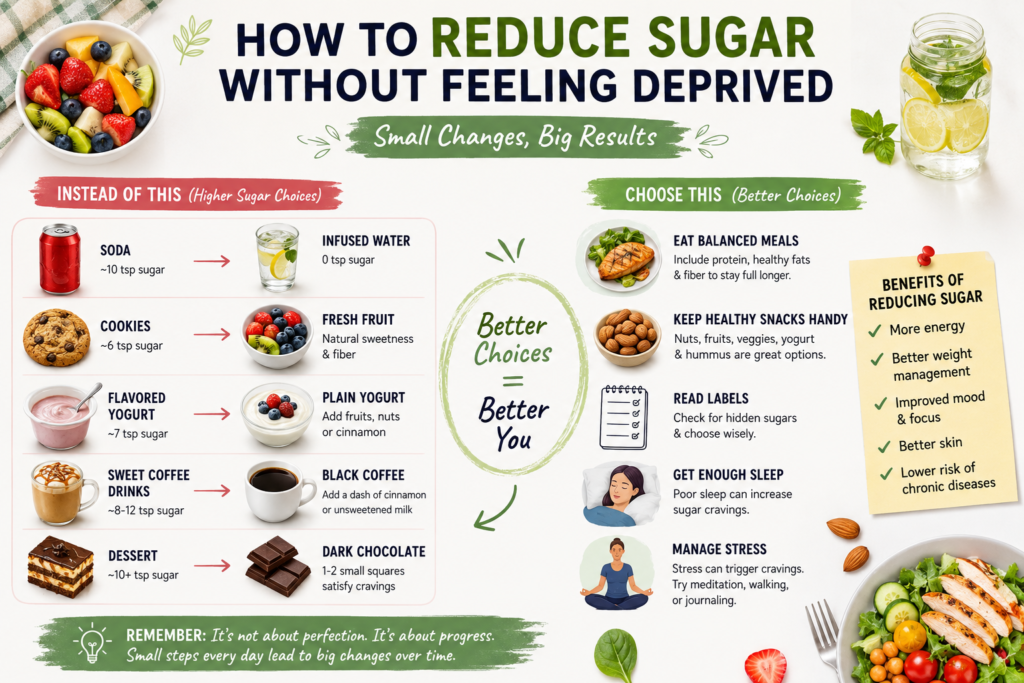
How to Reduce Sugar Without Feeling Deprived
How to Reduce Sugar Without Feeling Deprived. Sugar is everywhere. From breakfast cereals and flavored coffee drinks to sauces, snacks, and desserts, added sugar has become a major part of many people’s diets. While enjoying something sweet occasionally is perfectly fine, consuming too much sugar can negatively affect your health over time.
The challenge is that many people associate reducing sugar with strict diets, constant cravings, and giving up foods they love. Fortunately, that doesn’t have to be the case.
Learning how to reduce sugar without feeling deprived is all about making gradual changes, finding satisfying alternatives, and building healthy habits that are sustainable in the long run.
In this guide, you’ll discover practical ways to lower your sugar intake while still enjoying your meals and maintaining a balanced lifestyle.
Why Too Much Sugar Can Be a Problem:
Before discussing solutions, it’s important to understand why reducing sugar matters.
Excess sugar consumption has been linked to:
- Weight gain
- Type 2 diabetes
- Heart disease
- Tooth decay
- Energy crashes
- Increased inflammation
- Higher risk of chronic diseases
Added sugar provides calories without offering significant nutritional value.
This doesn’t mean you need to eliminate all sugar. The goal is to reduce excess added sugars while maintaining a healthy relationship with food.
Understand the Difference Between Natural and Added Sugars: How to Reduce Sugar Without Feeling Deprived
Not all sugars are the same.
Natural Sugars
Naturally occurring sugars are found in foods such as:
- Fruits
- Vegetables
- Milk
- Yogurt
These foods also provide:
- Fiber
- Vitamins
- Minerals
- Antioxidants
Added Sugars
Added sugars are incorporated during processing or preparation.
Examples include:
- White sugar
- Brown sugar
- Corn syrup
- High-fructose corn syrup
- Honey added to packaged foods
- Cane sugar
Most health concerns relate to excessive consumption of added sugars.
Start Slowly Instead of Going Cold Turkey: How to Reduce Sugar Without Feeling Deprived
One of the biggest mistakes people make is trying to eliminate sugar overnight.
This approach often leads to:
- Intense cravings
- Frustration
- Binge eating
- Giving up
Instead, reduce sugar gradually.
Identify Your Biggest Sources of Sugar: How to Reduce Sugar Without Feeling Deprived
Many people consume more sugar than they realize.
Common sources include:
- Soft drinks
- Sweetened coffee drinks
- Energy drinks
- Breakfast cereals
- Flavored yogurt
- Candy
- Cookies
- Pastries
- Ice cream
Spend a few days observing your eating habits.
Once you identify your biggest sugar sources, focus on reducing those first.
Drink More Water: How to Reduce Sugar Without Feeling Deprived
Sugary beverages are one of the largest contributors to excess sugar intake.
Examples include:
- Soda
- Sweet tea
- Sweetened coffee drinks
- Sports drinks
- Fruit punches
Replacing sugary beverages with water can dramatically reduce daily sugar consumption.
Make Water More Enjoyable
Try adding:
- Lemon slices
- Cucumber
- Mint leaves
- Orange slices
- Berries
These additions provide flavor without excessive sugar.
Choose Fruit When You Want Something Sweet: How to Reduce Sugar Without Feeling Deprived
Fruit naturally satisfies sweet cravings while providing valuable nutrients.
Great options include:
- Apples
- Berries
- Oranges
- Mangoes
- Grapes
- Pears
Because fruit contains fiber, it tends to be more filling than sugary snacks.
Instead of feeling deprived, you’ll still enjoy sweetness in a healthier form.
Eat More Protein: How to Reduce Sugar Without Feeling Deprived
Protein helps stabilize blood sugar levels and increase feelings of fullness.
Good protein sources include:
- Eggs
- Greek yogurt
- Chicken
- Fish
- Beans
- Lentils
- Tofu
A protein-rich meal can reduce the likelihood of reaching for sugary snacks later.
Increase Your Fiber Intake: How to Reduce Sugar Without Feeling Deprived
Fiber slows digestion and helps keep you satisfied longer.
Foods high in fiber include:
- Oats
- Beans
- Lentils
- Fruits
- Vegetables
- Whole grains
Higher-fiber meals often reduce cravings and help maintain steady energy throughout the day.
Don’t Skip Meals: How to Reduce Sugar Without Feeling Deprived
Skipping meals can lead to extreme hunger, making sugary foods much more tempting.
Try to eat balanced meals that include:
- Protein
- Healthy fats
- Fiber-rich carbohydrates
Consistent eating patterns help prevent sudden energy crashes and sugar cravings.
Read Nutrition Labels Carefully: How to Reduce Sugar Without Feeling Deprived
Sugar hides in many packaged foods.
Common names for sugar include:
- Sucrose
- Dextrose
- Fructose
- Maltose
- Corn syrup
- Cane juice
- Molasses
When shopping, check:
- Added sugars
- Total sugars
- Ingredient lists
Reading labels helps you make informed choices.
Reduce Sugar in Coffee and Tea: How to Reduce Sugar Without Feeling Deprived
Many coffee and tea drinks contain large amounts of added sugar.
Instead of eliminating them completely:
Gradual Reduction Method
- Use slightly less sugar each week.
- Reduce flavored syrups.
- Choose unsweetened versions.
Over time, your taste buds adapt to less sweetness.
Improve Your Breakfast Choices: How to Reduce Sugar Without Feeling Deprived
Many popular breakfast foods are surprisingly high in sugar.
Examples include:
- Sugary cereals
- Pastries
- Flavored oatmeal
- Sweetened yogurt
Healthier alternatives include:
- Oatmeal with fruit
- Greek yogurt with berries
- Eggs and whole-grain toast
- Smoothies made with whole fruits
Starting the day with balanced nutrition can help reduce cravings later.
Keep Healthy Snacks Available: How to Reduce Sugar Without Feeling Deprived
When hunger strikes, convenience matters.
Stock your kitchen with:
- Nuts
- Fresh fruit
- Yogurt
- Hummus
- Vegetables
- Hard-boiled eggs
Having healthier options nearby makes it easier to avoid sugary snacks.
Learn to Manage Emotional Eating: How to Reduce Sugar Without Feeling Deprived
Many people turn to sugar when feeling:
- Stressed
- Bored
- Lonely
- Tired
- Anxious
If emotional eating is a challenge, try alternative coping strategies:
- Walking
- Reading
- Meditation
- Calling a friend
- Exercising
- Journaling
Recognizing emotional triggers can help break the habit of using sugar for comfort.
Get Enough Sleep
Lack of sleep can increase cravings for sugary foods.
When you’re tired, your body often seeks quick energy sources.
Poor sleep may:
- Increase hunger hormones
- Reduce self-control
- Increase cravings
Aim for consistent, quality sleep each night.
Better sleep often leads to better food choices.
Allow Yourself Occasional Treats: How to Reduce Sugar Without Feeling Deprived
Completely banning sugar can make it more appealing.
A healthier approach is moderation.
Enjoying dessert occasionally can:
- Prevent feelings of deprivation
- Support a balanced mindset
- Reduce binge eating tendencies
Healthy eating is about consistency, not perfection.
Choose Dark Chocolate: How to Reduce Sugar Without Feeling Deprived
If you enjoy chocolate, dark chocolate can be a satisfying alternative.
Dark chocolate often contains:
- Less sugar
- More antioxidants
- Rich flavor
Because it’s more intense, many people find they need less to feel satisfied.
Use Natural Flavour Enhancers: How to Reduce Sugar Without Feeling Deprived
Reduce reliance on sugar by using naturally flavorful ingredients.
Examples include:
Cinnamon
Adds sweetness without sugar.
Vanilla Extract
Enhances flavour in oatmeal and yogurt.
Nutmeg
Provides warmth and sweetness.
Fresh Fruit
Naturally sweetens foods and beverages.
These ingredients can help satisfy your taste buds while reducing added sugars.
Be Careful with “Healthy” Foods: How to Reduce Sugar Without Feeling Deprived
Some foods marketed as healthy can contain significant amounts of sugar.
Examples include:
- Granola bars
- Protein bars
- Smoothies
- Fruit-flavored yogurt
- Sports drinks
Always check nutrition labels rather than relying on packaging claims.
Retrain Your Taste Buds: How to Reduce Sugar Without Feeling Deprived
One of the most encouraging things about reducing sugar is that your taste preferences can change.
Over time:
- Foods become naturally sweeter.
- Cravings often decrease.
- Highly sweet foods may start tasting too sweet.
This adaptation makes long-term sugar reduction much easier.
Focus on What You Can Add:
Instead of thinking about restriction, focus on adding nutritious foods.
Add:
- More fruits
- More vegetables
- More whole grains
- More protein
- More healthy fats
A positive mindset helps reduce feelings of deprivation.
Sample Day of Lower-Sugar Eating
Breakfast
Oatmeal topped with berries and cinnamon.
Snack
Apple with almond butter.
Lunch
Grilled chicken salad with mixed vegetables.
Snack
Greek yogurt and walnuts.
Dinner
Salmon, brown rice, and roasted vegetables.
Dessert
A few squares of dark chocolate.
This approach provides balanced nutrition while naturally reducing added sugar.
Common Mistakes to Avoid
Eliminating Sugar Too Quickly
Can lead to cravings and frustration.
Relying on Artificial Solutions
Focus on sustainable habits instead.
Skipping Meals
Often increases sugar cravings later.
Ignoring Hidden Sugars
Always read labels.
Expecting Immediate Results
Healthy habits take time to develop.
Patience is important.
Long-Term Benefits of Reducing Sugar
As sugar intake decreases, many people notice:
- More stable energy levels
- Better weight management
- Improved dental health
- Fewer cravings
- Better concentration
- Improved mood
- Better overall health
These benefits often become noticeable within weeks of making consistent changes.
Final Thoughts
Learning how to reduce sugar without feeling deprived doesn’t require extreme dieting or giving up everything you enjoy. The most successful approach involves gradual changes, mindful choices, and finding healthier alternatives that still satisfy your taste buds.
By drinking more water, choosing whole foods, eating more protein and fiber, managing cravings, and allowing occasional treats, you can significantly reduce your sugar intake while maintaining a balanced and enjoyable lifestyle.
Remember that healthy eating is not about perfection. Every small step toward reducing added sugar is a positive investment in your long-term health, energy, and well-being. Focus on progress rather than perfection, and you’ll create habits that last for years to come.