
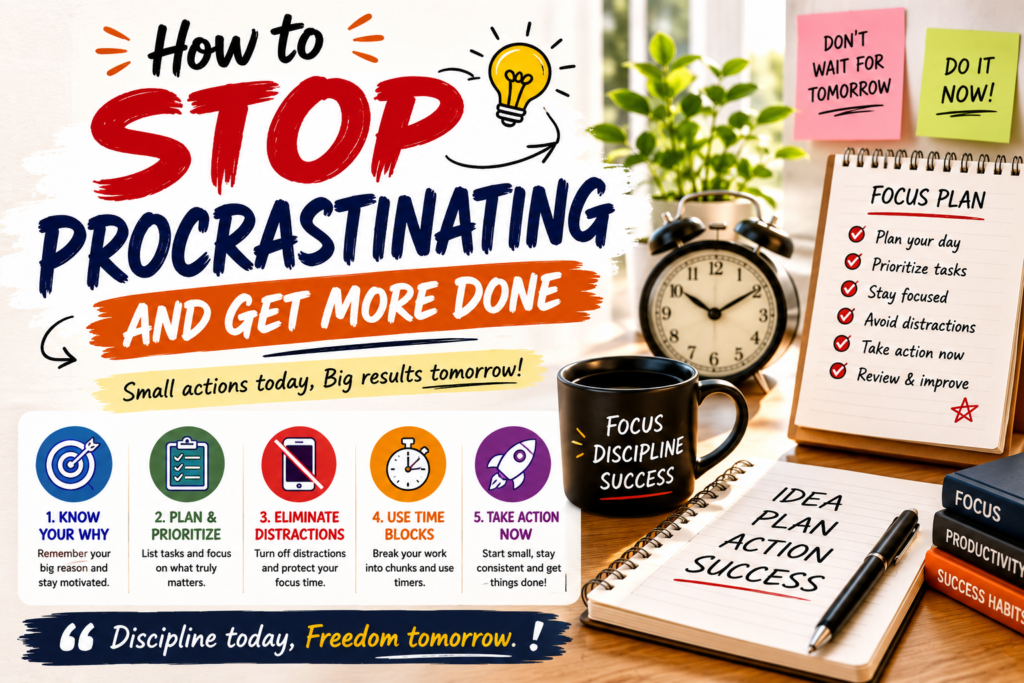
How to Stop Procrastinating and Get More Done:
Introduction
How to Stop Procrastinating and Get More Done. Almost everyone procrastinates at some point in life. Whether it is delaying homework, avoiding important work tasks, postponing exercise, or waiting until the last minute to complete responsibilities, procrastination affects people of all ages.
Many people think procrastination happens because they are lazy. However, procrastination is usually connected to fear, stress, lack of motivation, perfectionism, poor time management, or feeling overwhelmed. Understanding why procrastination happens is the first step toward overcoming it.
The good news is that procrastination can be controlled with the right habits, mindset, and daily routines. Productivity is not about working endlessly or being busy all the time.
This complete guide explores the causes of procrastination, how it affects life, and practical strategies to stop delaying tasks and become more productive every day.
What Is Procrastination?
Procrastination is the habit of delaying important tasks even when you know they should be completed. Instead of taking action, people often choose distractions or less important activities.
Common examples of procrastination include:
- Scrolling social media instead of studying
- Watching videos instead of working
- Delaying assignments until the last minute
- Avoiding difficult conversations
- Postponing exercise or healthy habits
Procrastination may feel comfortable temporarily, but it often creates stress, guilt, and pressure later.
Why People Procrastinate:How to Stop Procrastinating and Get More Done:
People procrastinate for many different reasons. Understanding the cause can help you solve the problem more effectively.
Fear of Failure
Many people avoid tasks because they are afraid of making mistakes or failing.
Thoughts like:
- “What if I’m not good enough?”
- “What if I fail?”
- “What if people judge me?”
can create anxiety and prevent action.
Fear often causes people to delay tasks instead of facing discomfort.
Perfectionism
Perfectionists often procrastinate because they want everything to be flawless.
They may think:
- “I need the perfect plan before starting.”
- “If it’s not perfect, it’s not worth doing.”
This mindset creates pressure and delays progress.
In reality, progress is more important than perfection.
Feeling Overwhelmed
Large tasks can feel stressful and difficult to begin.
For example:
- Writing a long report
- Preparing for exams
- Starting a business
- Cleaning a messy room
When tasks feel too big, the brain may avoid them completely.
Breaking tasks into smaller steps makes them easier to manage.
Lack of Motivation
Some tasks feel boring, difficult, or uninteresting.
Without immediate rewards, it becomes tempting to choose entertainment or comfort instead.
Motivation naturally changes from day to day, which is why discipline and routines are important.
Poor Time Management
Without planning and structure, people often waste time without realizing it.
Common time-wasting habits include:
- Excessive social media use
- Constant phone checking
- Watching too much television
- Multitasking
- Lack of organization
Poor time management often leads to procrastination.
The Negative Effects of Procrastination:How to Stop Procrastinating and Get More Done:
Procrastination affects more than productivity. It can influence mental health, confidence, relationships, and overall well-being.
Increased Stress
Delaying tasks creates pressure as deadlines get closer.
This often leads to:
- Anxiety
- Panic
- Emotional exhaustion
- Poor sleep
Completing tasks earlier reduces unnecessary stress.
Lower Productivity
Procrastination wastes valuable time and energy.
People often spend more time worrying about tasks than actually completing them.
Reduced Confidence
Constant procrastination can damage self-esteem.
People may begin thinking:
- “I’m lazy.”
- “I can’t stay disciplined.”
- “I never finish anything.”
Repeated delays weaken self-confidence over time.
Missed Opportunities
Procrastination can prevent people from reaching important goals.
Examples include:
- Missing deadlines
- Poor academic performance
- Lost career opportunities
- Delayed personal growth
Small delays repeated consistently can create long-term consequences.
The Psychology Behind Procrastination: How to Stop Procrastinating and Get More Done:
The human brain naturally seeks comfort and avoids discomfort.
Tasks that feel stressful, boring, or difficult trigger resistance in the brain. Meanwhile, activities like social media, games, or entertainment provide quick dopamine rewards.
This creates a cycle where short-term pleasure becomes more appealing than long-term success.
The problem is that temporary comfort often leads to greater stress later.
Learning to manage discomfort is one of the keys to overcoming procrastination.
How to Stop Procrastinating: How to Stop Procrastinating and Get More Done:
Overcoming procrastination requires practical strategies and consistent habits.
1. Start Small
One of the biggest reasons people procrastinate is because tasks feel overwhelming.
Instead of focusing on the entire task, focus on the first small step.
Examples:
- Write one paragraph
- Study for 10 minutes
- Clean one section of the room
- Exercise for 5 minutes
Starting creates momentum.
Small actions often lead to continued progress.
2. Use the 5-Minute Rule
Tell yourself you only need to work on the task for five minutes.
Once people begin, they usually continue longer because starting is often the hardest part.
This method reduces mental resistance.
3. Break Tasks Into Smaller Steps: How to Stop Procrastinating and Get More Done:
Large tasks become easier when divided into smaller parts.
For example:
Instead of:
“Write a research paper.”
Break it into:
- Choose a topic
- Research information
- Create an outline
- Write introduction
- Edit final draft
Smaller steps feel less stressful and more achievable.
4. Create a Daily Schedule
Successful people usually plan their time carefully.
A schedule helps:
- Reduce distractions
- Increase focus
- Improve organization
- Build consistency
You can create schedules using:
- Planners
- Calendars
- Productivity apps
- To-do lists
Planning reduces decision fatigue and improves productivity.
5. Prioritize Important Tasks
Not all tasks are equally important.
Focus first on high-priority responsibilities instead of easy distractions.
A useful strategy is the “Most Important Task” method.
Ask yourself:
“What is the most important thing I need to complete today?”
Finish important tasks before entertainment or less valuable activities.
6. Remove Distractions: How to Stop Procrastinating and Get More Done:
Distractions are one of the biggest causes of procrastination.
Common distractions include:
- Social media
- Phone notifications
- Television
- Noisy environments
- Multitasking
Ways to Reduce Distractions
- Turn off notifications
- Put your phone away
- Use focus timers
- Work in quiet spaces
- Keep your workspace organized
A focused environment improves concentration and efficiency.
7. Stop Waiting for Motivation
Many people believe they must “feel motivated” before taking action.
However, motivation is temporary.
Action often creates motivation, not the other way around.
Successful people continue working even on days when they do not feel inspired.
Discipline is more reliable than motivation.
8. Use Time Blocking
Time blocking means assigning specific periods for focused work.
Example:
- 9:00 AM – 10:00 AM: Study
- 10:00 AM – 10:15 AM: Break
- 10:15 AM – 11:00 AM: Writing tasks
Time blocking improves focus and prevents wasted time.
9. Reward Yourself: How to Stop Procrastinating and Get More Done:
Rewards help reinforce productivity and build positive habits.
Examples of healthy rewards:
- Taking a short break
- Watching a favorite show
- Enjoying a snack
- Spending time with friends
Small rewards make difficult tasks feel more enjoyable.
10. Build Self-Discipline
Self-discipline means doing what needs to be done even when you do not feel like it.
Discipline develops through repetition and consistency.
Ways to strengthen discipline include:
- Following routines
- Keeping promises to yourself
- Completing small tasks daily
- Avoiding unnecessary excuses
Discipline becomes stronger with practice.
11. Practice Positive Self-Talk
Negative self-talk increases procrastination.
Thoughts like:
- “I’ll never finish this.”
- “I’m too lazy.”
- “I always fail.”
reduce confidence and motivation.
Replace negative thoughts with:
- “I can improve step by step.”
- “Starting small is still progress.”
- “I don’t need perfection to begin.”
Positive thinking encourages action.
12. Focus on Progress, Not Perfection: How to Stop Procrastinating and Get More Done:
Perfectionism often prevents people from starting.
Remember:
Done is better than perfect.
Taking imperfect action creates growth and improvement over time.
Perfection is impossible, but progress is achievable.
13. Create Healthy Habits
Productivity improves when supported by healthy daily routines.
Helpful habits include:
- Sleeping properly
- Exercising regularly
- Eating healthy foods
- Drinking enough water
- Taking mental breaks
A healthy body supports a productive mind.
14. Use the Pomodoro Technique
The Pomodoro Technique is a popular productivity method.
How it works:
- Work for 25 minutes
- Take a 5-minute break
- Repeat the cycle
This method improves focus and prevents burnout.
Short work sessions feel less overwhelming.
15. Identify Your Peak Productivity Hours: How to Stop Procrastinating and Get More Done:
Some people focus better in the morning, while others work better later in the day.
Pay attention to when your energy and concentration are strongest.
Use those hours for:
- Studying
- Creative work
- Important projects
- Problem-solving tasks
Working with your natural energy improves efficiency.
16. Learn to Manage Stress: How to Stop Procrastinating and Get More Done:
Stress often increases procrastination.
Healthy stress-management habits include:
- Exercise
- Meditation
- Deep breathing
- Journaling
- Spending time outdoors
Calm minds focus better and avoid unnecessary delays.
17. Build a Productive Environment: How to Stop Procrastinating and Get More Done:
Your environment strongly affects behavior.
A productive environment includes:
- Clean workspace
- Good lighting
- Comfortable seating
- Limited distractions
- Organized materials
Small environmental changes can improve focus significantly.
18. Stay Accountable: How to Stop Procrastinating and Get More Done:
Accountability increases consistency.
Ways to stay accountable:
- Share goals with friends
- Use productivity apps
- Join study groups
- Track daily progress
People are more likely to complete tasks when someone else knows about their goals.
19. Learn From Mistakes
Everyone procrastinates sometimes.
The important thing is learning from setbacks instead of giving up completely.
Ask yourself:
- What distracted me?
- Why did I avoid the task?
- How can I improve next time?
Growth comes from reflection and adjustment.
20. Develop a Growth Mindset
A growth mindset is the belief that improvement is possible through effort and learning.
People with a growth mindset:
- Stay patient
- Continue learning
- View mistakes as lessons
- Focus on improvement
This mindset reduces fear and encourages consistent action.
Daily Habits That Improve Productivity
Helpful daily habits include:
- Waking up early
- Planning your day
- Exercising regularly
- Reading daily
- Limiting screen time
- Taking breaks
- Sleeping on time
- Practicing gratitude
Small habits repeated consistently create major long-term results.
How Successful People Avoid Procrastination
Highly productive people often:
- Plan their days carefully
- Focus on priorities
- Reduce distractions
- Follow routines consistently
- Take action even without motivation
Success usually comes from discipline and consistency rather than waiting for perfect conditions.
Conclusion
Procrastination is one of the biggest obstacles to productivity and personal growth, but it can be overcome with the right mindset and habits. Delaying important tasks may feel comfortable temporarily, but taking action creates confidence, progress, and long-term success.
By starting small, reducing distractions, building discipline, managing time wisely, and focusing on progress instead of perfection, anyone can become more productive and stop procrastinating.
Remember:
- Small actions create big results
- Starting is often the hardest part
- Consistency matters more than motivation
- Progress is better than perfection
- Every day is a new chance to improve
The habits you build today will shape your future tomorrow. Start now, take one small step, and continue moving forward every single day.
Click here