
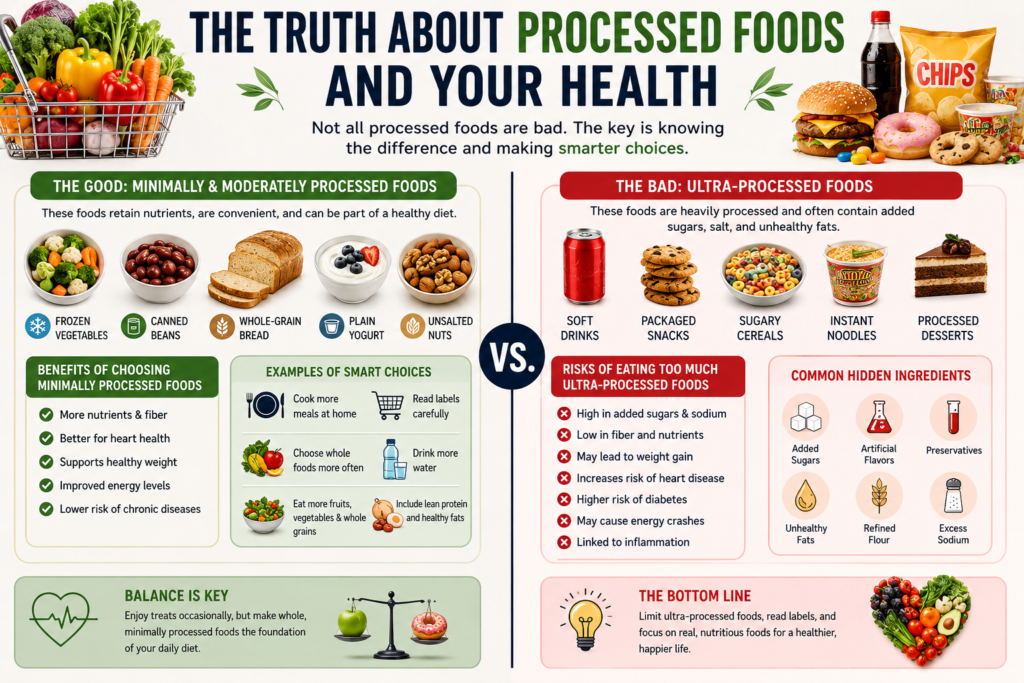
The Truth About Processed Foods and Your Health
The Truth About Processed Foods and Your Health. Processed foods are often blamed for many modern health problems, from weight gain and heart disease to diabetes and low energy levels. At the same time, many of the foods we eat every day are technically processed. This can make it difficult to understand which processed foods are harmful and which can still be part of a healthy diet.
The truth is that not all processed foods are created equal. Some processing methods make foods safer, more convenient, and longer lasting, while others can reduce nutritional value and contribute to poor health when consumed excessively.
Understanding the facts about processed foods can help you make smarter choices without feeling overwhelmed or guilty about your diet. In this comprehensive guide, we’ll explore what processed foods are, how they affect your health, and how to create a balanced approach to eating.
What Are Processed Foods?
A processed food is any food that has been changed from its natural state before reaching your plate.
Processing can include:
- Washing
- Freezing
- Drying
- Canning
- Packaging
- Cooking
- Adding ingredients
By this definition, many healthy foods are processed to some extent.
Examples include:
- Frozen vegetables
- Canned beans
- Whole-grain bread
- Yogurt
- Cheese
Processing itself isn’t necessarily harmful. The key is understanding the degree of processing.
Different Types of Processed Foods:
Not all processed foods have the same impact on health.
Nutrition experts often classify foods into different levels of processing.
Minimally Processed Foods: The Truth About Processed Foods and Your Health
These foods undergo minimal changes while retaining most of their natural nutrients.
Examples include:
- Washed vegetables
- Frozen fruits
- Unsalted nuts
- Plain yogurt
- Fresh-cut produce
These foods are generally considered healthy and convenient options.
Moderately Processed Foods: The Truth About Processed Foods and Your Health
These foods contain added ingredients for flavor, preservation, or convenience.
Examples include:
- Whole-grain bread
- Canned vegetables
- Peanut butter
- Cheese
- Pasta
Many moderately processed foods can fit into a healthy diet.
Ultra-Processed Foods: The Truth About Processed Foods and Your Health
Ultra-processed foods are heavily altered and often contain ingredients not commonly used in home cooking.
Examples include:
- Soft drinks
- Packaged snacks
- Sugary cereals
- Candy
- Fast food
- Instant noodles
- Processed desserts
These foods often contain:
- Added sugars
- Refined grains
- Artificial flavors
- Preservatives
- Unhealthy fats
- Excess sodium
Most health concerns surrounding processed foods focus on this category.
Why Processed Foods Are So Popular: The Truth About Processed Foods and Your Health
Processed foods are widely consumed because they offer several advantages.
Convenience
Ready-to-eat foods save time and effort.
Affordability
Many processed foods are inexpensive and accessible.
Long Shelf Life
Preservatives and packaging help foods last longer.
Taste
Manufacturers often design products to be highly appealing through combinations of sugar, fat, and salt.
These factors make processed foods attractive, especially for busy lifestyles.
The Health Benefits of Some Processed Foods: The Truth About Processed Foods and Your Health
Despite the negative reputation, certain processed foods can provide important benefits.
Food Safety
Processing helps eliminate harmful bacteria and pathogens.
Examples include:
- Pasteurized milk
- Frozen foods
- Canned foods
Improved Accessibility
Processing allows foods to be available year-round.
For example:
- Frozen berries
- Canned beans
- Frozen vegetables
Nutrient Preservation
Freezing often preserves nutrients effectively.
Frozen fruits and vegetables can be nearly as nutritious as fresh produce.
Convenience for Healthy Eating
Pre-washed salads and frozen vegetables can encourage people to eat more nutritious foods.
The Downsides of Ultra-Processed Foods
While some processing is beneficial, ultra-processed foods may negatively affect health when consumed frequently.
High in Added Sugars: The Truth About Processed Foods and Your Health
Many ultra-processed foods contain significant amounts of sugar.
Examples include:
- Soda
- Candy
- Sweetened cereals
- Flavored yogurt
- Packaged desserts
Excess sugar consumption has been linked to:
- Weight gain
- Type 2 diabetes
- Heart disease
- Tooth decay
Excess Sodium: The Truth About Processed Foods and Your Health
Sodium helps preserve food and enhance flavor.
However, many processed foods contain excessive amounts.
Examples include:
- Chips
- Frozen meals
- Canned soups
- Processed meats
Too much sodium may contribute to:
- High blood pressure
- Heart disease
- Stroke
Unhealthy Fats: The Truth About Processed Foods and Your Health
Some ultra-processed foods contain unhealthy fats that may increase health risks.
Examples include:
- Fried snacks
- Packaged baked goods
- Certain fast foods
Excessive intake can negatively affect heart health.
Low Nutritional Value: The Truth About Processed Foods and Your Health
Many heavily processed foods provide calories without offering substantial nutrients.
They may be:
- Low in fiber
- Low in vitamins
- Low in minerals
- High in empty calories
As a result, people may consume more calories while receiving fewer nutrients.
How Processed Foods Affect Weight Gain: The Truth About Processed Foods and Your Health
Research consistently shows a connection between high consumption of ultra-processed foods and weight gain.
Several factors contribute:
High Calorie Density
Ultra-processed foods often contain many calories in small portions.
Lower Satiety
These foods may not keep you full for long.
Easy Overeating
Highly palatable foods encourage larger portions and frequent snacking.
Blood Sugar Fluctuations
Refined carbohydrates can cause rapid rises and falls in blood sugar levels, increasing hunger.
These factors make maintaining a healthy weight more difficult.
Processed Foods and Heart Health: The Truth About Processed Foods and Your Health
A diet rich in ultra-processed foods may increase the risk of cardiovascular disease.
Potential contributors include:
- Excess sodium
- Added sugars
- Saturated fats
- Low fiber intake
On the other hand, minimally processed foods such as fruits, vegetables, legumes, and whole grains support heart health.
Processed Foods and Diabetes: The Truth About Processed Foods and Your Health
Type 2 diabetes has become increasingly common worldwide.
Frequent consumption of ultra-processed foods may increase risk due to:
- Excess sugar intake
- Weight gain
- Insulin resistance
- Poor nutrient quality
Replacing highly processed foods with whole foods can help support healthy blood sugar control.
Impact on Digestive Health: The Truth About Processed Foods and Your Health
A healthy digestive system relies on adequate fiber intake.
Many ultra-processed foods contain little or no fiber.
Low fiber intake can contribute to:
- Constipation
- Poor gut health
- Reduced beneficial gut bacteria
Whole foods such as fruits, vegetables, legumes, and whole grains support a healthier digestive system.
The Connection Between Processed Foods and Energy Levels: The Truth About Processed Foods and Your Health
Many people notice energy crashes after eating highly processed foods.
This often happens because:
- Refined carbohydrates digest quickly.
- Blood sugar rises rapidly.
- Energy drops shortly afterward.
Whole foods generally provide more stable energy because they contain:
- Fiber
- Protein
- Healthy fats
These nutrients help slow digestion and maintain consistent energy levels.
Are All Packaged Foods Bad?
No.
A common misconception is that every packaged food is unhealthy.
Many nutritious packaged foods include:
- Frozen vegetables
- Frozen fruit
- Plain oatmeal
- Canned beans
- Whole-grain bread
- Unsalted nuts
The key is reading labels and understanding ingredients.
How to Read Food Labels: The Truth About Processed Foods and Your Health
Food labels can help identify healthier options.
Look for:
Short Ingredient Lists
Fewer ingredients often indicate less processing.
Whole Food Ingredients
Examples:
- Oats
- Brown rice
- Beans
- Whole wheat
Lower Added Sugar
Check nutrition facts for added sugars.
Lower Sodium
Choose lower-sodium versions when available.
Higher Fiber
Foods rich in fiber generally offer better nutritional value.
Practical Ways to Reduce Ultra-Processed Foods: The Truth About Processed Foods and Your Health
You don’t need to eliminate processed foods completely.
Instead, focus on reducing the most heavily processed options.
Choose Whole Foods More Often: The Truth About Processed Foods and Your Health
Build meals around:
- Fruits
- Vegetables
- Whole grains
- Lean proteins
- Healthy fats
Cook More Meals at Home: The Truth About Processed Foods and Your Health
Home cooking gives you greater control over ingredients.
Even simple meals can significantly improve diet quality.
Replace Sugary Drinks: The Truth About Processed Foods and Your Health
Choose:
- Water
- Sparkling water
- Unsweetened tea
Instead of:
- Soda
- Energy drinks
- Sweetened beverages
Upgrade Your Snacks: The Truth About Processed Foods and Your Health
Swap:
- Chips for nuts
- Candy for fruit
- Sugary granola bars for yogurt
Small substitutions can make a big difference.
Shop Smart: The Truth About Processed Foods and Your Health
When grocery shopping:
- Focus on fresh produce
- Buy frozen vegetables
- Read ingredient labels
- Limit highly processed convenience foods
A healthier cart leads to healthier meals at home.
Finding Balance Instead of Perfection: The Truth About Processed Foods and Your Health
Healthy eating doesn’t require avoiding every processed food.
A balanced approach is more realistic and sustainable.
It’s okay to enjoy:
- Pizza occasionally
- Dessert sometimes
- Convenience foods when needed
What matters most is your overall dietary pattern.
Consistently choosing nutritious foods while allowing flexibility creates a healthier relationship with food.
Common Myths About Processed Foods
Myth 1: All Processed Foods Are Bad
False.
Many minimally processed foods are nutritious and convenient.
Myth 2: Fresh Is Always Better Than Frozen
False.
Frozen fruits and vegetables often retain excellent nutritional value.
Myth 3: Healthy Eating Requires Eliminating All Packaged Foods
False.
Many packaged foods can support a healthy diet.
Myth 4: Organic Processed Foods Are Automatically Healthy
False.
Organic cookies are still cookies.
Always check nutrition labels and ingredients.
Creating a Healthier Diet:
Focus on progress, not perfection.
Try these guidelines:
- Fill half your plate with fruits and vegetables.
- Choose whole grains more often.
- Include lean protein.
- Limit sugary drinks.
- Reduce highly processed snacks.
- Read food labels.
Small improvements made consistently produce lasting results.
Final Thoughts
The truth about processed foods and your health is more nuanced than many people realize. Processing itself is not the enemy. In fact, some processed foods improve convenience, safety, and access to nutritious options.
The real concern lies with excessive consumption of ultra-processed foods that are high in added sugars, sodium, unhealthy fats, and empty calories. These foods can contribute to weight gain, heart disease, diabetes, and other health problems when consumed regularly.
Rather than focusing on strict rules, aim to build a balanced diet centered around whole and minimally processed foods while enjoying occasional treats in moderation. By making informed choices and understanding food labels, you can support your health without feeling restricted.
Remember, healthy eating isn’t about perfection—it’s about creating sustainable habits that help you feel your best every day.