
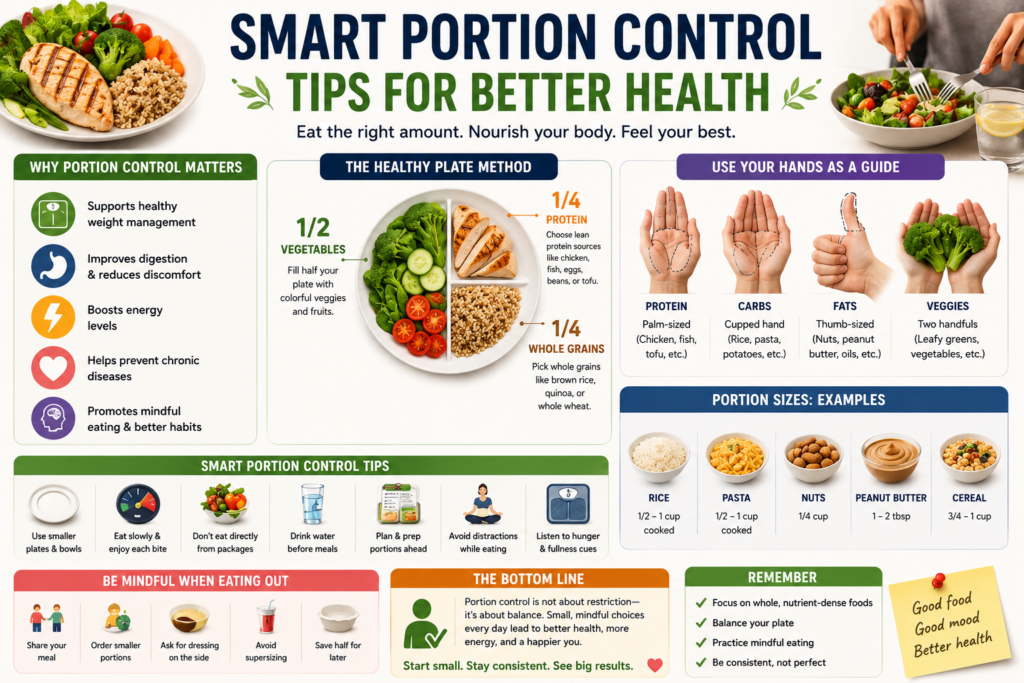
Smart Portion Control Tips for Better Health
Smart Portion Control Tips for Better Health. When people think about improving their health, they often focus on what they eat. While choosing nutritious foods is important, how much you eat matters just as much. Even healthy foods can contribute to weight gain and digestive discomfort when consumed in excessive amounts.
Portion control is not about strict dieting, starving yourself, or counting every calorie. Instead, it’s about understanding the right amount of food your body needs and developing mindful eating habits that support long-term health.
In this comprehensive guide, we’ll explore practical and sustainable strategies to help you manage portions without feeling deprived.
What Is Portion Control?
Portion control means eating appropriate amounts of food based on your body’s needs.
A portion is the amount of food you choose to eat at one time.
A serving, on the other hand, is a standardized amount listed on nutrition labels.
Many people unknowingly consume portions that are much larger than recommended serving sizes.
For example:
- A serving of pasta may be 1 cup.
- A serving of peanut butter may be 2 tablespoons.
- A serving of cereal may be 1 cup.
However, actual portions often exceed these amounts significantly.
Understanding this difference is the first step toward healthier eating.
Why Portion Control Matters: Smart Portion Control Tips for Better Health
Portion control offers numerous health benefits.
Supports Healthy Weight Management
Eating appropriate portions helps balance calorie intake and energy needs.
Improves Digestion
Overeating can lead to:
- Bloating
- Indigestion
- Stomach discomfort
Moderate portions support better digestion.
Stabilizes Energy Levels
Balanced meals help prevent:
- Energy crashes
- Excessive hunger
- Blood sugar fluctuations
Promotes Mindful Eating
Paying attention to portions encourages awareness of hunger and fullness signals.
Why Portion Sizes Have Increased: Smart Portion Control Tips for Better Health
Over the past few decades, portion sizes have grown dramatically.
Examples include:
- Larger restaurant meals
- Bigger beverage sizes
- Oversized snack packages
- Supersized fast-food options
As larger portions become normal, many people lose track of appropriate serving sizes.
This phenomenon is sometimes called “portion distortion.”
Listen to Your Hunger and Fullness Cues: Smart Portion Control Tips for Better Health
Your body naturally provides signals about hunger and fullness.
The challenge is learning to recognize them.
Signs of Hunger
- Stomach growling
- Low energy
- Difficulty concentrating
- Mild hunger sensations
Signs of Fullness
- Satisfaction
- Reduced hunger
- Comfortable stomach fullness
Try to stop eating when you feel comfortably satisfied rather than overly full.
Use Smaller Plates and Bowls: Smart Portion Control Tips for Better Health
One of the simplest portion control strategies is changing your dinnerware.
Research suggests that people often eat more when using larger plates.
Smaller plates can:
- Make portions appear larger
- Reduce overeating
- Increase meal satisfaction
This simple visual trick can be surprisingly effective.
Follow the Healthy Plate Method: Smart Portion Control Tips for Better Health
A balanced plate provides structure without requiring calorie counting.
Fill your plate like this:
Half the Plate
- Vegetables
- Salad
- Fruits
One-Quarter
- Lean protein
Examples:
- Chicken
- Fish
- Eggs
- Beans
One-Quarter
- Whole grains or healthy carbohydrates
Examples:
- Brown rice
- Quinoa
- Whole wheat pasta
This method naturally supports healthy portions.
Measure Portions Occasionally: Smart Portion Control Tips for Better Health
You don’t need to measure every meal forever.
However, measuring foods occasionally helps develop awareness.
Consider measuring:
- Rice
- Pasta
- Nuts
- Peanut butter
- Cereals
Many people are surprised by how different actual serving sizes are from their estimates.
Learn Simple Hand Portion Guides: Smart Portion Control Tips for Better Health
Your hands can serve as convenient portion-control tools.
Protein
Palm-sized portion
Examples:
- Chicken breast
- Fish
- Tofu
Carbohydrates
One cupped hand
Examples:
- Rice
- Pasta
- Potatoes
Healthy Fats
Thumb-sized portion
Examples:
- Peanut butter
- Butter
- Oils
Vegetables
Two handfuls
These visual guides make portion control practical anywhere.
Eat Slowly: Smart Portion Control Tips for Better Health
Eating too quickly can cause overeating.
It takes time for your brain to receive fullness signals.
Try these strategies:
- Chew thoroughly
- Put utensils down between bites
- Take small bites
- Enjoy the flavour of your food
Eating slowly often leads to greater satisfaction with smaller portions.
Avoid Eating Directly from Packages: Smart Portion Control Tips for Better Health
Large containers can encourage mindless overeating.
Examples include:
- Chips
- Crackers
- Popcorn
- Cookies
Instead:
- Portion snacks into a bowl or plate
- Put the package away before eating
This simple habit improves awareness and portion control.
Prioritize Protein at Meals: Smart Portion Control Tips for Better Health
Protein helps increase feelings of fullness.
Good protein sources include:
- Eggs
- Fish
- Chicken
- Greek yogurt
- Beans
- Lentils
Protein-rich meals may help reduce overeating later in the day.
Include Plenty of Fiber: Smart Portion Control Tips for Better Health
Fiber helps keep you satisfied longer.
High-fiber foods include:
- Fruits
- Vegetables
- Whole grains
- Beans
- Lentils
Fiber slows digestion and supports healthy appetite regulation.
Drink Water Before Meals: Smart Portion Control Tips for Better Health
Sometimes thirst is mistaken for hunger.
Drinking water before meals may help:
- Improve hydration
- Support fullness
- Reduce excessive eating
Try having a glass of water about 20–30 minutes before meals.
Be Mindful When Eating Out: Smart Portion Control Tips for Better Health
Restaurant portions are often much larger than necessary.
Helpful strategies include:
Share Meals
Split an entrée with someone.
Order Smaller Portions
Choose appetizers or lunch-sized portions.
Save Half for Later
Request a takeout container early.
Skip Automatic Upsizing
Avoid larger drink and side options.
These adjustments can significantly reduce calorie intake.
Avoid Distractions While Eating: Smart Portion Control Tips for Better Health
Many people eat while:
- Watching TV
- Using phones
- Working
- Driving
Distracted eating often leads to consuming more food than intended.
Instead:
- Sit down at a table
- Focus on your meal
- Pay attention to hunger and fullness
Mindful eating improves portion awareness.
Plan Balanced Snacks: Smart Portion Control Tips for Better Health
Skipping snacks can sometimes lead to overeating at meals.
Healthy snack ideas include:
- Apple and peanut butter
- Greek yogurt
- Nuts and fruit
- Hummus and vegetables
Balanced snacks help control hunger throughout the day.
Understand Emotional Eating: Smart Portion Control Tips for Better Health
Many people eat for reasons other than hunger.
Common triggers include:
- Stress
- Boredom
- Loneliness
- Anxiety
Before eating, ask yourself:
“Am I physically hungry, or am I eating for another reason?”
Recognizing emotional triggers can improve portion control.
Don’t Label Foods as Good or Bad: Smart Portion Control Tips for Better Health
Strict food rules often backfire.
When foods are completely forbidden, cravings may intensify.
Instead:
- Practice moderation
- Enjoy treats occasionally
- Focus on overall balance
A flexible mindset supports long-term success.
Prepare Portions in Advance:
Meal preparation helps prevent oversized portions.
Examples:
- Divide snacks into containers
- Portion lunches ahead of time
- Store individual servings
Pre-portioned foods reduce decision fatigue and improve consistency.
Read Nutrition Labels:
Nutrition labels provide valuable serving information.
Pay attention to:
Serving Size
Many packages contain multiple servings.
Calories per Serving
Helps estimate energy intake.
Nutrients
Check:
- Protein
- Fiber
- Added sugars
- Sodium
Label awareness supports informed choices.
Manage Buffet and Party Eating: Smart Portion Control Tips for Better Health
Buffets and celebrations often encourage overeating.
Helpful strategies:
Survey Options First
Look at all choices before filling your plate.
Start with Vegetables
Vegetables add volume without excessive calories.
Use a Smaller Plate
Smaller plates encourage smaller portions.
Eat Slowly
Give your body time to recognize fullness.
Get Enough Sleep
Sleep affects appetite-regulating hormones.
Poor sleep may:
- Increase hunger
- Increase cravings
- Reduce self-control
Aim for consistent, quality sleep each night.
Better sleep often supports healthier eating habits.
Build Sustainable Habits: Smart Portion Control Tips for Better Health
Portion control works best when approached gradually.
Start with one or two changes such as:
- Using smaller plates
- Eating more slowly
- Measuring portions occasionally
Small habits practiced consistently create lasting results.
Common Portion Control Mistakes
Skipping Meals
May lead to overeating later.
Eating Too Quickly
Reduces awareness of fullness.
Drinking Calories
Sugary beverages can contribute significant calories without fullness.
Ignoring Serving Sizes
Many people underestimate portion sizes.
Restricting Too Much
Extreme restriction often leads to rebound overeating.
Balance is essential.
Sample Day of Smart Portion Control
Breakfast
Oatmeal topped with berries and nuts.
Snack
Apple with peanut butter.
Lunch
Grilled chicken salad with olive oil dressing.
Snack
Greek yogurt.
Dinner
Salmon, brown rice, and roasted vegetables.
Dessert
Small portion of dark chocolate.
This approach emphasizes balanced portions rather than deprivation.
Long-Term Benefits of Portion Control
Consistent portion awareness may lead to:
- Healthier weight management
- Better digestion
- Improved energy levels
- Reduced overeating
- Greater food satisfaction
- Better blood sugar control
- Improved overall well-being
These benefits accumulate over time through small daily choices.
Final Thoughts
Instead, it involves understanding your body’s needs, paying attention to hunger and fullness cues, and creating balanced eating habits that you can maintain for life.
By using smaller plates, eating slowly, planning balanced meals, practicing mindful eating, and becoming aware of serving sizes, you can enjoy food while supporting your health goals.
Remember that portion control is not about perfection. It’s about making thoughtful choices that help you feel energized, satisfied, and healthy. Small adjustments today can lead to meaningful improvements in your health and well-being for years to come.