
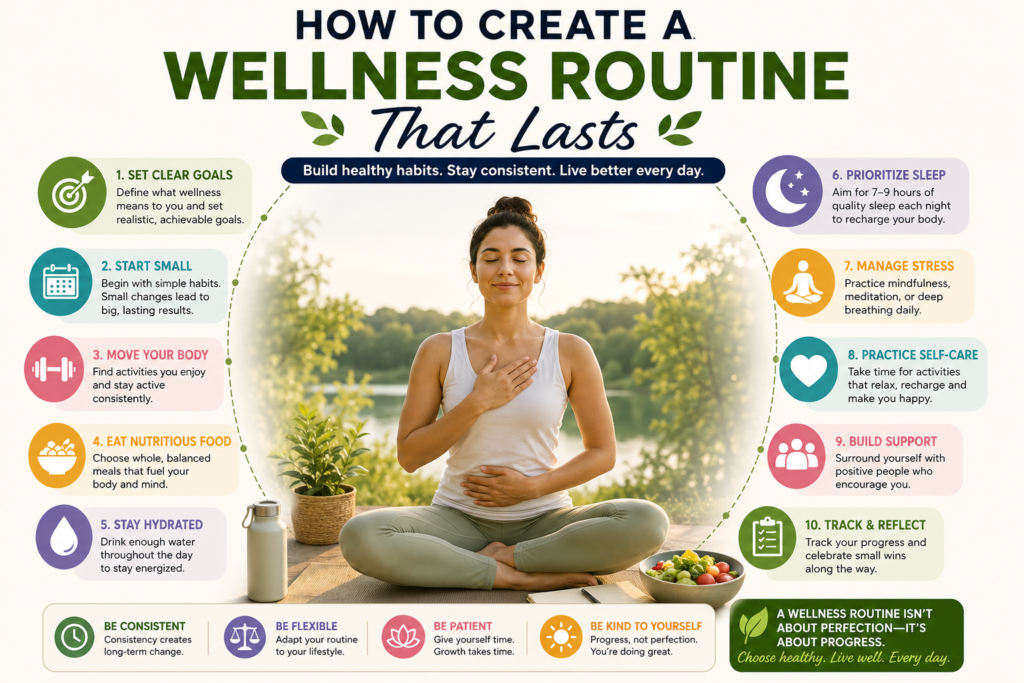
How to Create a Wellness Routine That Lasts
How to Create a Wellness Routine That Lasts . Many people start wellness journeys with excitement and motivation. They buy fitness equipment, create meal plans, download health apps, and set ambitious goals. However, after a few days or weeks, motivation fades, routines become difficult to maintain, and old habits often return.
The problem isn’t usually a lack of determination. Instead, many wellness routines fail because they are too complicated, unrealistic, or difficult to sustain over the long term.
True wellness is not about short-term perfection. It’s about building healthy habits that fit your lifestyle and can be maintained consistently for years. A lasting wellness routine supports your physical health, mental well-being, emotional balance, and overall quality of life.
In this comprehensive guide, you’ll learn how to create a wellness routine that lasts, avoid common mistakes, and develop sustainable habits that help you feel your best every day.
What Is a Wellness Routine? How to Create a Wellness Routine That Lasts
A wellness routine is a collection of daily habits and practices that support your overall health and well-being.
A balanced wellness routine typically includes:
- Healthy eating
- Regular exercise
- Quality sleep
- Stress management
- Hydration
- Self-care
- Mental wellness practices
- Positive social connections
Rather than focusing on a single area of health, a wellness routine addresses multiple aspects of your life.
Why Wellness Routines Often Fail: How to Create a Wellness Routine That Lasts
Before creating a sustainable routine, it’s important to understand why many routines don’t last.
Common reasons include:
- Setting unrealistic goals
- Trying to change everything at once
- Relying solely on motivation
- Lack of planning
- Perfectionism
- Busy schedules
- Ignoring personal preferences
Many people create routines that look good on paper but don’t fit their actual lifestyle.
The Benefits of a Lasting Wellness Routine: How to Create a Wellness Routine That Lasts
A consistent wellness routine can improve:
Physical Health
Healthy habits support:
- Energy levels
- Fitness
- Immune function
- Weight management
Mental Health
Wellness practices can help reduce:
- Stress
- Anxiety
- Mental fatigue
Emotional Well-Being
Consistent self-care improves emotional resilience and balance.
Productivity
Healthy individuals often experience:
- Better focus
- Improved concentration
- Greater motivation
Long-Term Health
Wellness habits help reduce the risk of many lifestyle-related health problems.
Step 1: Define What Wellness Means to You: How to Create a Wellness Routine That Lasts
Wellness looks different for everyone.
Before creating a routine, ask yourself:
- What areas of my health need attention?
- What goals are most important?
- What habits would improve my daily life?
Examples of wellness goals:
- Increase energy
- Sleep better
- Reduce stress
- Improve fitness
- Eat healthier
- Build self-confidence
Personalized goals create stronger commitment.
Step 2: Start Small: How to Create a Wellness Routine That Lasts
One of the biggest mistakes people make is trying to change everything at once.
Instead of completely transforming your lifestyle overnight, focus on small improvements.
Examples
Instead of:
- Exercising 2 hours daily
Start with:
- 15-minute walks
Instead of:
- Completely changing your diet
Start with:
- Adding one serving of vegetables daily
Small habits are easier to maintain and build momentum over time.
Step 3: Focus on Consistency Over Perfection: How to Create a Wellness Routine That Lasts
Perfection is not required for success.
Many people quit after missing a workout or making an unhealthy food choice.
Remember:
A single mistake does not ruin your progress.
Consistency matters far more than perfection.
A sustainable wellness routine allows flexibility while maintaining healthy patterns.
Step 4: Prioritize Sleep: How to Create a Wellness Routine That Lasts
Sleep is one of the most important pillars of wellness.
Without quality sleep, it becomes difficult to maintain healthy habits.
Benefits of Good Sleep
- Improved focus
- Better mood
- Increased energy
- Faster recovery
- Better decision-making
Sleep Tips
- Maintain a regular bedtime
- Avoid screens before sleep
- Keep your bedroom cool and dark
- Limit caffeine in the evening
Aim for 7–9 hours of quality sleep each night.
Step 5: Create a Balanced Nutrition Plan: How to Create a Wellness Routine That Lasts
Healthy eating doesn’t require strict diets.
A lasting nutrition routine focuses on balance and sustainability.
Include
Fruits and Vegetables
Rich in vitamins, minerals, and fiber.
Lean Proteins
Examples:
- Chicken
- Fish
- Eggs
- Beans
Whole Grains
Examples:
- Oats
- Brown rice
- Whole wheat bread
Healthy Fats
Examples:
- Avocados
- Nuts
- Olive oil
Balanced meals support energy, health, and overall wellness.
Step 6: Stay Hydrated: How to Create a Wellness Routine That Lasts
Water plays a vital role in nearly every bodily function.
Benefits include:
- Better concentration
- Improved energy
- Healthy digestion
- Temperature regulation
Easy Hydration Habits
- Carry a water bottle
- Drink water before meals
- Set reminders
- Eat water-rich foods
Consistent hydration is a simple but powerful wellness habit.
Step 7: Move Your Body Daily: How to Create a Wellness Routine That Lasts
Exercise is a key component of long-term wellness.
The best exercise routine is one you genuinely enjoy.
Options Include
- Walking
- Cycling
- Swimming
- Strength training
- Yoga
- Dancing
Choose activities that fit your interests and schedule.
Consistency is more important than intensity.
Step 8: Schedule Wellness Activities: How to Create a Wellness Routine That Lasts
Many healthy habits fail because they are not planned.
Treat wellness activities like important appointments.
Schedule:
- Workouts
- Meal preparation
- Relaxation time
- Outdoor walks
- Self-care activities
Planning increases the likelihood of follow-through.
Step 9: Manage Stress Effectively: How to Create a Wellness Routine That Lasts
Chronic stress can negatively affect both physical and mental health.
A lasting wellness routine includes stress-management practices.
Effective Stress-Relief Activities
Meditation
Helps calm the mind and improve focus.
Deep Breathing
Reduces tension and promotes relaxation.
Journaling
Allows emotional expression and reflection.
Nature Walks
Provide mental clarity and stress relief.
Regular stress management supports overall well-being.
Step 10: Practice Self-Care: How to Create a Wellness Routine That Lasts
Self-care is not selfish.
It is an essential part of maintaining wellness.
Self-Care Ideas
- Reading
- Taking a bath
- Listening to music
- Spending time with loved ones
- Practicing hobbies
Self-care helps restore energy and prevent burnout.
Step 11: Build Healthy Morning Habits: How to Create a Wellness Routine That Lasts
Morning routines often set the tone for the day.
Sample Morning Wellness Routine
- Wake up at a consistent time
- Drink water
- Stretch
- Practice gratitude
- Eat a healthy breakfast
A positive start can improve productivity and mood throughout the day.
Step 12: Create an Evening Routine: How to Create a Wellness Routine That Lasts
Evening habits support recovery and quality sleep.
Sample Evening Routine
- Limit screen time
- Reflect on the day
- Read a book
- Practice relaxation techniques
- Prepare for the next day
Consistent evenings contribute to long-term wellness success.
Step 13: Track Your Progress: How to Create a Wellness Routine That Lasts
Monitoring your habits can increase motivation and accountability.
Ways to track progress:
- Journals
- Habit trackers
- Mobile apps
- Calendars
Focus on progress rather than perfection.
Step 14: Build Habits Gradually: How to Create a Wellness Routine That Lasts
Adding too many habits at once can become overwhelming.
Instead:
- Introduce one new habit at a time
- Practice it consistently
- Add another habit when it becomes comfortable
This approach increases long-term success.
Step 15: Find Activities You Enjoy: How to Create a Wellness Routine That Lasts
Enjoyment plays a major role in consistency.
If you dislike your wellness routine, it will be difficult to maintain.
Choose activities that make you feel good and fit your personality.
Examples:
- Group fitness classes
- Hiking
- Gardening
- Cooking healthy meals
- Yoga
Wellness should feel rewarding, not like punishment.
Step 16: Build a Support System: How to Create a Wellness Routine That Lasts
Supportive people can help you stay motivated.
Consider:
- Friends
- Family members
- Fitness partners
- Wellness communities
Shared goals often increase accountability and success.
Step 17: Prepare for Challenges: How to Create a Wellness Routine That Lasts
Life is unpredictable.
Travel, illness, work demands, and family responsibilities may disrupt your routine.
Instead of quitting, adjust your routine when necessary.
For example:
- Shorten workouts
- Choose quick healthy meals
- Focus on basic wellness habits
Flexibility helps maintain consistency during difficult periods.
Step 18: Celebrate Small Wins: How to Create a Wellness Routine That Lasts
Acknowledging progress helps maintain motivation.
Celebrate achievements such as:
- Completing a week of workouts
- Drinking more water
- Improving sleep habits
- Managing stress effectively
Small victories build confidence and momentum.
Sample Daily Wellness Routine:
Morning
- Wake up at the same time
- Drink a glass of water
- Stretch or exercise
- Eat a nutritious breakfast
Midday
- Healthy lunch
- Short walk
- Stay hydrated
Afternoon
- Focus on productive tasks
- Take movement breaks
- Eat a healthy snack
Evening
- Relaxation activities
- Family time
- Prepare for sleep
Night
- Limit screens
- Read or meditate
- Sleep at a consistent time
Common Wellness Routine Mistakes:
Avoid these common pitfalls:
Doing Too Much Too Soon
Start gradually.
Comparing Yourself to Others
Focus on your own journey.
Ignoring Recovery
Rest is essential.
Depending Only on Motivation
Build systems and routines.
Quitting After Setbacks
Resume your routine as soon as possible.
Signs Your Wellness Routine Is Working:
You may notice:
- Increased energy
- Better sleep
- Improved mood
- Reduced stress
- Better concentration
- Greater productivity
- Enhanced physical fitness
These improvements often develop gradually over time.
Long-Term Wellness Success Tips
Be Patient
Sustainable change takes time.
Stay Flexible
Adapt your routine when needed.
Focus on Habits
Daily actions create lasting results.
Keep Learning
Explore new wellness strategies and healthy practices.
Enjoy the Process
Wellness should enhance your life, not complicate it.
Final Thoughts
The key is not creating a perfect routine but building one that fits your lifestyle and can be maintained consistently.
Start with small habits, focus on progress rather than perfection, and prioritize essential wellness pillars such as sleep, nutrition, exercise, hydration, stress management, and self-care. Over time, these daily practices will become part of your lifestyle and support long-term physical, mental, and emotional well-being.
Remember that lasting wellness is a journey, not a destination. Every healthy choice you make today contributes to a stronger, healthier, and more fulfilling future.