
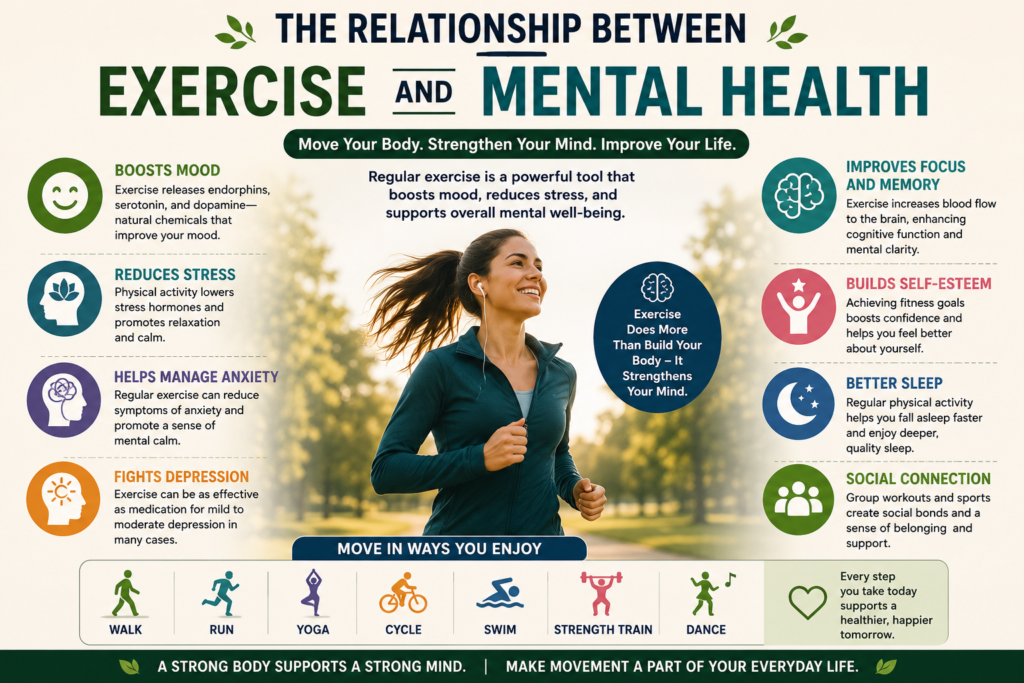
The Relationship Between Exercise and Mental Health:
The Relationship Between Exercise and Mental Health. When most people think about exercise, they often focus on physical benefits such as weight management, stronger muscles, improved fitness, and better heart health. While these benefits are certainly important, exercise also has a profound impact on mental health.
In today’s fast-paced world, mental health challenges such as stress, anxiety, depression, and emotional exhaustion are becoming increasingly common. Many people search for ways to improve their mental well-being, and one of the most effective yet often overlooked solutions is regular physical activity.
Exercise is more than just a tool for improving physical appearance. It is a powerful way to support emotional balance, mental clarity, self-confidence, and overall happiness. Whether it’s a brisk walk, a gym workout, a yoga session, or a bike ride, movement can positively influence the way you think and feel.
In this guide, we’ll explore the relationship between exercise and mental health, the science behind it, and practical ways to use physical activity to improve your well-being.
Understanding Mental Health: The Relationship Between Exercise and Mental Health
Mental health refers to your emotional, psychological, and social well-being.
It affects:
- How you think
- How you feel
- How you handle stress
- How you make decisions
- How you interact with others
Good mental health doesn’t mean feeling happy all the time. It means having the ability to cope with life’s challenges, maintain emotional balance, and function effectively in daily life.
Why Mental Health Matters: The Relationship Between Exercise and Mental Health
Mental health influences nearly every area of life, including:
Physical Health
Mental and physical health are closely connected.
Relationships
Healthy emotional well-being supports stronger relationships.
Productivity
Good mental health improves focus and performance.
Quality of Life
Mental wellness contributes significantly to overall happiness and life satisfaction.
Taking care of mental health is just as important as taking care of physical health.
How Exercise Affects the Brain: The Relationship Between Exercise and Mental Health
Exercise creates several positive changes in the brain that support mental well-being.
When you engage in physical activity, your body releases chemicals that improve mood and reduce stress.
These include:
Endorphins
Often called “feel-good” hormones, endorphins help create feelings of happiness and relaxation.
Dopamine
Supports motivation, pleasure, and reward.
Serotonin
Helps regulate mood, sleep, and emotional balance.
Norepinephrine
Improves alertness, focus, and stress response.
Together, these chemicals help explain why people often feel better after exercising.
Exercise and Stress Reduction: The Relationship Between Exercise and Mental Health
Stress is a normal part of life, but chronic stress can negatively affect both mental and physical health.
Common symptoms include:
- Irritability
- Fatigue
- Difficulty concentrating
- Anxiety
- Sleep problems
How Exercise Reduces Stress
Physical activity helps:
- Lower stress hormones
- Relax tense muscles
- Improve mood
- Promote better sleep
Even a short walk can help clear your mind and reduce feelings of tension.
Exercise and Anxiety: The Relationship Between Exercise and Mental Health
Anxiety affects millions of people worldwide.
Symptoms may include:
- Excessive worry
- Restlessness
- Racing thoughts
- Increased heart rate
Benefits of Exercise for Anxiety
Regular exercise can:
- Reduce nervous tension
- Improve emotional regulation
- Promote relaxation
- Increase confidence
Activities such as walking, yoga, swimming, and cycling are especially helpful for managing anxiety symptoms.
Exercise and Depression: The Relationship Between Exercise and Mental Health
Depression can affect a person’s thoughts, emotions, energy levels, and daily functioning.
Common symptoms include:
- Persistent sadness
- Loss of motivation
- Fatigue
- Difficulty concentrating
- Feelings of hopelessness
How Exercise Helps
Research has shown that physical activity may:
- Improve mood
- Increase energy
- Enhance self-esteem
- Reduce depressive symptoms
Exercise is often recommended as part of a comprehensive mental wellness plan.
The Mood-Boosting Power of Exercise: The Relationship Between Exercise and Mental Health
Many people experience a noticeable improvement in mood after physical activity.
This is sometimes called the “exercise high.”
Why It Happens
Exercise:
- Releases endorphins
- Increases blood flow to the brain
- Reduces stress
- Promotes a sense of accomplishment
Even moderate exercise can provide immediate emotional benefits.
Exercise Improves Self-Confidence: The Relationship Between Exercise and Mental Health
Self-confidence plays an important role in mental well-being.
Physical activity can improve confidence by helping you:
- Feel stronger
- Improve fitness
- Achieve personal goals
- Develop discipline
As you make progress, you may develop greater trust in your abilities.
Exercise Enhances Sleep Quality: The Relationship Between Exercise and Mental Health
Sleep and mental health are closely connected.
Poor sleep can contribute to:
- Anxiety
- Stress
- Mood swings
- Reduced concentration
Benefits of Exercise for Sleep
Regular physical activity may help:
- Fall asleep faster
- Sleep more deeply
- Improve sleep quality
- Regulate sleep patterns
Better sleep supports emotional stability and mental performance.
Exercise Improves Cognitive Function: The Relationship Between Exercise and Mental Health
Mental health is not only about emotions—it also includes how your brain functions.
Exercise supports:
- Memory
- Focus
- Learning
- Decision-making
Why This Happens
Physical activity increases blood flow and oxygen delivery to the brain.
This helps support healthy brain function and mental clarity.
Exercise Helps Build Resilience: The Relationship Between Exercise and Mental Health
Life inevitably includes challenges and setbacks.
Resilience is the ability to recover from difficult experiences and continue moving forward.
How Exercise Builds Resilience
Regular physical activity teaches:
- Persistence
- Patience
- Discipline
- Adaptability
These qualities often carry over into other areas of life.
Social Benefits of Exercise: The Relationship Between Exercise and Mental Health
Many forms of exercise involve social interaction.
Examples include:
- Fitness classes
- Sports teams
- Walking groups
- Running clubs
Social connection can improve mental health by reducing feelings of isolation and loneliness.
Positive relationships are an important part of emotional well-being.
Best Types of Exercise for Mental Health: The Relationship Between Exercise and Mental Health
The good news is that almost any form of movement can support mental wellness.
Walking
Walking is simple, accessible, and highly effective.
Benefits include:
- Reduced stress
- Improved mood
- Increased energy
Running
Running can provide significant mental health benefits through endorphin release.
Strength Training
Weight training may improve confidence and reduce symptoms of anxiety and depression.
Yoga
Yoga combines movement, breathing, and mindfulness.
Benefits include:
- Relaxation
- Stress reduction
- Emotional balance
Swimming
Swimming provides a full-body workout while promoting relaxation.
Cycling
Cycling supports cardiovascular health and mental well-being.
The best exercise is one you enjoy and can do consistently.
How Much Exercise Is Needed?
You don’t need hours in the gym to experience mental health benefits.
Experts often recommend:
- At least 150 minutes of moderate activity per week
This can be divided into manageable sessions.
Examples:
- 30 minutes per day, five days per week
- Three 10-minute walks daily
Even small amounts of exercise can make a difference.
Exercise and Emotional Regulation: The Relationship Between Exercise and Mental Health
Emotional regulation refers to the ability to manage emotions effectively.
Regular exercise can help you:
- Stay calmer during stressful situations
- Respond thoughtfully rather than react impulsively
- Maintain emotional balance
This contributes to healthier relationships and improved overall well-being.
The Mind-Body Connection: The Relationship Between Exercise and Mental Health
The relationship between exercise and mental health highlights the powerful connection between mind and body.
When you care for your body through movement, your mental well-being often improves as well.
Physical activity supports:
- Brain health
- Hormonal balance
- Stress management
- Emotional resilience
This interconnectedness explains why exercise can have such a significant impact on mood and mental wellness.
Common Barriers to Exercise: The Relationship Between Exercise and Mental Health
Despite its benefits, many people struggle to exercise consistently.
Common barriers include:
- Lack of time
- Low motivation
- Fatigue
- Busy schedules
- Fear of failure
Overcoming These Challenges
Start small.
Examples:
- Walk for 10 minutes daily
- Stretch during breaks
- Take the stairs
- Exercise with a friend
Small steps often lead to lasting habits.
Tips for Making Exercise a Habit
Choose Activities You Enjoy
You’re more likely to stay consistent when you enjoy the activity.
Set Realistic Goals
Start with achievable targets.
Schedule Exercise
Treat workouts like important appointments.
Track Progress
Monitoring improvements can increase motivation.
Focus on Consistency
Regular movement matters more than perfection.
A Simple Weekly Exercise Plan: The Relationship Between Exercise and Mental Health
Monday
30-minute walk
Tuesday
Strength training
Wednesday
Yoga or stretching
Thursday
Cycling or jogging
Friday
Strength training
Saturday
Outdoor activity
Sunday
Gentle walk or recovery day
This balanced approach supports both physical and mental health.
Signs Exercise Is Improving Your Mental Health: The Relationship Between Exercise and Mental Health
As you become more active, you may notice:
- Better mood
- Increased energy
- Reduced stress
- Improved sleep
- Greater confidence
- Better concentration
- More emotional balance
These improvements often develop gradually with consistent effort.
Long-Term Mental Health Benefits: The Relationship Between Exercise and Mental Health
Maintaining an active lifestyle may contribute to:
- Lower stress levels
- Improved emotional resilience
- Better cognitive function
- Greater self-esteem
- Reduced symptoms of anxiety and depression
- Enhanced overall well-being
These benefits can significantly improve quality of life.
Final Thoughts
Regular physical activity does far more than improve fitness—it supports mood, reduces stress, enhances cognitive function, boosts confidence, and promotes emotional balance.
The best part is that you don’t need intense workouts to experience these benefits. Simple activities such as walking, cycling, yoga, swimming, or strength training can make a meaningful difference when practiced consistently.
If you’re looking to improve your mental health naturally, exercise is one of the most effective tools available. Start small, stay consistent, and remember that every step you take toward a more active lifestyle is also a step toward a healthier, happier mind.