
Introduction
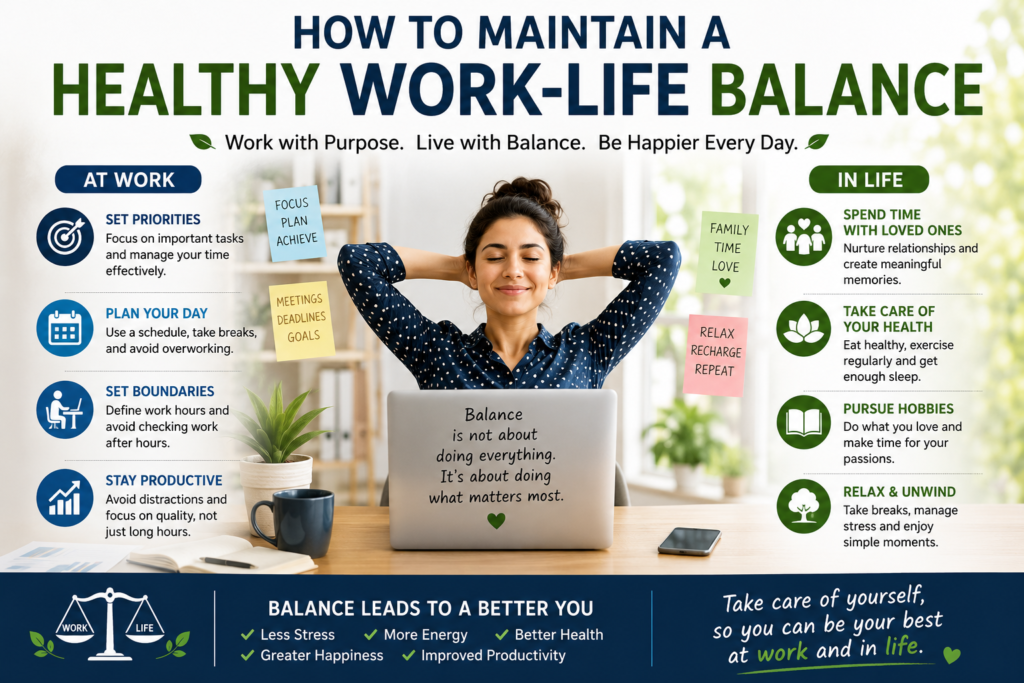
How to Maintain a Healthy Work-Life Balance .In today’s fast-paced world, achieving a healthy work-life balance can feel challenging. Many people spend long hours working, managing responsibilities, and trying to meet personal and professional goals. While dedication and hard work are important, constantly prioritizing work over personal well-being can lead to stress, burnout, fatigue, and reduced quality of life.
A healthy work-life balance is about creating harmony between your professional responsibilities and personal life. It does not mean giving equal hours to both areas every day. Instead, it means ensuring that work does not negatively impact your physical health, mental well-being, relationships, and overall happiness.
Maintaining a healthy balance allows you to be productive at work while also enjoying time with family, friends, hobbies, and self-care. It can improve job satisfaction, strengthen relationships, reduce stress, and support long-term health.
This guide explores practical strategies to help you maintain a healthy work-life balance and create a more fulfilling life.
What Is Work-Life Balance?
Work-life balance refers to the ability to effectively manage professional responsibilities while maintaining personal well-being and fulfilling personal commitments.
A balanced life allows you to:
- Meet work responsibilities
- Spend quality time with loved ones
- Prioritize health and wellness
- Pursue hobbies and interests
- Rest and recharge
Balance looks different for everyone. The goal is not perfection but sustainability.
Why Work-Life Balance Matters: How to Maintain a Healthy Work-Life Balance
Many people underestimate the impact that poor balance can have on their health and happiness.
When work dominates life, it can lead to:
- Chronic stress
- Burnout
- Anxiety
- Sleep problems
- Relationship issues
- Reduced productivity
- Poor physical health
On the other hand, a healthy work-life balance can improve both personal and professional success.
Benefits Include:
- Better mental health
- Improved physical well-being
- Increased productivity
- Greater job satisfaction
- Stronger relationships
- Better sleep quality
- Reduced stress
Signs Your Work-Life Balance Needs Improvement: How to Maintain a Healthy Work-Life Balance
Before making changes, it’s important to recognize warning signs.
Common indicators include:
- Constant exhaustion
- Difficulty relaxing
- Frequent stress
- Poor sleep
- Missing family events
- Feeling overwhelmed
- Lack of personal time
- Decreased motivation
Recognizing these signs early can help prevent burnout.
Set Clear Boundaries Between Work and Personal Life: How to Maintain a Healthy Work-Life Balance
One of the most important steps in maintaining balance is establishing boundaries.
Without boundaries, work can easily extend into personal time.
How to Set Boundaries
- Define working hours
- Avoid checking emails after work
- Create a dedicated workspace
- Communicate expectations clearly
Boundaries help protect your personal time and mental well-being.
Prioritize Your Health: How to Maintain a Healthy Work-Life Balance
Good health forms the foundation of a balanced life.
Unfortunately, many people sacrifice their health to meet work demands.
Focus on:
- Healthy eating
- Regular exercise
- Adequate sleep
- Stress management
Taking care of yourself allows you to perform better both at work and at home.
Learn to Manage Time Effectively: How to Maintain a Healthy Work-Life Balance
Time management is essential for work-life balance.
Practical Time Management Tips
Create Daily Priorities
Identify the most important tasks each day.
Use a Schedule
Plan work activities, appointments, and personal commitments.
Avoid Multitasking
Focusing on one task at a time often improves efficiency and reduces stress.
Take Regular Breaks
Short breaks can improve concentration and productivity.
Learn to Say No: How to Maintain a Healthy Work-Life Balance
Many people become overwhelmed because they take on too many responsibilities.
Why Saying No Matters
Protecting your time allows you to:
- Avoid burnout
- Focus on priorities
- Reduce unnecessary stress
Saying no respectfully is a healthy and necessary skill.
Make Time for Family and Friends: How to Maintain a Healthy Work-Life Balance
Strong relationships contribute significantly to overall happiness and well-being.
Benefits of Social Connections
- Reduced stress
- Emotional support
- Increased happiness
- Better mental health
Schedule quality time with loved ones just as you would schedule work meetings.
Create a Daily Routine: How to Maintain a Healthy Work-Life Balance
Consistent routines help create structure and balance.
Example Morning Routine
- Wake up at a consistent time
- Drink water
- Exercise or stretch
- Eat a healthy breakfast
Example Evening Routine
- Disconnect from work
- Spend time with family
- Relax
- Prepare for quality sleep
Healthy routines reduce stress and improve productivity.
Take Regular Breaks During Work: How to Maintain a Healthy Work-Life Balance
Working continuously for long periods can reduce efficiency and increase fatigue.
Benefits of Breaks
- Improved concentration
- Better creativity
- Reduced mental fatigue
- Increased productivity
Even short breaks can help refresh your mind and body.
Avoid Perfectionism: How to Maintain a Healthy Work-Life Balance
Perfectionism often contributes to stress and imbalance.
The Problem With Perfectionism
Trying to make everything perfect can lead to:
- Overworking
- Anxiety
- Procrastination
- Burnout
Focus on doing your best rather than achieving perfection.
Practice Stress Management: How to Maintain a Healthy Work-Life Balance
Stress is unavoidable, but managing it effectively is essential.
Healthy Stress-Relief Activities
- Meditation
- Deep breathing
- Walking
- Yoga
- Journaling
- Spending time in nature
Managing stress improves both physical and mental health.
Prioritize Sleep: How to Maintain a Healthy Work-Life Balance
Sleep is often the first thing people sacrifice when life becomes busy.
Why Sleep Matters
Quality sleep supports:
- Energy levels
- Concentration
- Mood
- Immune function
- Productivity
Most adults need 7–9 hours of sleep each night.
Better Sleep Habits
- Maintain a regular schedule
- Limit screen time before bed
- Create a relaxing bedtime routine
Disconnect From Technology: How to Maintain a Healthy Work-Life Balance
Technology can blur the line between work and personal life.
Signs of Digital Overload
- Constant notifications
- Checking emails after hours
- Difficulty relaxing
Healthy Technology Habits
- Turn off work notifications after hours
- Schedule screen-free time
- Avoid devices before bed
Digital boundaries support mental well-being.
Make Time for Hobbies: How to Maintain a Healthy Work-Life Balance
Hobbies provide enjoyment, relaxation, and personal growth.
Examples include:
- Reading
- Gardening
- Painting
- Cooking
- Photography
- Music
Engaging in activities you enjoy helps reduce stress and increase life satisfaction.
Exercise Regularly: How to Maintain a Healthy Work-Life Balance
Physical activity benefits both body and mind.
Exercise Benefits
- Reduced stress
- Better mood
- Increased energy
- Improved sleep
- Enhanced productivity
Aim for at least 150 minutes of moderate activity each week.
Create Realistic Goals: How to Maintain a Healthy Work-Life Balance
Unrealistic expectations often lead to frustration and burnout.
SMART Goal Setting
Goals should be:
- Specific
- Measurable
- Achievable
- Relevant
- Time-bound
Realistic goals promote steady progress without overwhelming pressure.
Take Vacation Time: How to Maintain a Healthy Work-Life Balance
Many employees fail to use their available vacation days.
Benefits of Taking Time Off
- Reduced stress
- Improved mental health
- Increased creativity
- Better productivity upon return
Regular breaks from work help maintain long-term balance.
Focus on Quality Rather Than Quantity
Working longer hours does not always produce better results.
Productivity Tips
- Focus on important tasks
- Eliminate distractions
- Work efficiently
- Prioritize meaningful work
Productive work often matters more than lengthy workdays.
Build a Support System
Supportive relationships can make balancing responsibilities easier.
Sources of Support
- Family
- Friends
- Colleagues
- Mentors
Don’t hesitate to ask for help when needed.
Practice Mindfulness
Mindfulness encourages living in the present moment rather than constantly worrying about work or future responsibilities.
Benefits Include
- Reduced stress
- Improved focus
- Better emotional regulation
- Increased happiness
Simple mindfulness exercises can make a significant difference.
Maintain Financial Wellness
Financial stress often contributes to poor work-life balance.
Healthy Financial Habits
- Create a budget
- Save regularly
- Reduce unnecessary spending
- Plan for emergencies
Financial stability can reduce anxiety and improve overall well-being.
Regularly Reevaluate Your Priorities
Life circumstances change over time.
Ask yourself:
- What matters most right now?
- Are my daily activities aligned with my goals?
- Am I spending enough time on my health and relationships?
Regular reflection helps maintain balance and prevent burnout.
Common Work-Life Balance Mistakes
Avoid these common mistakes:
- Working during personal time
- Skipping meals
- Ignoring sleep
- Neglecting exercise
- Taking on too many commitments
- Constant multitasking
- Failing to take breaks
Awareness is the first step toward positive change.
A Sample Healthy Work-Life Balance Routine
Morning
- Wake up early
- Drink water
- Exercise
- Healthy breakfast
Workday
- Focus on priorities
- Take breaks
- Stay hydrated
Evening
- Disconnect from work
- Spend time with family
- Relax and unwind
Night
- Read or meditate
- Get quality sleep
Small daily habits create long-term balance.
Long-Term Benefits of Work-Life Balance
Maintaining balance can lead to:
- Better physical health
- Improved mental well-being
- Greater happiness
- Increased productivity
- Stronger relationships
- Reduced burnout
- Higher life satisfaction
The benefits extend to every area of life.
Conclusion
Maintaining a healthy work-life balance is not about choosing work or personal life—it’s about creating a lifestyle that allows both to thrive. By setting boundaries, managing time effectively, prioritizing health, nurturing relationships, and making time for rest and recreation, you can build a life that supports both success and well-being.
Remember that balance is an ongoing process, not a one-time achievement. Some days work may require more attention, while other days personal responsibilities may take priority. The key is to regularly assess your needs and make adjustments when necessary.
A healthy work-life balance leads to greater happiness, improved health, stronger relationships, and long-term success. Start with small changes today, and over time, you’ll create a more fulfilling and sustainable lifestyle.