
Introduction
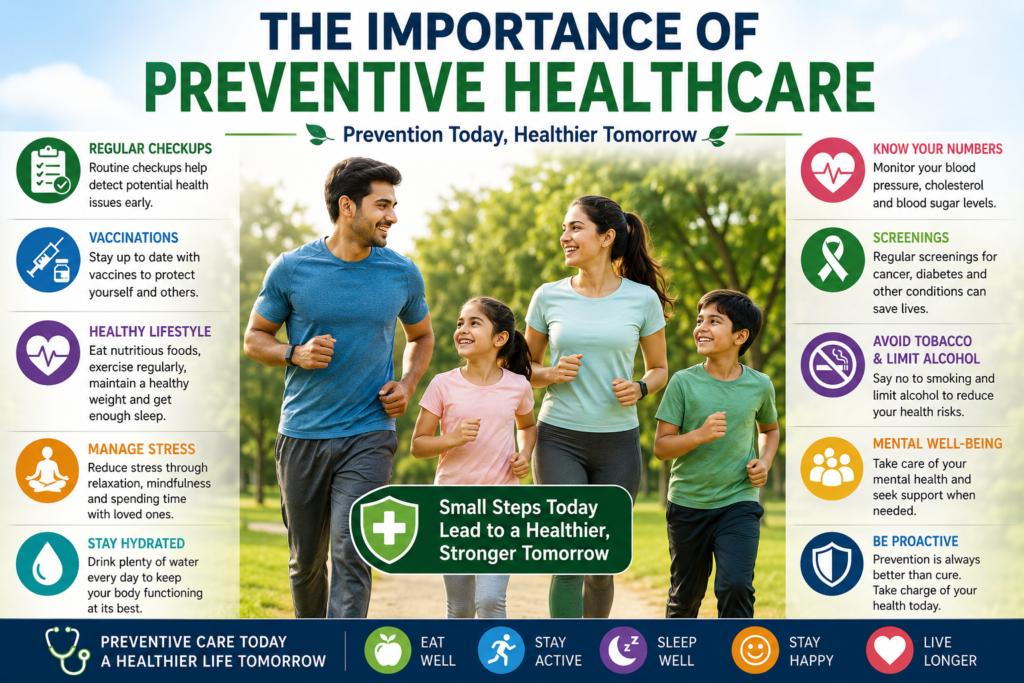
The Importance of Preventive Healthcare. When it comes to health, many people only visit a doctor when they feel sick or experience symptoms. While treating illnesses is important, preventing them before they start is often even more effective. This is where preventive healthcare plays a vital role.
Preventive healthcare focuses on maintaining health, preventing diseases, and detecting potential health issues early. Instead of waiting for a condition to become serious, preventive healthcare encourages proactive steps that help people stay healthy throughout their lives.
From routine medical checkups and vaccinations to healthy lifestyle choices and screenings, preventive healthcare helps reduce the risk of chronic diseases, improves quality of life, and can even save lives.
In today’s fast-paced world, where lifestyle-related illnesses are becoming increasingly common, understanding the importance of preventive healthcare has never been more critical.
This guide explores what preventive healthcare is, why it matters, and how simple preventive measures can lead to better long-term health and well-being.
What Is Preventive Healthcare? The Importance of Preventive Healthcare
Preventive healthcare refers to medical services and lifestyle practices designed to prevent diseases rather than treat them after they develop.
The primary goals of preventive healthcare are:
- Prevent illness
- Detect diseases early
- Reduce health risks
- Improve quality of life
- Promote long-term wellness
Preventive healthcare helps people stay healthier for longer and reduces the likelihood of serious medical complications.
Types of Preventive Healthcare: The Importance of Preventive Healthcare
Preventive healthcare can be divided into several categories.
Primary Prevention
Primary prevention focuses on preventing diseases before they occur.
Examples include:
- Vaccinations
- Healthy eating
- Regular exercise
- Avoiding smoking
- Managing stress
These actions reduce the likelihood of developing health problems.
Secondary Prevention: The Importance of Preventive Healthcare
Secondary prevention involves early detection and treatment.
Examples include:
- Blood pressure screenings
- Cholesterol tests
- Cancer screenings
- Diabetes screenings
Early detection often leads to better treatment outcomes.
Tertiary Prevention
Tertiary prevention aims to manage existing health conditions and prevent complications.
Examples include:
- Rehabilitation programs
- Chronic disease management
- Physical therapy
This approach helps improve quality of life and reduce further health risks.
Why Preventive Healthcare Matters: The Importance of Preventive Healthcare
Preventive healthcare benefits individuals, families, communities, and healthcare systems.
Key Benefits Include:
- Reduced disease risk
- Early diagnosis
- Lower healthcare costs
- Better quality of life
- Increased life expectancy
By taking preventive measures, individuals can often avoid serious health problems before they develop.
Helps Detect Diseases Early: The Importance of Preventive Healthcare
One of the biggest advantages of preventive healthcare is early detection.
Many serious diseases develop slowly and may not show symptoms in the early stages.
Examples include:
- High blood pressure
- Diabetes
- Heart disease
- Certain cancers
Routine screenings can identify these conditions before they become severe.
Why Early Detection Matters
When diseases are detected early:
- Treatment is often more effective
- Recovery rates improve
- Complications can be reduced
- Healthcare costs may decrease
Early action can save lives.
Reduces the Risk of Chronic Diseases: The Importance of Preventive Healthcare
Chronic diseases are among the leading causes of illness worldwide.
Common chronic conditions include:
- Heart disease
- Diabetes
- Obesity
- High blood pressure
- Stroke
Many of these conditions are strongly influenced by lifestyle choices.
Preventive Strategies
- Healthy eating
- Physical activity
- Weight management
- Stress reduction
- Avoiding tobacco
These habits can significantly lower disease risk.
Improves Quality of Life: The Importance of Preventive Healthcare
Preventive healthcare is not only about avoiding illness.
It also helps people:
- Feel more energetic
- Stay active
- Maintain independence
- Improve mental well-being
- Enjoy daily life
Good health allows individuals to participate more fully in work, family activities, and personal interests.
Saves Money in the Long Run: The Importance of Preventive Healthcare
Treating advanced diseases can be expensive.
Preventive care often costs less than managing serious medical conditions.
Examples
A routine health screening may identify a problem early, preventing costly treatments later.
Preventive measures can help reduce:
- Hospital visits
- Emergency care
- Surgical procedures
- Long-term medication costs
Investing in prevention often leads to financial benefits over time.
Supports Healthy Aging: The Importance of Preventive Healthcare
As people age, preventive healthcare becomes increasingly important.
Regular monitoring helps identify age-related health concerns before they become serious.
Healthy Aging Benefits
- Improved mobility
- Better cognitive function
- Stronger immunity
- Increased independence
Preventive care helps older adults maintain a higher quality of life.
Essential Components of Preventive Healthcare: The Importance of Preventive Healthcare
Regular Medical Checkups
Routine medical visits provide an opportunity to assess overall health.
Doctors may evaluate:
- Blood pressure
- Weight
- Cholesterol
- Blood sugar
- General wellness
Regular checkups help identify risk factors early.
Vaccinations
Vaccines are one of the most effective forms of preventive healthcare.
Vaccinations help protect against serious illnesses and reduce disease spread.
Examples include:
- Flu vaccines
- COVID-19 vaccines
- Childhood immunizations
- Travel vaccines
Vaccination supports both individual and community health.
Health Screenings
Screenings help identify diseases before symptoms appear.
Common screenings include:
Blood Pressure Checks
High blood pressure often has no symptoms.
Regular monitoring helps reduce the risk of heart disease and stroke.
Cholesterol Testing
High cholesterol can contribute to cardiovascular disease.
Diabetes Screening
Early diagnosis helps prevent complications.
Cancer Screenings
Depending on age and risk factors, screenings may include:
- Breast cancer screening
- Cervical cancer screening
- Colorectal cancer screening
- Prostate cancer screening
Always follow recommendations from healthcare professionals.
The Role of Healthy Lifestyle Habits: The Importance of Preventive Healthcare
Preventive healthcare extends beyond doctor’s offices and hospitals.
Daily habits play a major role in maintaining health.
Healthy Eating: The Importance of Preventive Healthcare
Nutrition is a cornerstone of preventive healthcare.
Focus on:
- Fruits
- Vegetables
- Whole grains
- Lean proteins
- Healthy fats
A balanced diet supports:
- Heart health
- Immune function
- Healthy weight
- Disease prevention
Regular Physical Activity: The Importance of Preventive Healthcare
Exercise is one of the most effective preventive health tools available.
Benefits Include
- Improved cardiovascular health
- Better weight management
- Stronger muscles and bones
- Reduced stress
- Better sleep
Aim for at least 150 minutes of moderate activity each week.
Quality Sleep: The Importance of Preventive Healthcare
Sleep allows the body to recover and repair itself.
Poor sleep may increase the risk of:
- Obesity
- Diabetes
- Heart disease
- Depression
Adults generally need 7–9 hours of sleep per night.
Stress Management: The Importance of Preventive Healthcare
Chronic stress can negatively affect physical and mental health.
Healthy Stress Reduction Techniques
- Meditation
- Deep breathing
- Exercise
- Spending time in nature
- Journaling
Managing stress supports overall wellness.
Avoiding Harmful Habits: The Importance of Preventive Healthcare
Preventive healthcare also involves reducing behaviours that increase health risks.
Avoid Smoking
Smoking increases the risk of:
- Lung disease
- Heart disease
- Cancer
Limit Alcohol Consumption
Excessive alcohol intake may contribute to:
- Liver disease
- High blood pressure
- Certain cancers
Healthy choices can significantly reduce disease risk.
Mental Health as Preventive Healthcare: The Importance of Preventive Healthcare
Mental health is an essential part of overall wellness.
Preventive mental health practices include:
- Maintaining social connections
- Seeking support when needed
- Practicing mindfulness
- Managing stress
Strong mental health contributes to better physical health and quality of life.
Preventive Healthcare for Children: The Importance of Preventive Healthcare
Healthy habits begin early in life.
Important preventive measures for children include:
- Regular pediatric visits
- Vaccinations
- Healthy nutrition
- Physical activity
- Good sleep habits
Early prevention lays the foundation for lifelong health.
Preventive Healthcare for Adults: The Importance of Preventive Healthcare
Adults benefit from regular health monitoring and healthy lifestyle habits.
Focus areas include:
- Blood pressure checks
- Cholesterol monitoring
- Weight management
- Cancer screenings
- Stress management
Taking proactive steps helps reduce future health risks.
Preventive Healthcare for Older Adults: The Importance of Preventive Healthcare
As people age, healthcare needs evolve.
Older adults should prioritize:
- Regular screenings
- Medication reviews
- Vision and hearing checks
- Bone health assessments
- Vaccinations
Preventive care supports independence and healthy aging.
Common Barriers to Preventive Healthcare
Some people delay preventive care due to:
- Lack of time
- Fear of medical results
- Cost concerns
- Limited awareness
However, postponing preventive care may increase health risks over time.
Making health a priority can lead to significant long-term benefits.
Building a Preventive Healthcare Routine: The Importance of Preventive Healthcare
A simple preventive healthcare routine may include:
Daily
- Eat nutritious meals
- Stay active
- Drink water
- Manage stress
Weekly
- Exercise consistently
- Plan healthy meals
Annually
- Schedule medical checkups
- Complete recommended screenings
- Review vaccinations
Consistency is key to long-term health.
The Future of Preventive Healthcare: The Importance of Preventive Healthcare
Modern healthcare increasingly focuses on prevention rather than treatment alone.
Advances in:
- Health technology
- Wearable devices
- Digital health monitoring
- Personalized medicine
are helping people take greater control of their health.
Preventive healthcare will continue to play a crucial role in improving public health worldwide.
Conclusion
The importance of preventive healthcare cannot be overstated. By focusing on prevention, early detection, and healthy lifestyle choices, individuals can significantly reduce their risk of disease and improve their overall quality of life.
Preventive healthcare empowers people to take control of their health before problems arise. Regular checkups, screenings, vaccinations, healthy eating, exercise, quality sleep, and stress management all contribute to long-term wellness.
Rather than waiting until illness develops, proactive healthcare encourages a healthier future through small, consistent actions taken today.
Remember, prevention is often easier, less expensive, and more effective than treatment. By making preventive healthcare a priority, you are investing in a longer, healthier, and more fulfilling life.